10 Women Shaping the Future of Science at Binghamton University
At Binghamton University, women researchers are advancing science in powerful and wide-ranging ways. Across departments and fields, these scholars are exploring new ideas, solving real-world problems and making discoveries that matter. Along the way, they mentor students and help build a stronger campus community. Here are 10 women shaping the future of science at Binghamton University.
Ahyeon Koh – designing biosensors for smarter health monitoring
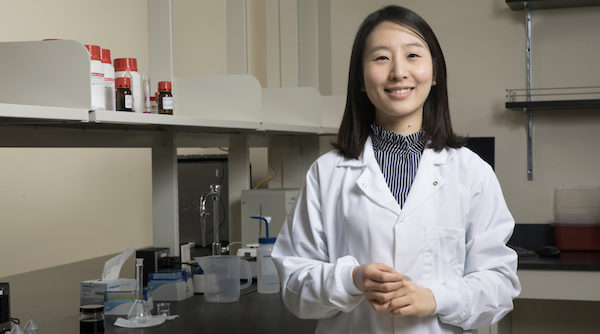
Ahyeon Koh, an associate professor in the Thomas J. Watson College of Engineering and Applied Science, develops advanced biosensors designed to improve how biological signals are detected and measured. She was honored with a National Science Foundation CAREER Award for her work, which supports early-career scientists and engineers and provides funding to push her research forward. Koh’s biosensors have the potential to transform health monitoring and diagnostics by making it easier and more accurate to track key biological information in real time.
Molly Patterson – Uncovering Earth’s climate history in Antarctica

A geologist at Harpur College of Arts and Sciences, Molly Patterson studies Earth’s ancient climate to help the world better understand its future. As co-chief scientist on an international research expedition, she recently spent part of the Antarctic summer at a remote camp hundreds of miles from the nearest base, working to drill through nearly 500 meters of ice to collect sediment that holds clues about how the West Antarctic Ice Sheet behaved in past warm periods. Her work helps reveal how Earth’s climate system has changed over millions of years and what that might mean for sea-level rise as the planet warms.
Monica Adams – Strengthening local food systems
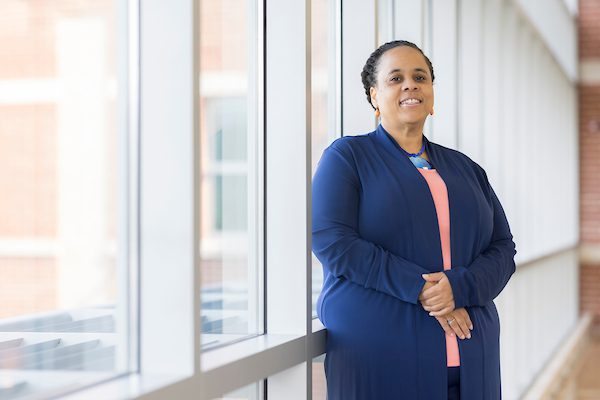
Monica Adams, an assistant professor of social work in the College of Community and Public Affairs, brings together researchers, students and community partners to examine local food systems. Her work explores how food access intersects with policy, equity and sustainability. She recently helped lead a University-wide consortium that connects faculty and students with local organizations to learn firsthand about food insecurity in the local area and develop community-informed solutions. Through this collaborative effort, Adams is turning research into action that supports more equitable food access across the region.
Melissa Morales – Developing targeted treatments for autoimmune diseases
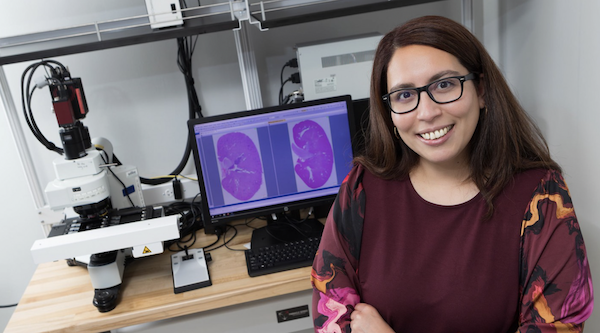
Assistant Professor Melissa Morales, in the School of Pharmacy and Pharmaceutical Sciences, researches autoimmune diseases and new ways to better target and treat them. Supported by recent collaborative grant work, her team is exploring innovative therapeutic approaches that deepen understanding of immune system dysfunction and inflammation. Morales’s research aims to uncover more precise ways to diagnose and treat autoimmune conditions, with the long-term goal of improving outcomes for people living with these chronic illnesses.
Deena Thomas – Revealing how air quality shapes our health

Deena Thomas focuses on how environmental exposures – especially tiny air pollutants called PM2.5 – affect human health. An assistant professor of public health at Decker College of Nursing and Health Sciences, she has been studying how these microscopic particles can influence everything from respiratory and cardiovascular systems to iron production in the body; and she’s also exploring how nutrition might help protect people from harmful exposures. Through her research, Thomas helps strengthen the connection between air quality and public health, raising awareness about environmental risks that often go unnoticed.
Azadeh Nasuhidehnavi – studying how infections affect aging
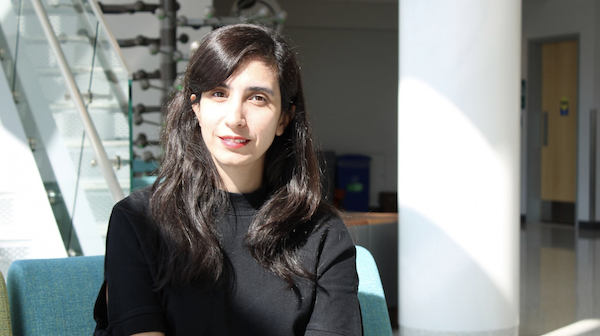
Assistant Professor of Pharmaceutical Sciences Azadeh Nasuhidehnavi studies how infections and immune responses may accelerate aging. Her research investigates the biological mechanisms behind age-related diseases, specifically how long-term inflammation and repeated infections could contribute to the earlier onset of conditions typically associated with aging. As part of her ongoing work, Nasuhidehnavi focuses on identifying specific cellular processes that deepen scientists’ understanding of how infection-driven inflammation may affect aging pathways, offering guidance for future strategies to promote healthier lifespans.
Siyuan Rao – engineering methods to treat spinal cord injuries
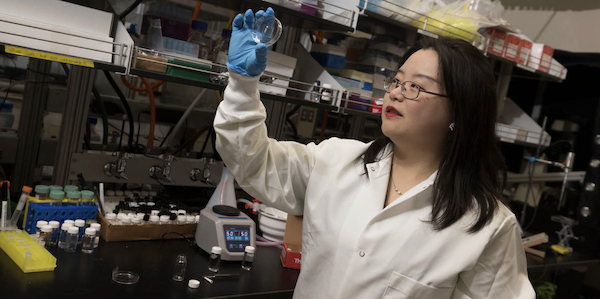
Siyuan Rao, an assistant professor in the Watson College of Engineering and Applied Science, focuses her research on spinal cord injuries and how the nervous system recovers after trauma. Her work combines engineering and neuroscience to reveal how neural connections rebuild and how this knowledge can lead to more effective rehabilitation strategies. In 2025, Rao secured more than $870,000 in grant funding to support her investigations – an investment that’s accelerating her team’s efforts to improve outcomes for patients living with neural injuries.
Lina Begdache – Making a connection between food, sleep and mood
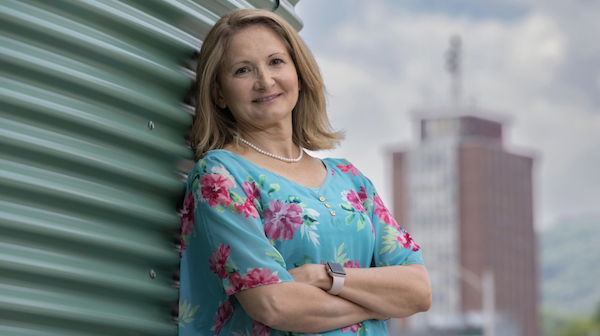
As an associate professor in Decker College’s Division of Health and Wellness Studies, Lina Begdache, PhD ’08 studies the relationship between nutrition, brain health and mental well-being. She was honored by Sigma Xi for her research service, recognizing her contributions to understanding how diet may influence cognitive and emotional health across the lifespan. Begdache’s work explores how what we eat can affect mood, thinking and overall mental wellness, bringing nutritional science into conversations about health in everyday life.
Flora Sun – Tracing how media influences financial markets
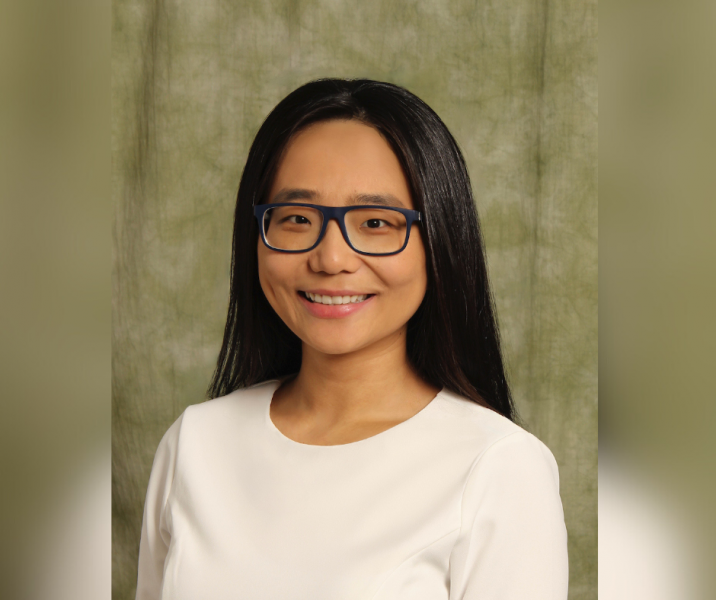
A researcher in the School of Management, Flora Sun studies financial markets and investor behavior with a focus on how shared information influences decision-making. Her recent work looks at how common media content – including financial news and social channels – can sway investor reactions and market movements, revealing the significant role communication plays in economic outcomes. By exploring how people respond to different kinds of financial information in a digital world, Sun’s research helps explain why markets sometimes move the way they do.
Sung-Joo Lim – exploring how our brains process attention and memory
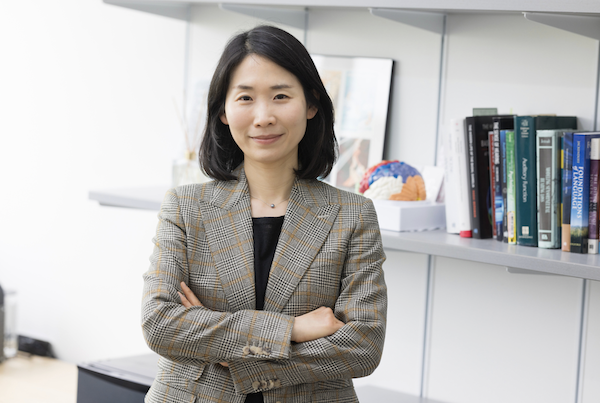
A psychologist at Harpur College of Arts and Sciences, Sung-Joo Lim studies the cognitive processes that shape human behavior and how the brain makes sense of information. Lim is a recipient of the National Science Foundation CAREER Award, a prestigious honor that supports early-career researchers and underscores the impact of her work. Her research deepens scientists’ understanding of attention, perception and memory, with implications for mental health, learning and everyday cognition.
Emma Young works for the Office of Media and Public Relations as a digital content producer and is a senior majoring in English with a minor in education. She is interested in pursuing a career in public relations. In her free time, she enjoys baking, reading and writing.
Have questions, comments or concerns about the blog? Email us at social@binghamton.edu.