Binghamton University PharmD students participate in a drug take-back
Students help to properly dispose of expired medications
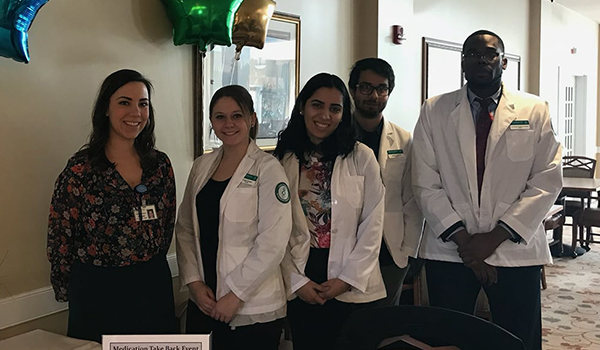
School of Pharmacy and Pharmaceutical Sciences students recently participated in a drug take-back event coordinated by Postgraduate Year Two (PGY-2) Geriatric Pharmacy Resident Elizabeth Feldman at Good Shepherd Village at Endwell, when individuals could bring back any of their unnecessary or expired medications.
“By collecting these medications, we were able to ensure that these drugs did not fall into the wrong hands or get dumped or flushed in a way that could potentially contaminate local water sources,” said Caitlyn Brown, a PharmD student.
According to the FDA, if no drug take-back events are available, an individual can still safely dispose of medications at home by mixing them (uncrushed) with an unpalatable substance (e.g. dirt, kitty litter), placing the mixture in a container such as a plastic bag, throwing it in a household trash can and scratching out any personal information remaining on empty bottles before throwing them away (Center for Drug Evaluation and Research).
“Ensuring that medications are properly disposed of is a key factor in decreasing drug abuse, keeping medications away from children, avoiding medication mix-ups and preventing contamination,” said PharmD student Helen Benjamin. “That’s why proper disposal of medications and events like this drug take-back are easy ways to play a part in potentially saving lives.”
New York Substance Abuse Statistics cite rising costs for medications as well: “In 2013, U.S. healthcare costs associated with the use of prescription opioid drugs exceeded $26 billion,” and this number continues to increase annually. The Washington Poison Center states that about half of its 37,000 phone calls concern young children who have ingested medicines found at home.
“As current pharmacy students at SOPPS, it was our task to evaluate the drug labels brought in and to record information including drug names, expiration dates and drug classes for each,” said Umar Ahmed, another PharmD student participant. “Once the take-back ended, we identified that the most common types of medications brought in were blood pressure medications, cold and allergy medications, pain medications, blood thinners and antibiotics. The most common expiration year was 2018, with 2017 as the next most common.”
“Careful evaluation of the information we obtained throughout this event can help us in gaining a better understanding of the common disease states in a special population community,” said PharmD student Lambert Egbuchulam. “And the drug take-back was a success because everyone who brought medications in was taking a positive step toward preventing prescription drug misuse and abuse.