Emergency in the Classroom
Three students in the public administration program often remain after their evening class to walk out with their instructor. One night, the decision to stay behind put their training in emergency preparedness to an unexpected test.
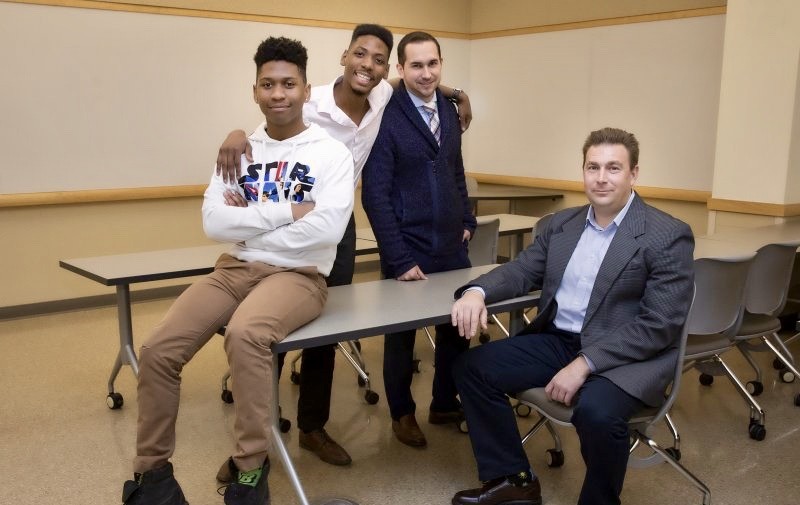
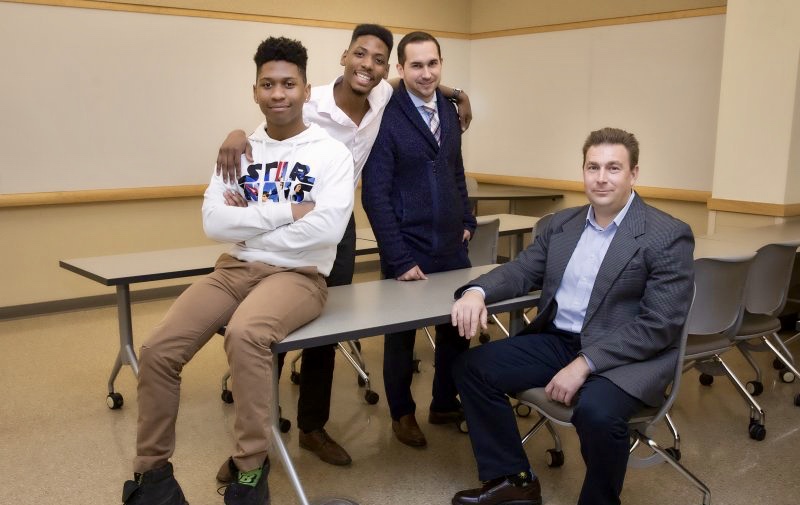
Aleksey Tikhomirov, a visiting assistant professor of public administration at the College of Community and Public Affairs, arranged for emergency preparedness training for master’s students in his Organizational Theory class in spring 2018.
This included certification in cardiopulmonary resuscitation (CPR), and Stephen Baumgarten, a student in that class, was one of the instructors.
“Responding to unexpected emergency situations in a composed, effective fashion is an essential ability for public administrators,” Tikhomirov says.
Fast forward to fall 2018. It was after 9 p.m. on a typical Tuesday. A three-hour public administration class had been dismissed, and only three students remained in the classroom.
Suddenly, things were no longer typical. The instructor, Tikhomirov, had collapsed. As one student called 911, the other two helped Tikhomirov into a chair, holding the semiconscious professor upright until Harpur’s Ferry, the student-run ambulance service, arrived.
Baumgarten was the emergency responder.
Because Tikhomirov quickly regained consciousness, CPR was not needed, although all students present were qualified to provide it.
Responding calmly and purposefully is second nature to Franklin Richards, one of the three students. Richards, whose mother is a nurse, is a resident assistant (RA) and trained to deal with the unexpected. Richards credits his RA training for kicking him into “I need to do something” mode,” when fellow student Jason Dearin first alerted him of the situation.
Dearin, who says he was a first responder to the terrorist attacks on 9/11, said, “It was not by chance the three of us (himself, Richards and Senegal Mabry) were still there after class ended. We were there because of Aleksey, because of his teaching style, because of how he treats us … we wanted to be there.”
“Any other class, any other instructor, and that classroom would have been empty,” Dearin says. “This happened after 9 p.m. in a remote classroom. If the professor had been alone, things could have taken a very different turn.”
Mabry had sensed Tikhomirov’s health was off that night. “Senegal was the only one brave enough to come right out and ask the professor if everything was OK,” Dearin says.
The lack of a clear response from Tikhomirov added to their unease. At the same time, it was difficult, as students, to know how to proceed with their growing concern.
It was Mabry who held Tikhomirov upright in his chair in the moments before the ambulance arrived, with support from Richards and Dearin after the 911 call was placed and building security alerted. “I was concerned about the professor sliding from the chair to the floor,” Mabry says.
In the end, the incident was attributed to a bad cold, lack of sleep and dehydration; a perfect storm from which Tikhomirov has since fully recovered.
All three students are quick to give credit to the other, but Tikhomirov sees a team. “The level of composure, teamwork and potentially lifesaving actions of these three students combined was remarkable,” he says, “especially given the unexpected and serious nature of what transpired, circumstances when it is very easy to slide into panic.”
Tikhomirov suspects the trio are still keeping a watchful eye on him, something he appears to both regret — and appreciate