Team of Binghamton engineering students finishes third in international competition
Group took on 27 teams in Hong Kong medical engineering contest
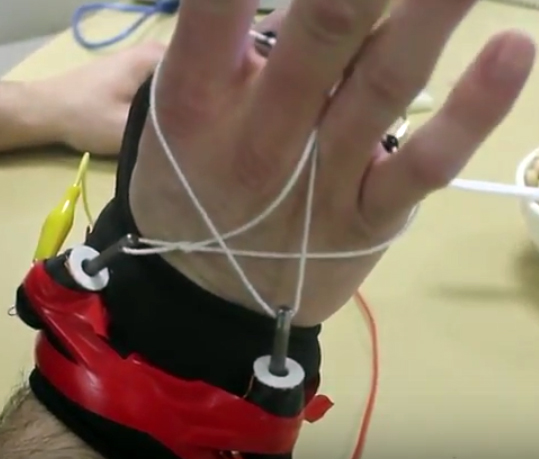
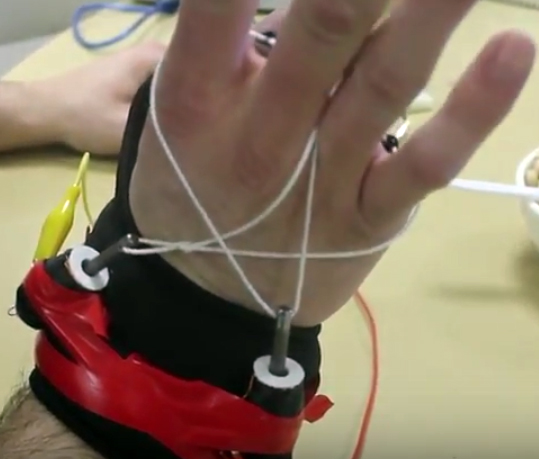
A group of eight Binghamton University students developed a glove that may help people dealing with tremors caused by Parkinson’s disease.
The Binghamton team presented the prototype and findings at the Engineering Medical Innovation Global Competition (EMedic Global) in Hong Kong in mid-August and finished third of 27 international teams.
The Thomas J. Watson School of Engineering and Applied Science and Office of Entrepreneurship and Innovation Partnerships sponsored the team.
The EMedic Global competition featured clinically driven and client-centered engineering innovations in medicine, according to the competition’s official website. Finalists were from across the United States, United Kingdom, Canada, China, South Korea, Taiwan, Saudi Arabia, Switzerland, Singapore and Hong Kong.
“I received an email saying that the results would be delayed and we were worried the delay was due to the high amount of submissions which meant we had no chance,” said team co-lead Amanda Lau about how the team got into the competition. Lau is a senior biomedical engineering major. “A week later I got an email that said, ‘Dear Amanda, Congratulations - your team…’ I've never been so happy.”
The rest of the team includes biomedical engineering seniors Sophia Fu (the other team co-lead), Jason Yumin Wu, Nathaniel Fisher, Bar Stern, along with biomedical engineering Class of 2016 graduates Alise Hiu Ching Au, Luke Lombardi, and computer science sophomore Steven Mitchell.
Work on the project started in October and teams were selected for the finals based on the project’s clinical need, novelty, technical merit, a demonstration of technical feasibility, clinical feasibility and translational readiness, intellectual property potential and a business model including regulatory issues.
The glove itself dampens a Parkinson’s tremor with a circuit designed to detect when the hand is moving at frequencies between 4-6 Hertz. That circuit then powers an electromagnet with a controlled magnetic field, called a solenoid, to create an equal and opposing tremor force. The two forces cancel each other out.
“We believe our method is more effective than other current devices to treat Parkinson's tremors because it is very cost effective to make,” Lau said. “For people with Parkinson's, this glove would help them to perform daily activities, like holding a mug to drink coffee or a knife to cut food, more possible. It will make them feel as if they have returned to their Parkinson's free days.”
The final competition included poster presentations and device demonstrations.
The competition was organized by The Chinese University of Hong Kong Chow Yuk Ho Technology Centre for Innovative Medicine. The CUHK Biomedical Engineering Programme & Graduate Division and Hong Kong Science & Technology Parks Corporation are co-organizers.
The Hong Kong Institution of Engineers – Biomedical Division, International Federation of Medical and Biological Engineering, and World Association for Chinese Biomedical Engineers are all sponsors of the event.
The group plans to continue working on the glove project with the help of a group of retired General Electric engineers in Wise Labs. Wise Labs has experience in research and development, product development, tech licensing, and commercialization.