Harpur student spotlight: Eliana Epstein
Sustainable communities graduate student gives back to those in need
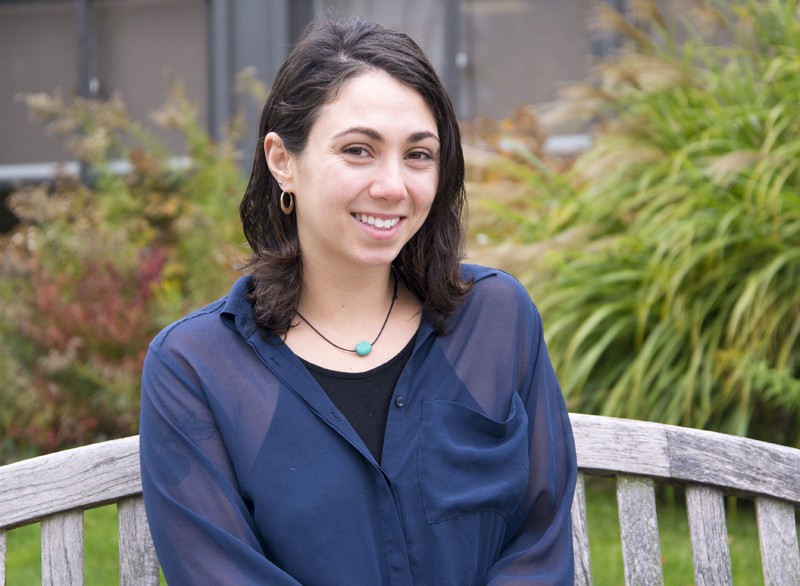
Eliana Epstein lives not only in the present, but with the future in mind.
“Sustainability, to me, is building a lifestyle that can continue to be maintained in the future,” Epstein said. “For example, not being super into fast-fashion or a general consumerist lifestyle and knowing where food is coming from. I try to support a lifestyle my grandchildren can have, too.”
Epstein, a Westchester County native, is in the sustainable communities graduate program at Binghamton University, and sustaining the world we live in is of utmost importance to her.
Along with her studies, Epstein is the director of Binghamton Food Rescue, an organization that collects surplus fruits and vegetables from local farmers markets and redistributes them to community centers and meal programs within the city.
“On Saturdays, we go to Lee Barta Community Center, and we have this awesome cart that rolls out with all these vegetables in it,” Epstein said. “We target the north side [of Binghamton] because that’s the biggest food desert in the area.”
A food desert is an area that lacks access to affordable, nutritious foods. Epstein has found meaning in distributing healthy foods in fun ways to local communities that need it most.
“I like a lot of little things,” Epstein said. “I enjoy when people come back to food rescue the week after and they’re like, ‘I could never get my kids to eat carrots!’ but they tried a recipe for a soup we had talked about and their kids finally enjoyed it. And they got it all for free. That’s so special. The community comes together, and we are making their homes a better place.”
In terms of her own lifestyle, Epstein eats a locally-sourced vegetarian diet, gardens and loves to crochet. When she isn’t working part time at Robby’s Produce stand in Vestal, studying or providing food to local communities, she runs her own Etsy shop where she sells handmade items.
“I’ve been crocheting for a few years, but I’ve been knitting since I was 6,” Epstein said. “I used to buy all my yarn from Michael’s and I realized that was so against my beliefs. I don’t buy any new clothing − only used − so why would I buy yarn that’s essentially plastic? Now I try to make sure my materials are biodegradable, organic or upcycled.”
There are many directions that Epstein could go in her future endeavors, and she’s now trying to find out which one suits her best.
“I know what I like, I know how I enjoy spending my time, I know the kind of people I like talking to, but I don’t necessarily know how I can make my passions lucrative,” Epstein said. “Being a farmer is cool, but I don’t want to just make food. I want to have a socioeconomic impact as well.”
Dedicated to sustaining communities, Epstein wants to do it in a way that is educational, fun and interactive. She hopes to provide for the community while also being a part of it.
“I could see myself having some sort of teaching farm, or being a sustainability coordinator at a university,” Epstein said. “One goal I have for my future is to build some sort of community space where people can come and learn about food and art in an environmentally-focused way.”
Epstein spent her undergraduate years at Binghamton University, as well. She designed her own major that focused on sustainable development planning, and she said her professors have played a major role in her current path.
“I feel connected to this area and the Environmental Studies Department. There are a lot of things that keep me here,” Epstein said. “The professors I have had here are amazing. I was at (Richard) Andrus’ retirement party recently and was surrounded by so many community-minded intellectuals. It was an awesome feeling to know so many people here have done so much good.”
Of the many professors that Epstein built a connection with, she said Andrus is the one that pushed environmentalism in her heart and taught her to see sustainability in a different way.
Her experiences at Binghamton University and the network she has cultivated have shaped her personal beliefs and instilled a mindset that she will always carry with her.
“I try to be mindful of everything,” Epstein said. “I try to do or have everything be intentional. Art that is in my house is there because someone I love gave it to me or someone I love made it for me. Food that I eat is because I grew it, or I know where it’s coming from. Everything is intentional.”