Binghamton University offers Master of Science in Human Rights
Program is first of its kind in the SUNY system
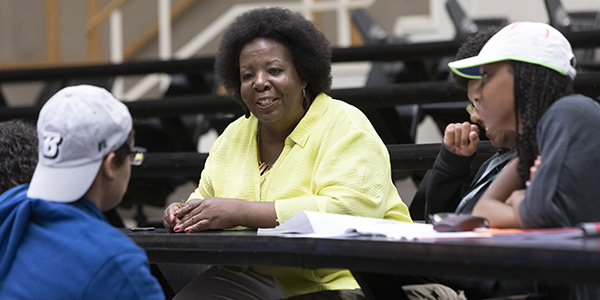
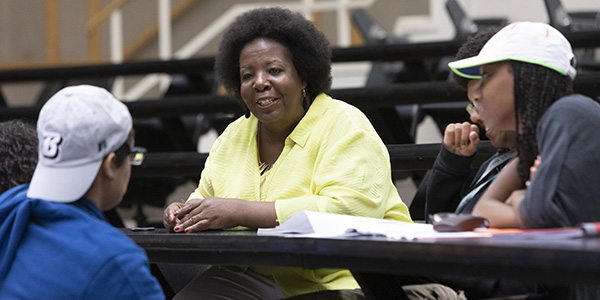
Binghamton University is offering a new graduate degree program, the Master of Science in Human Rights. The program is the first of its kind in the State University of New York (SUNY) system.
The Master of Science in Human Rights will prepare graduates to work in an array of human rights fields, from local community organizing to international advocacy, and will offer an affordable alternative to programs abroad or at private institutions. In addition to rigorous theoretical training, the program emphasizes practical training as a pathway to meaningful human rights careers.
“Bringing together the theoretical foundation and practical approaches to human rights is an exciting aspect of the program,” said Denise Yull, associate professor and chair of the Department of Human Development. “We envision a program that offers a strong commitment to research and practice that embodies social justice and community activism focused on human rights. “
Graduate programs in human rights are few in number in the United States, particularly those offered through public universities. “We were really surprised to find out that there was no program on social justice and human rights in the entire SUNY system,” said Lubna Chaudhry, associate professor of human development.
Among those existing programs, Binghamton University’s new master’s offers a unique approach to the study of human rights. “What made our program stand out from all other programs on the East Coast, and even other parts of the country, in human rights is that it has a grassroots, community-based orientation,” Chaudhry said.
Suzy Lee, MS in human rights program director and assistant professor of human development at Binghamton, said the program stemmed from a growing emphasis on the need for preparing the next generation of human rights practitioners and scholars working at local, national and international levels.
“A few years ago, momentum began to build for the Binghamton University campus to become a major center for human rights,” said Lee. “A number of human rights-oriented research and teaching initiatives were in development. A graduate degree in human rights provided a necessary component of this innovative work initiative, and the human development faculty spearheaded the drive to create one.”
The program has been in development for three years and is currently admitting students on a rolling basis. It will offer professional training for interdisciplinary applied research and practice in human rights with a focus on community-level engagement. The degree requires nine courses consisting of classes in core human rights and community action, research methods, a practicum course and a capstone project. These studies are designed to help students understand the theoretical foundations of the international human rights regime, human rights-oriented research methods and community-based practice.
“The program will not offer specific concentrations, though we expect students to specialize in their own research based on their required course work, electives and field placements,” said Lee. “We offer two different tracks − academic or applied − to accommodate students’ varied career goals.”
“[Binghamton] has such a strong social justice orientation. This is a great way to utilize the expertise of our faculty,” said Chaudhry. “There are lots of people at Binghamton who are interested in human rights and who teach courses on human rights, so Binghamton is really ready to offer this program.”
“Within 10 years, we see this program graduating 30-40 students each year, and sending those students on to jobs in major human rights institutions, as organizers in local communities, as well as to further their graduate studies in law or related fields,” said Lee. “You will be hearing about our students in the news for the exceptional human rights work they are doing in the world.”