How students are learning to be better upstanders
How students are learning to be better upstanders
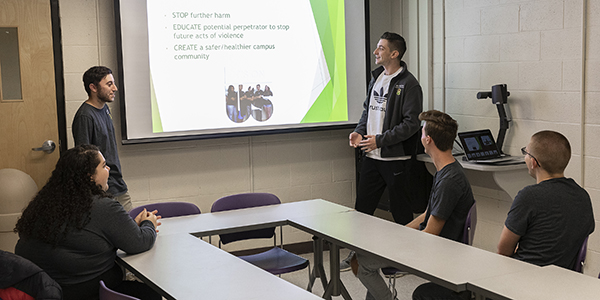
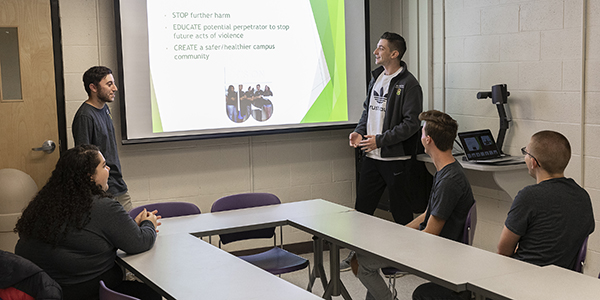
Binghamton University students are learning how to be better upstanders in our community through different bystander intervention training programs offered by both Binghamton University’s 20:1 intervention programs and the Crime Victims Assistance Center (CVAC).
“Every single person is a bystander at some point in their lives,” said Jennifer Spencer, education and outreach supervisor for the Crime Victims Assistance Center. “Everyone has been in or witnessed a situation where they had a choice whether or not to step in and do the right thing. The difference between being a bystander and being an upstander is making that decision to intervene and help someone in need.”
Bystander intervention training is available to all students and student groups through the 20:1 Sexual Assault Prevention and 20:1 Bystander Intervention programs at Binghamton University.
“We have four bystander intervention programs,” said Dara Raboy-Picciano, coordinator of the 20:1 programs at Binghamton. “Our main program teaches students how to recognize certain situations that could be problematic, and then offers different options for intervening. We talk about direct intervention, either with the perpetrator or the person being harmed. We also talk about third-party intervention, whether that’s with a bouncer or an RA or the police. Then we also talk about distracting.”
She said the main program focuses on different types of interpersonal violence, such as sexual assault, domestic violence, hazing, hate crimes and bullying. This past year, the program was rewritten to have a bigger focus on dating violence. In addition, 20:1 offers two other bystander intervention programs, both created by the One Love Foundation: the Escalation Workshop, which explores the escalation of relationship violence, and Behind the Post, a program that seeks to help students identify healthy versus unhealthy relationships.
Students not only receive this important training, but also have the opportunity to become trainers for 20:1 through an internship program.
“The main thing that interested me in becoming a trainer for bystander intervention with the 20:1 internship program was the unique experience to receive a more nuanced education about how to be a good bystander, along with the opportunity to spread this information across the Binghamton student body,” said Gina Parisi, student trainer for 20:1’s bystander intervention programs.
She said that teaching students the importance of what it means to be good bystanders and how to intervene when the occasion calls for it has a lasting impact on the community’s safety.
“Almost every student on campus receives some form of this training, whether it be during freshman or transfer orientation, as part of a Greek organization, as a part of an athletics team or even just attending a tabling event,” said Parisi.
However, Parisi believes that students should strive to receive the training more than once during their college years. “I think it is incredibly beneficial to receive the bystander intervention training more than once and in different contexts. The program can be received differently by a first-semester freshman than by a senior who is part of a Greek organization.”
While these programs stress the importance of being a better upstander, safety should always come first. “We very much emphasize safety,” said Raboy-Picciano. “Don’t intervene directly if your safety is in jeopardy—that’s when you get a third party.”
20:1 isn’t the only organization inspiring students to adapt better upstanding behaviors in our community. CVAC offers similar bystander intervention training specifically tailored to college students, involving the discussion of scenarios relevant to what they might encounter and strategies for safe intervention.
“We will cover bystander intervention options and offer a chance to apply the material to practice scenarios relevant to college students,” said Spencer.
No matter which program students get involved with, the overarching takeaway message is that they have options for intervening, whether that’s through a direct action or contacting someone in a position of authority for help.
“Remember: One person can’t do everything, but everyone can do something,” said Spencer. “By intervening in a potentially harmful situation, you could be making a huge difference in another person’s life.”
Both 20:1 and CVAC offer free bystander intervention training for any student group or other campus entity. Any group interested in setting up a training session can contact 20to1@binghamton.edu for 20:1, or Haley Murphy at haley@cvac.us or Jennifer Spencer at jennifer@cvac.us for CVAC.