WISE is 30 years strong
Industries, students partner in research
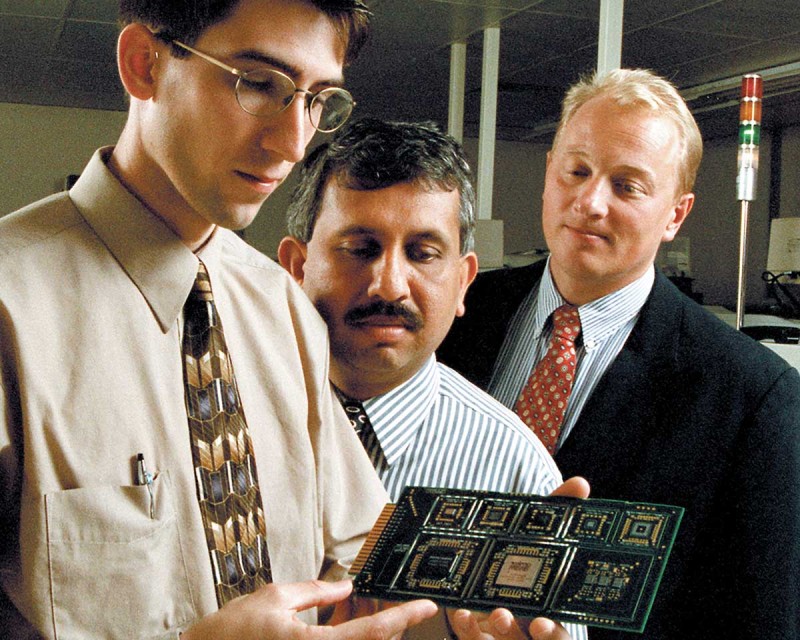
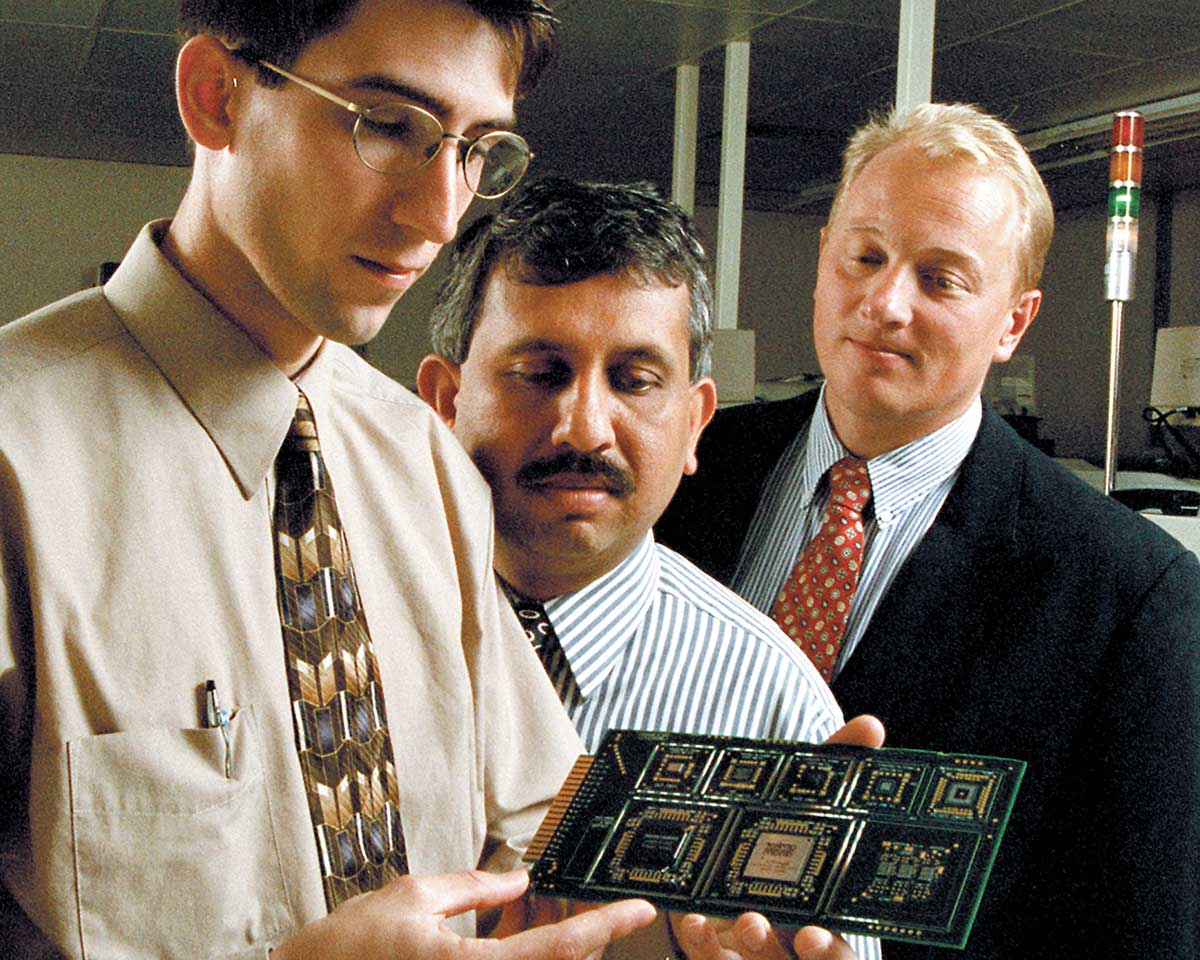
For nearly two decades, the program called itself the Electronics Manufacturing Research and Services group, but what began 30 years ago with one company sponsor and one student was the foundation for what now includes dozens of company sponsors, 84 graduate students, 10 faculty mentors, one research scientist, one research manager and the potential for more growth.
Renamed the Watson Institute for Systems Excellence (WISE) in 2007, the program places students with industry sponsors to conduct innovative research.
Among the most innovative programs in the country, as WISE celebrates its 30th anniversary it boasts well over 600 alumni in leadership positions in industry around the world.
The brainchild of Krishnaswami “Hari” Srihari, then a faculty member and now dean and distinguished professor of the Watson School, WISE did not follow the beaten path.
And one way it has taken a different path is to be fully self-supported through external funding, not relying on Binghamton University for funding. Since its inception, WISE has secured over $50 million in external, sponsored research (including $3 million in fiscal year 2018) and graduated over 600 master and doctoral students — never once missing student payroll.
“Our first sponsored project was in May 1989, with Universal Instruments,” says Srihari, who has served as WISE director since the program’s inception. “We then had a major event in January 1990 when we started working with industry in surface-mount technology.
“Thinking back, we had many different inflection points in our growth,” he says. “The first time was in 1991 when we achieved more than $50,000.”
The list of industry sponsors continued to grow, in part due to a conscious decision in 1997–98 to begin working with companies outside of the University’s geographic area — starting with Bay Networks in California, which became Nortel, then with other companies, including Sanmina.
Then came 2001, bringing a shaky stock market and the terrorist attacks of Sept. 11 — and Srihari’s blood pressure soared.
“We were completely supported by industry, which was struggling at that point,” Srihari says. “However, we didn’t lose any sponsors because we were bringing them value. They were laying off people to improve their value, but we were strategic in their plans.”
But Srihari saw the need to diversify, and healthcare was a logical choice. He says the idea came from Monice DeGennaro, his senior staff assistant. “Our first project was with [local healthcare provider] UHS in 2002 — graduate student Tejas Gandhi, now chief operating officer at Baystate Medical Center, and me, looking at the challenges nonurgent-care patients faced in the emergency room.”
After UHS came projects for Virtua Health, thanks, in part, to a graduate who went to work there. Today, WISE works with about a dozen healthcare institutions.
Healthcare is also the area of fastest growth within WISE, says Mohammad Khasawneh, professor and chair of systems science and industrial engineering, and WISE associate director. Srihari asked him to lead efforts in healthcare, but it took some convincing.
“Hari came to me and said, ‘My healthcare research is growing. Can you help?’” Khasawneh says. With a background in virtual reality research and no healthcare experience other than as a patient, Khasawneh was hesitant. “Hari said, ‘Read this paper and let’s talk in a week,’ and I thought, ‘This is fascinating.’
“I was used to theoretical research, and this was all applied,” Khasawneh says. “I could see how I could apply this in a real-life setting in an area that’s very rewarding. And the applied aspect is what sets WISE apart.”
Khasawneh was hooked. “To be part of this group is one of the best things that has ever happened to me. It’s amazing how strong this group is that started with one company and one student. If we had more resources we could grow to 100 students in no time.”
The Process
Everything WISE does supports the University’s Road Map, or strategic plan, Srihari says. In particular, WISE helps the University fulfill three priorities by:
- Engaging in path-breaking graduate education, research, scholarship and creative activities that shape the world
- Preparing students for advanced education, careers and purposeful living
- Enhancing the University’s economic, social and cultural impact from the local to the global level.
It starts with the industry sponsor’s requirements, Khasawneh says. “We ask them for a scope-of-work document, and they give us some parameters to work with. Faculty review the scope of work and determine who among us would be the most appropriate faculty member. Then we create a position description that we send out to our graduate students, targeting the discipline depending on the scope of work.”
The faculty screen the applications that come in and interview the finalists. “Based on the interview, we select résumés of those we believe can accomplish the project and send them to the sponsor,” Khasawneh says. “In some cases, we have the students complete a small test, apply some analytics or test an algorithm. It truly depends on the scope.
“We match very carefully because our reputation is at stake, and we don’t want to be unfair to the student,” Khasawneh says.
The WISE Way
WISE has developed its own culture over 30 years. “We take no shortcuts. We tell the students what we expect: “If, in any month, you work harder than any one of us, please complain. Otherwise, don’t,” says Srihari, who admits the WISE faculty are an unorthodox group, even holding hours-long weekly meetings early in the morning on Saturdays and Sundays to stay on top of every project.
But the support the students receive is also unprecedented.
“Yes, we expect a lot, but for our students, we will do a lot. Nothing is out of our purview, from hospital visits to fixing cars to how do you open up a bank account to what do you have for breakfast; we are there,” Srihari says.
No one knows this better than Christopher Greene, MS ’98, PhD ’01, assistant professor of systems science and industrial engineering. He was once a WISE student.
“Dr. Hari took a student aimlessly taking master’s classes, and here I am,” Greene says.
His biggest takeaway as a student? The foundation provided by WISE. “Dr. Hari helped me with prioritization, tasks and commitment. He and WISE provided the structure I might otherwise not have on my own and that continues to help me achieve my self-goals.”
And as a WISE faculty member? Greene says it remains the commitment. “If you ask me if I would prefer to be speaking with Dr. Hari at 6:30 a.m. or watching TV, I would say talking to Dr. Hari because I’m being productive, and it’s good for my career.”