Human development professor to address structural inequality in two major appointments
Leo Wilton to serve on APA task force and NIH study section
“Oppressed people, whatever their level of formal education, have the ability to understand and interpret the world around them, to see the world for what it is, and move to transform it.”
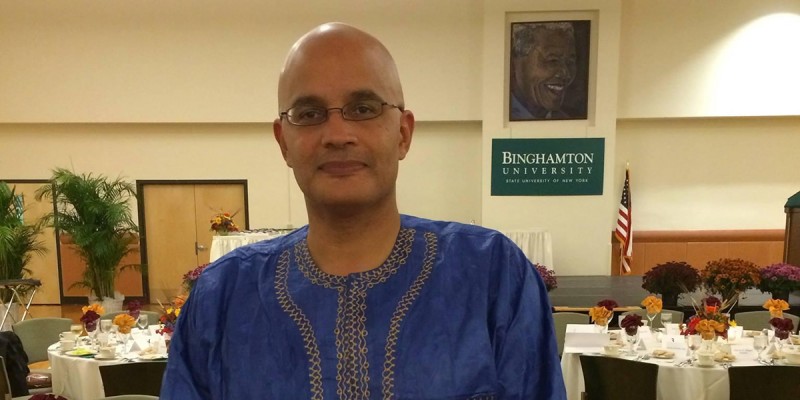
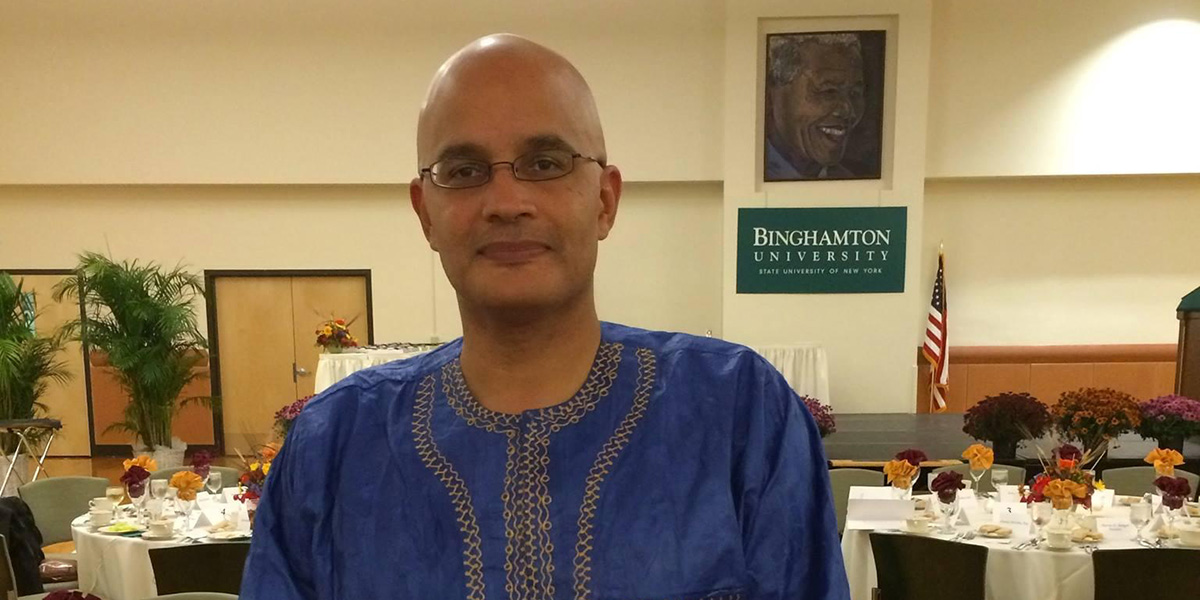
Leo Wilton, professor of human development in the College of Community and Public Affairs at Binghamton University, has found these words, spoken by civil rights activist Ella Baker, to be the cornerstone of his research, which aims to address structural inequalities and develop culturally informed systems of care in Black communities.
Wilton’s scientific research and policy contributions to the field of psychology have had an impact on the profession at both the national and international levels. They also have recently earned him two recent appointments: one to the American Psychological Association (APA) Presidential Task Force on Psychology and Health Equity, and the second to the National Institutes of Health HIV/AIDS Intra- and Inter-personal Determinants and Behavioral Interventions (HIBI) Study Section at the Center for Scientific Review.
“It is an honor to serve in these roles and participate in addressing structural inequalities that will inform key advancements in research, policy and prevention,” Wilton said.
In his role with the APA, Wilton will work collaboratively on the task force to develop a comprehensive report articulating a vision for the role of psychology in advancing health equity, with specific recommendations in the areas of psychological science, education and training, psychological practice, public policy and legislative advocacy. As part of the process of developing its recommendations, the task force will work on an APA Virtual Summit on Health Equity as well as work to make policy recommendations for the APA for addressing health equity.
Wilton has a great deal of experience shaping policy at the national level. He was invited to the White House, under former President Barack Obama, as part of a select group of nationally recognized experts to participate in a research meeting that addressed the state of the HIV epidemic among Black men in the U.S. The objective of the research meeting was to develop awareness about the HIV epidemic pertaining to Black men in the U.S., critically examine government and community responses to the HIV epidemic, and promote dialogue among a variety of constituencies in Black communities.
Wilton’s responsibility as a member of the NIH Study Section on HIV/AIDS will include reviewing grant applications submitted to the NIH, making recommendations on these applications to the appropriate NIH national advisory council or board and surveying the status of research in their fields of science.
He has previously worked with NIH. He served on the Director’s Council of Public Representatives (COPR) and worked on issues related to the mission of the NIH, advising it on public perspectives of priorities for NIH activities and disseminating pertinent research-oriented information to the public.
Although the APA Presidential Task Force was founded this year and Wilton will not serve on the NIH Study Section until July, he has already made a significant impact in directly dismantling structural inequalities. While serving on a technical expert panel for the World Health Organization, he helped to provide ongoing guidance for the provision of HIV testing service delivery for community-based programs.
Wilton’s extensive knowledge of HIV/AIDS is detailed in his scholarly research, which focuses on the intersectionality of race, gender and sexuality, as situated in macro- and micro-level inequalities in Black communities, both nationally and internationally.
“My research engages the complexities of how socio-structural and -cultural contexts influence people’s development and well-being within African and African Diaspora communities, with specific implications for addressing social justice and human rights,” Wilton said. “In this context, the overall objective of my scholarly research has been to examine socio-structural and -cultural factors that provide the basis for the development of culturally congruent HIV prevention and care interventions in Black communities.”