Binghamton University employee takes leave to translate for refugee Afghan children
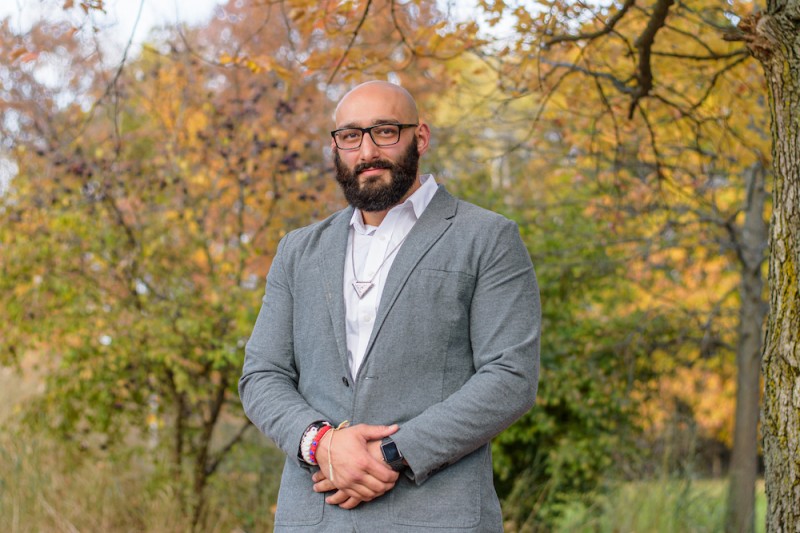
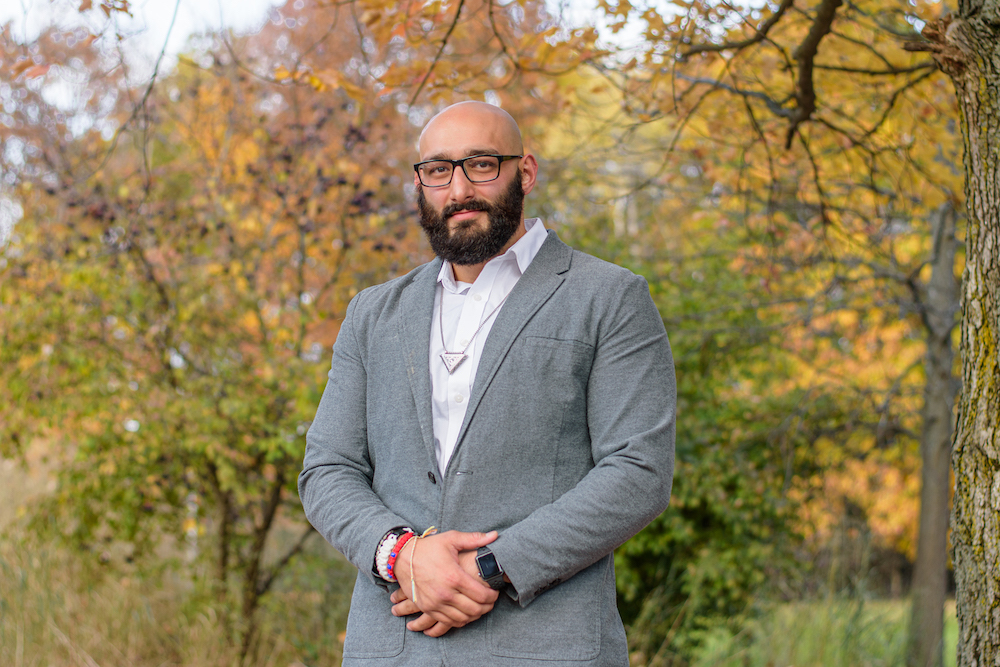
When the Taliban seized control of Afghanistan in August 2021, heartbreaking videos and news spread of people desperate to flee the country. It had been years since the extremist group was in power, but the capital, Kabul, fell and thousands of people made their way to the airport to try to get on one of the evacuation flights. Watching from his home in the United States, Amir Aslamkhan jumped into action.
A security services assistant for Binghamton University’s Police Department, Aslamkhan proactively searched for ways to donate, translate or guide refugees through their transition to a new country. He was eventually approached with an opportunity to translate for unaccompanied children at a shelter in Michigan. It was a no-brainer for him and he quickly arranged for a two-month unpaid leave from his job.
“It is one of those rare experiences where income doesn’t matter, location doesn’t matter, comfort doesn’t matter; it was something I was very passionate about,” Aslamkhan said. “My mother and my family were in very similar situations when they immigrated here during the Russian-Afghan war back in the eighties. So, it hit very close to home for me, and that’s why I looked for the best way possible to contribute.”
Binghamton University Chief of Police John Pelletier expressed his admiration for Aslamkhan’s selfless service and refusal to sit back while people are in need.
“Too many times we sit on our couch and see what’s going on out there and we look at it and we say ‘Man, somebody really needs to help,’” Pelletier said. “Amir doesn’t do that. Amir sees that and he says, ‘How can I help?’ And that’s what he did. He’s an amazing person and we support him 100%. We absolutely love having him work for us here at the University and the UPD.”
The shelter Aslamkhan worked at was repurposed by the Department of Health and Human Services into an emergency intake site for unaccompanied Afghan minors who are cared for until they can be placed with a sponsor.
Although Aslamkhan was born in Queens and moved to Binghamton at 16, his mother learned English after moving to America in 1990 and his grandparents never learned the language. He and his mother spoke Dari to communicate with them and relatives back in Afghanistan.
Because Dari is Afghanistan’s most prominent language, Aslamkhan was able to assist with every level of interpretation possible in Michigan, translating for lawyers, doctors and volunteers.
Many of the children he worked with asked him how they could learn English as fast as possible, what to major in at college and how to adjust to American communities. Aslamkhan was inspired by their optimism and aspirations.
“I think my biggest takeaway is the hopefulness of everybody,” Aslamkhan said. “And the way that people wanted to contribute to the societies that they’re going to integrate into.”
Despite the hopefulness of the refugees, they also expressed sadness and told many heartbreaking stories. News stories and social media posts exposed the horrors of the crisis, but Aslamkhan heard first-hand experiences from these Afghan children.
Overall, the experience was rewarding and eye-opening for Aslamkhan. He said his work helped him reconnect with his people, culture, language and religion, as there are not many Afghans in Binghamton.
“As much turmoil as there has been over the decades … it’s a strong, powerful country. I was reminded of how much these kids just want to grow up to be contributors in society. The conversations that I had, these are without a doubt the future doctors, medicine-makers, lawyers…”
Aslamkhan’s knowledge of American society, Afghanistan culture and Islam gave him the ability to bridge the gap between Western and Eastern culture for the refugees. Whether that was telling them about the best foods to eat, explaining the best ways to learn English or talking about school, he helped the children who hoped to integrate into America’s culture. His advice for the refugees was to remain hopeful and patient because services and assimilation take longer than expected.
There are services and ways to get education quickly, but Aslamkhan also has advice for Americans to help bridge the gap between cultures for refugees even if they do not know Dari.
“Try to help these people assimilate into this culture without being super harsh about it,” Aslamkhan said. “Keep an open mindset and open heart and approach these people gently. These were people who were going to cafés and restaurants, going to school, and then, within 48 hours, that was all gone. That would be like any of us going to a café or restaurant downtown, and then in 48 hours being told you have to stay home and your environment is war-torn.”
Despite the fear and confusion of being uprooted from their homes and relocated in an entirely new country, the refugees remained happy and positive. Aslamkhan smiled while discussing his interactions with the children. He hopes to continue his contribution and assist with mental health services for Afghanistan refugees, but for now he is left with the hopeful memories of his volunteer work.
“More than anything, the things I replay in my head are the laughs, the smiles and the optimism,” Aslamkhan said. “The way these people look forward to coming into the culture and going out on drives to explore the country.”