In the trees: Binghamton faculty to head research at Amazon site
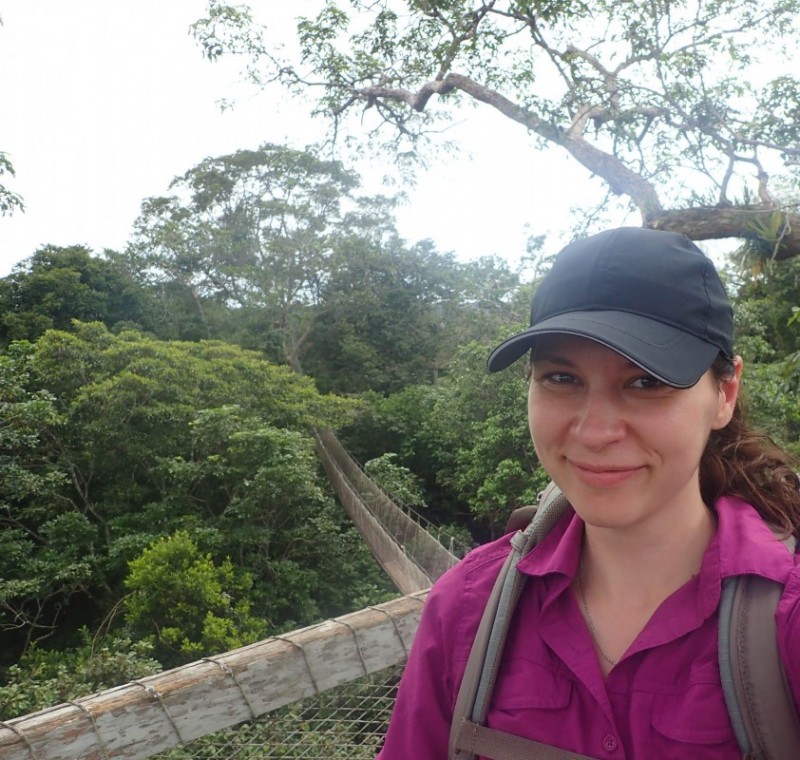
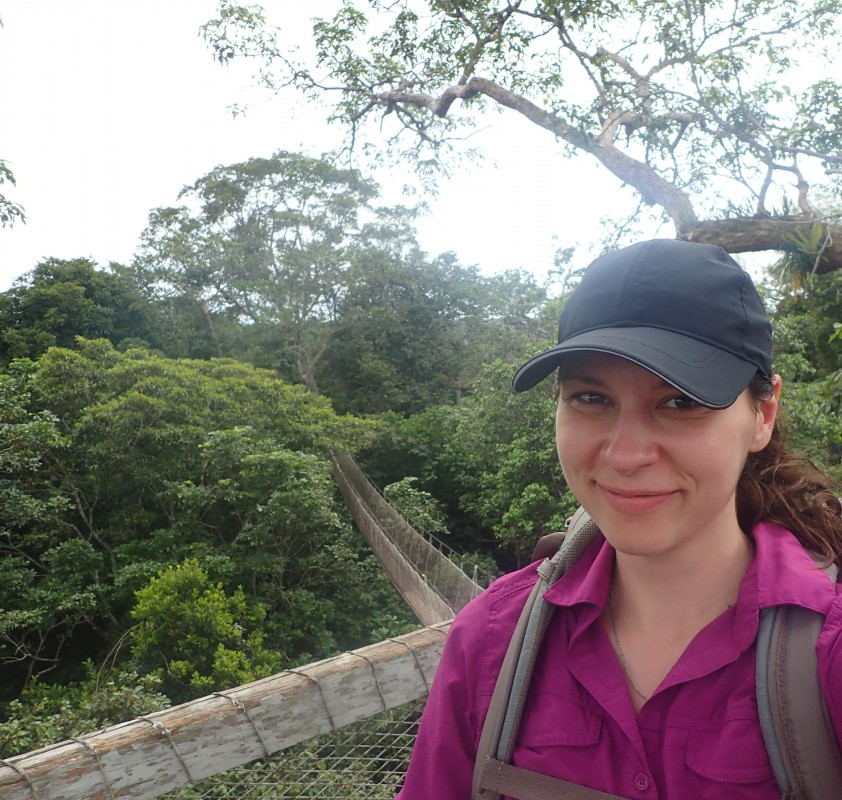
A walkway sways amid the treetops of the Peruvian rainforest, more than 100 feet off the ground in some places. Part of the Amazon Conservatory for Tropical Studies (ACTS), it’s one of the longest canopy walkways in the world and a valuable resource for scientists studying the often-inaccessible heights of the rainforest ecosystem.
With a biological reserve spanning more than 4,000 acres, ACTS’s Field Station has hosted rainforest research, conservation and climate monitoring for more than three decades, said Binghamton University Assistant Research Professor of Biological Sciences Lindsey Swierk, who recently became ACTS’ associate director of research.
The organization also has ties to the Native Amazonian community, the Maijuna, who maintain the adjacent conservation area; together, ACTS’s Napo-Sucusari Biological Reserve and the Maijuna reserve are larger than Yosemite National Park, Swierk said.
As associate director, Swierk will set up and continue the site’s long-term research projects, particularly in biodiversity monitoring. The walkway gives researchers the unique opportunity to monitor biodiversity at all levels of the forest, she said.
“I’ll also be supervising research at ACTS, recruiting faculty to lead classes here, interfacing with local Peruvian researchers and naturalists, helping to coordinate outreach, and facilitating research,” she said of the volunteer directorship.
Additionally, she also maintains a research database and research permissions. Long-term, she hopes to build another bridge to the canopy — this one connecting the rainforest to Binghamton.
“It’s my hope that my position here will allow Binghamton students to take better advantage of this fantastic site, connecting them with researchers, and possibly someday facilitating field courses at this site,” she said.