Jennifer Fiebert: Passing on good experiences to the next generation of pharmacists
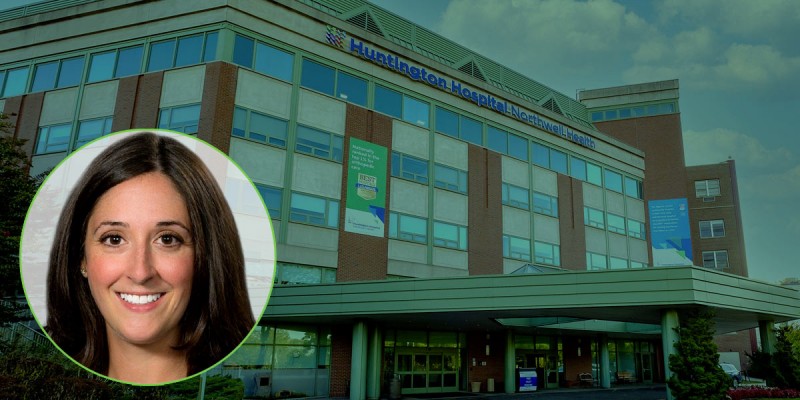
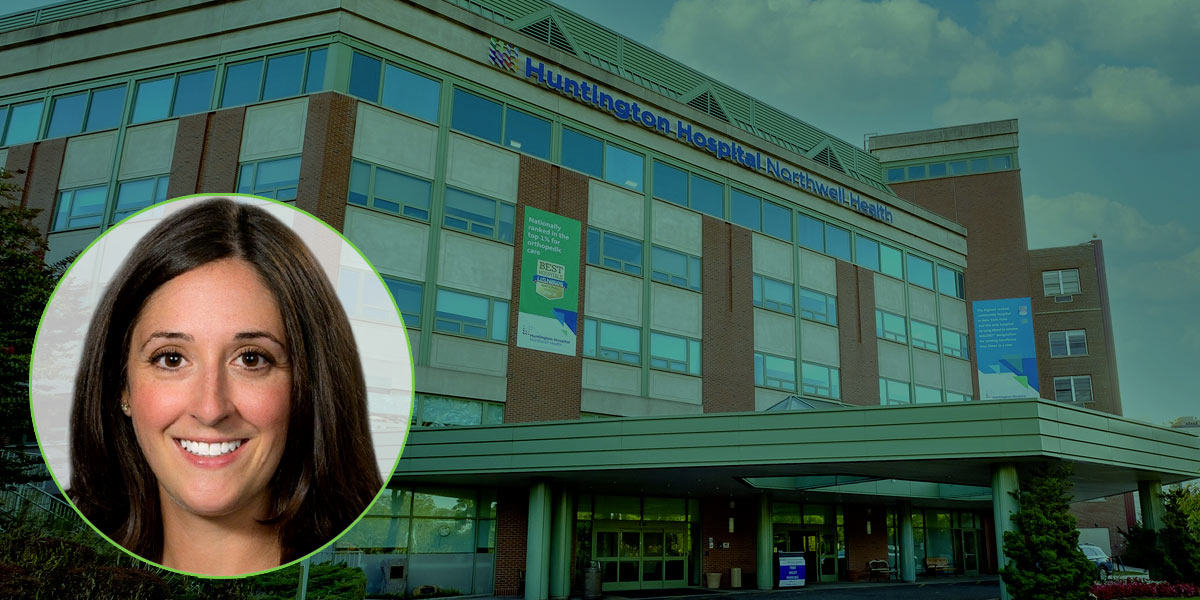
After eight years as a clinical pharmacy specialist with Northwell Health at Glen Cove Hospital, Jennifer Fiebert moved to Northwell Health’s Huntington Hospital, in Huntington, N.Y., where, for the past two years she has been pharmacy supervisor and PGY-1 residency program director. In her supervisory roles, she oversees the pharmacy clinical team, two PGY-1 residents and pharmacy interns. In her clinical role, she covers one of the hospital’s internal medicine units.
She starts her day doing triage.
“I have an open-door policy, so any team members who have anything that needs to be discussed can come in,” she said. “I also respond to emails and take care of any hot issues, and meet with my director of pharmacy and senior manager to make sure we cover anything that needs to be done for the day and we’re all on the same page.”
After that, Fiebert focuses on her patients, working them up before going to the floor and rounding. “I’ll do rounds in the morning and then triage how to spend the rest of my day,” she said. “If there are urgent patient-care issues I take care of them, and I try to dedicate a lot of time in the afternoon to working with the residents or completing supervisory or administrative duties. My afternoons are kind of a hybrid of everything.”
As a preceptor, Fiebert works mostly with APPE students, setting up the rotation to best meet the students’ expectations — and hers. Post-COVID, she has assigned students to different areas of the hospital, where they work with other preceptors as well. “Our model here is more of a co-precepting one within the acute-care setting, and we’ve gotten a lot of positive feedback.
“I meet with the students on their first day and get a sense of what experience they have coming into this site, what goals they might have and where they think they might want to practice at the end of their program,” Fiebert said. “I have a rough schedule set up in advance, but can customize it a little bit based on the students’ interests and what they want to see. We go over the syllabus and potential assignments and, based on that, I set the students up to see different inpatient areas of the hospital.”
Fiebert’s goal is to provide students with experiences that match their interests as much as possible, within the confines of the syllabus. “Some students are more interested in cardio, some students want to spend some time in the emergency room and some want to go on to a residency,” she said. “Others are more interested in medication safety, so we’ll help them all foster their interests within the acute-care setting.”
Ensuring the APPE students and residency interns all get a full learning experience is key for Fiebert, so she tries to take only one APPE student at a time. She’s seen improvements in the students over time as well. “I definitely see the changes from when I first started precepting,” she said. “The students are a lot more prepared than when we took our first wave of students.”
One student, in particular, was memorable for her. “Ashley was an IPPE student, so it was before I transitioned to Huntington. We met on the first day and she stood out from the group.”
At that time, Fiebert said, the students scheduled their own hours, taking responsibility for making sure their assignments were completed by the end of the semester. “We had met in January and I had made suggestions on how I thought it would be best structured and easiest for the students to complete their assignments,” she said. “They had the whole semester from January to May to figure out their assignments and scheduling … and then COVID hit in March. Ashley was the only student able to complete that rotation experience because she had completed so much ahead of time. She was so motivated on her breaks that she would do extra hours and volunteer for extra assignments. Our pharmacy staff was so impressed. She was such a motivated student.
“Having that motivated a student, everyone was able to stop and say, ‘Wow! She’s learning, but we’re learning, too.’ Everyone was extra willing to take the time to teach her. Especially after COVID when we couldn’t bring students on site, we were able to communicate with her and finish up her time and she was helpful and motivated throughout all of that.”
The pandemic changed Fiebert’s life as well.
“There were many challenges and from a clinical perspective, it was the first time no one really knew what the best treatment was,” she said. “Everything we were doing felt experimental at that point and it was difficult to manage clinically to stay on top of it from the little pieces of literature you would see and try to apply it to your patients.
“It was a different way of practicing because we’re used to teaching and working in the evidence-based medicine world and there was so little evidence at that time,” she said. “It brought a different perspective into how we were managing patients and then our workload as well; how to manage such an influx of patients with relatively minimal change of staff.”
Fiebert added that being on site in a hospital setting during the pandemic while trying to manage home, childcare and personal issues was definitely challenging. “Some people had the option to go remote, but people who are taking care of patients every day had to be on site every day and that added its own level of stress,” she said. “But some positive things have come out of it as well. A lot of remote work has been innovative. Within our health system, we’re doing a new initiative for tele-antimicrobial stewardship. COVID paved the way for some of these services, especially within the pharmacy world, to expand virtually.”
One point Fiebert now makes post-pandemic with students, as well as staff, is about when to call out sick. “Students often feel they need to have those hours signed off on and they’re very hesitant to call out sick,” she said. “I really stress now that we’re in a hospital setting and we have immunocompromised patients, so if you are ill at all, don’t worry about those hours, we’ll figure something out. That conversation is much easier in a post-COVID world.”
Another goal Fiebert has is to open students’ eyes to the continuum of pharmacy care. “I want to make sure from the acute-care setting, that this sometimes could be the students’ only real inpatient acute-care experience throughout their whole pharmacy career,” she said. “For anyone who is going into retail or pharma, this could be their only chance to see an acute-care setting. I want to make sure they walk away knowing the role of a pharmacist and gain the necessary basic clinical skills that allow them to function in a variety of settings.
“Even if they expect that they’re going to be in one area whether it’s retail or industry, things change and they’ll need that basic background and understanding to be able to function and be adaptable to change,” she said. “And we certainly have some clinical goals that we want to cover, so I know that when they leave my rotation they have a baseline level of competence in certain areas and in patient care.
“We pair students with what they’re interested in, but also try to open their eyes and say that these transitions of care are all connected,” she added. For example, for a student who goes into retail pharmacy for a career “to see, experience and have empathy for the other side of the coin for the patient who, when they present to your pharmacy to pick up 10 prescriptions that they were just discharged from the hospital with, that you understand what went on on the other side.
“And when you call to communicate or we call to communicate from the hospital, that having a sense of the workflow and needs can help facilitate all transitions of care in many different settings,” Fiebert added. “There’s such carry over to many different areas of pharmacy. I want to make sure they have that experience of pharmacy broadly no matter what.”
And for Fiebert, what the students learn can be brought down to a very basic — and personal — level: “If my family member ever encountered that person as a pharmacist, I want to feel comfortable letting them care for my family member,” she said. “So my ultimate goal as I approach it is that we’ve done our job giving them at least the minimal amount of teaching and experience and that they are competent with their skill set.”.
Fiebert noted that she was lucky when she was a student and a resident to have strong preceptors and good experiences. She wants the same for the students she precepts. “My motivation for wanting to see the students succeed and spending so much time precepting is that I want to make sure all of the future pharmacists also have the positive experience I had,” she said. “If you have one bad experience, you always say ‘I never want to do that to someone.’ Well, I never want to be the person who makes another person go through that. My motivation is to make sure everyone has a good experience and so I’m passing on that good experience I was given to the next generation of pharmacists.”