Seminar highlights participatory research areas to budding scholars
Doctoral students learn about participatory research
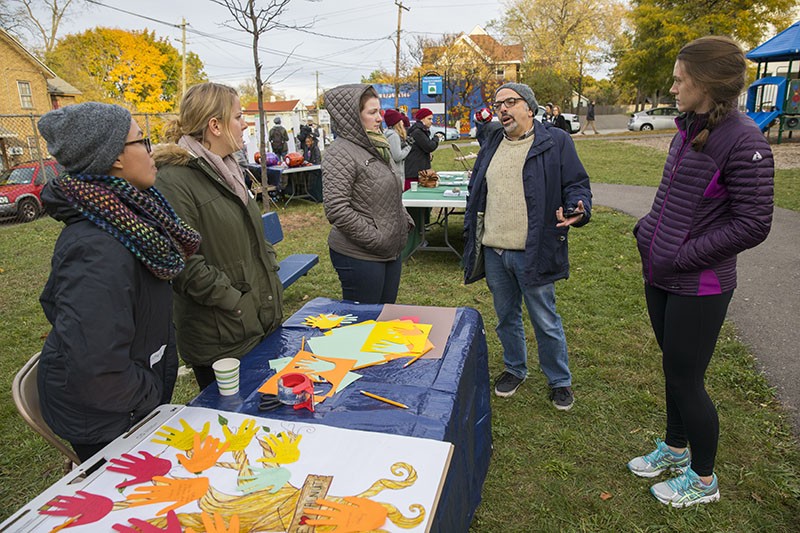
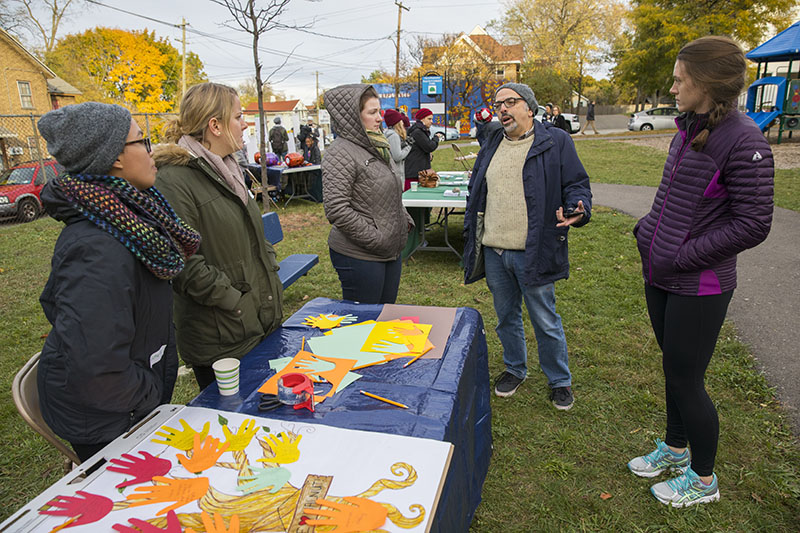
Students in the Doctoral Program in Community and Public Affairs learned about the participatory approach to research — which emphasizes scholarship through engagement and action communities — through an ongoing research colloquium designed to expose students to faculty members, and new opportunities for collaboration/mentorship.
Participatory research places an emphasis on being collaborative and context specific, meaning researchers are often focused on addressing the needs of a particular group and working with individuals directly to improve situations.
Faculty members work on participatory research projects across the globe in areas like community programs, asset-based development and heritage-focused assessment.
Myra Sabir, an assistant professor of human development, explained to students that she is a narrative physiologist who employs “life-writing” as a technique to therapy. More than three decades ago she was inspired by an “intrinsic need to make sense of my life by writing everything down.”
She spent several weeks “wet-writing,” which she dubbed for the rush of emotions she felt during the exercises, and went on to pursue advanced degrees in the field.
“Narrative psychologists believe that we are all born into a story in progress and that we will eventually leave a story in progress. All of the answers you are looking for are, ultimately, within yourself, which is why I felt like a better person after writing my life story,” said Sabir, who also conducts wet-writing workshops and has worked with groups including parents, grandparents, low-income and homeless individuals.
Lisa Blitz, an associate professor of social work, is working on a community-based participatory research project in Malawi, Africa. She explained the research project in Malawi, which has evolved into a University study-abroad experience, was born out of listening to the local villagers express their needs and inherent strengths.
“We employ an asset-based model to recognize the strengths of these people and the systems they have developed for the community in Malawi,” Blitz said. “The asset-based, community-development approach also shines a light on the positive aspects of communities and brings people together for a common goal.”
Professors do participatory research all over the world, as well as right in the backyard of Binghamton. George Homsy, assistant professor of public administration, highlighted the sustainability work he’s conducting in Binghamton’s West Side.
“We’re trying to understand what sustainability means at the local level, and how we can take the residents’ definitions of sustainability and enact new strategies for a more sustainable future,” said Homsy, who works with University master’s students to conduct interviews with residents on the neighborhood’s strengths, weaknesses and areas of aspirations.
“You can see the bones of a really strong community and there are real opportunities to improve the neighborhoods,” Homsy said. “We are taking what the residents have shared with us and turning it into a sustainable plan.”
Youjung Lee and Denise Yull, of the Social Work and Human Development Departments, shared with students their ongoing grandparent and parent assistance programs within local schools.
Doctoral students within CCPA work on participatory research projects in schools, college campuses and organizations to study issues such as disproportionalities in student discipline; local housing and community development; and evidence-based brief alcohol interventions with college students who drink heavily.