Double major: Senior says neuroscience and philosophy offer right balance
Francesca Varriano '24 plans a career in the medical field
Francesca Varriano ’24, who is double-majoring in philosophy and integrative neuroscience at Binghamton University’s Harpur College, is an example of how “the sky’s the limit” for aspiring students. Entering Binghamton University as a biochemistry major, Varriano had no idea of the possibilities that awaited her.
Varriano reflects fondly on her decision to double-major and points out how unique Binghamton is when it comes to pursuing a dual degree.
Asked what sparked her interest in philosophy, Varriano emphasizes its relationship to her medical aspirations.
“I think that philosophy really keeps you grounded in the human realm, and it’s important to think about the broader impact on humans when conducting research,” she said. “Philosophy helps with that part. It helps you imagine what impact your research will have.”
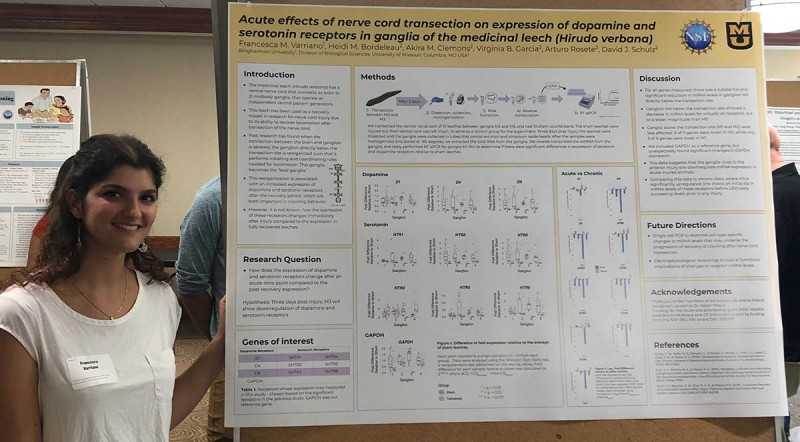
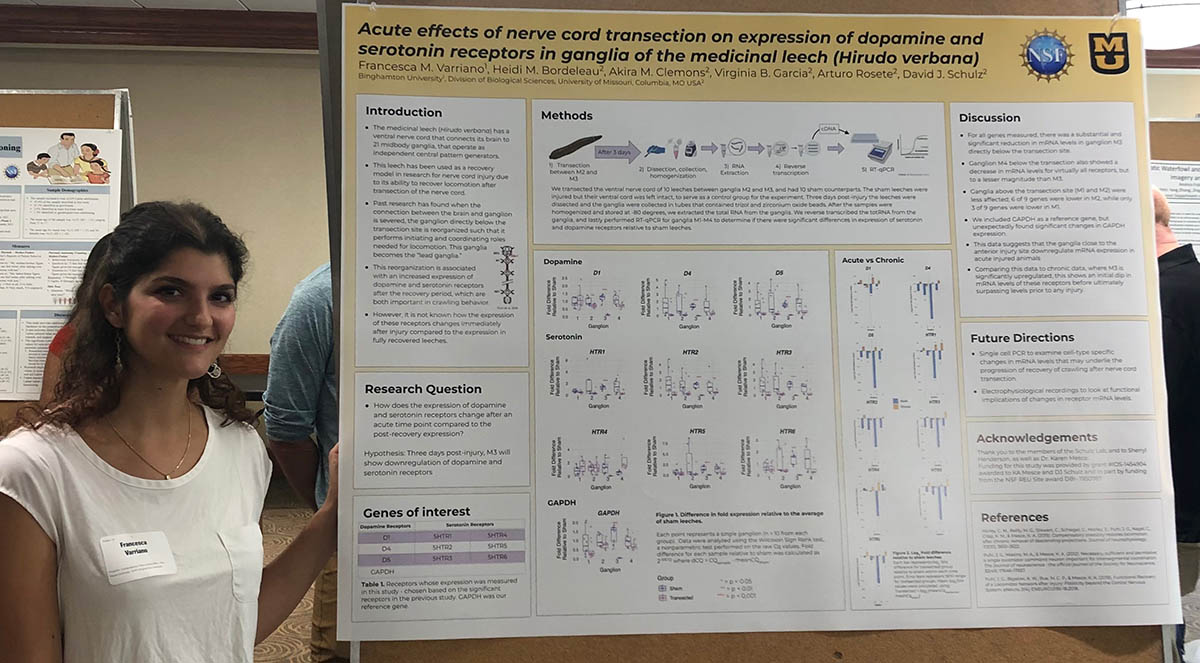
After joining the Research Experience for Undergraduates (REU) program sponsored by the National Science Foundation, Varriano spent 10 weeks working under Professor David Shultz in the University of Missouri’s molecular biology lab.
However, neuroscience is not the only area of study that Varriano shines in.
Varriano was accepted into the Pell Honors Program in philosophy for her senior year. Working on combining her research at the Mood Disorders Institute and her interest in philosophy for her thesis project, Varriano is dedicated to the pursuit of ethical medicine.
“I want to focus my thesis on mental illness in the moral realm,” she said. “In moral philosophy, mental illness has been considered an exemption from operating as a full moral agent and mentally ill people are not treated like fully autonomous humans. It’s really messed up.”
Varriano has set her sights on pursuing post-graduate research opportunities after she finishes her degrees in the spring.
“I’d really like to continue researching mental illness in graduate school,” she said. “I’m interested in the link between depression and empathy, and the combination of a philosophy and neuroscience education will be really helpful in that regard.”
Beyond the classroom, Varriano is an active member of the Binghamton student community. As treasurer of the Food Co-Op and braille transcriber for the Services for Students with Disabilities on campus, Varriano views getting involved in university life as an important part of her college experience.
“I’d really like for the Food Co-Op to be a space for everyone, and I started transcribing braille for SSD for the same reason,” she said. “There’s such an issue of accessibility with expensive braille textbooks, and it’s not fair. Working at the SSD office has helped me realize how to make things more accessible for people. It’s important for me to think about how I can apply that to my future work.”
“People treat college like it’s their job,” she said. “Obviously, you should work hard, but you also want to focus on becoming a better member of society in such a communal space.”
Having studied abroad in Italy the summer before her junior year, Varriano stresses the role university life can play in expanding your horizons outside of academia.
“It wasn’t related to anything I’ve been working on academically, but it was a fantastic experience,” she said. “I really felt like I grew a lot as an independent person, and I got to meet people from all over the world.”
As spring graduation draws nearer, Varriano has some words of advice for Binghamton students starting off on their academic journeys: “Don’t get in your own way. Don’t wait for the perfect version of yourself. Start doing the things you want to do, even if you’re scared or uncomfortable and anxious. You’re not going to regret the things that you do. You’re only going to regret the things that you don’t.”