Binghamton students amongst the first to receive statewide mental health scholarship
For scholarship recipients Daisy Calvario Velasco and Jeannette Guisao, school and career development are now fully in focus.
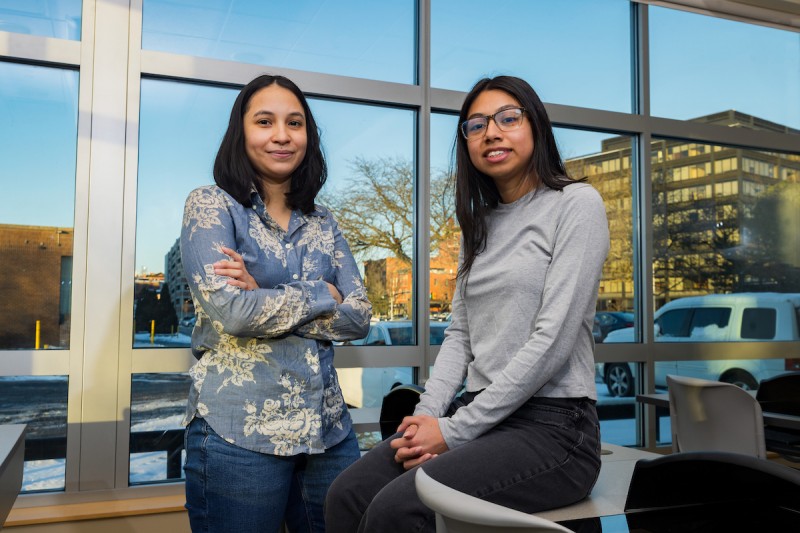
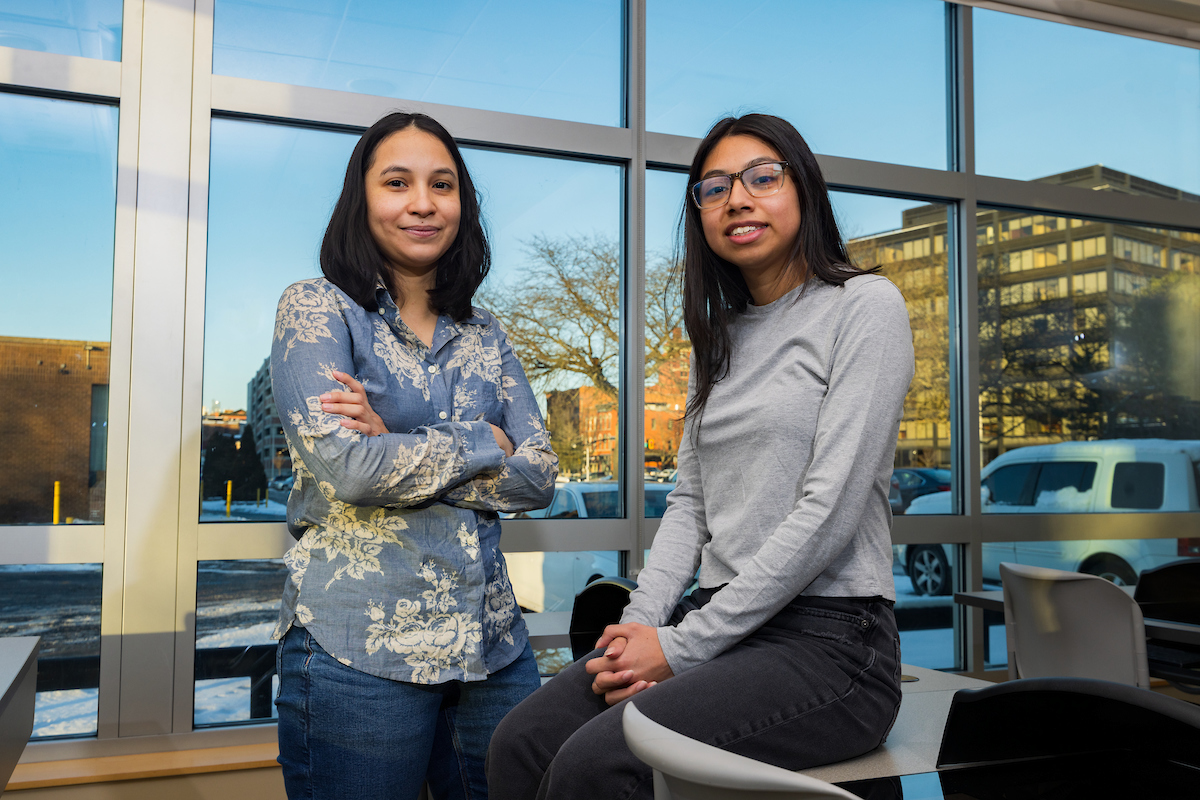
Third-year human development major Daisy Calvario Velasco and social work student Jeannette Guisao were among the first recipients of New York state’s new mental health scholarship announced in April 2023 by Gov. Kathy Hochul. The $4 million scholarship program administered through the New York State Office of Mental Health (OMH) not only supports underrepresented students in mental health programs but also seeks to address the significant shortage of clinicians, especially those who are multilingual or from diverse backgrounds.
The scholarship rewards high-achieving students from underrepresented backgrounds throughout their program of study as long as they maintain academic requirements.
Calvario Velasco learned about the scholarship through the campus’s Educational Opportunity Program (EOP) office. She was one of three Binghamton University students among 11 recipients from six campuses across the State University of New York and City University of New York public university systems.
In addition to tuition assistance, the scholarship program provides internships, mentorships and career-building workshops with mental health professionals and experts working in the field.
For both Guisao and Calvario Velasco, the scholarship has eased their financial burden, allowing them to focus on classwork and professional development.
“Receiving the scholarship was just an incredible [financial] weight off my shoulders,” Calvario Velasco says. “Now that I no longer have to focus on how to fund my education, I can start planning on what I want to accomplish post-graduation.”
The scholarship also addresses a critical need for clinicians who understand underrepresented communities.
Master of Social Work student Guisao describes a critical shortage of diverse mental health providers, often due to financial barriers and lack of support within educational environments. “The scholarship helps mitigate some of those factors by supporting BIPOC [Black, Indigenous, people of color] clinicians,” she says.
Guisao is also committed to giving back to the communities that are often underserved with regard to mental health treatment, leading to over- or under-diagnoses and ineffective treatment due to cultural differences. Her internships through the SUNY/OMH scholarship have helped her identify the areas and populations she would like to work with.
“My internships have helped me discover my passion for working with immigrant populations,” Guisao says. “My parents are immigrants, and I hope to find a job helping people who have had the same experience as they did.”
Calvario Velasco agrees that a lack of diversity in the mental health field impacts those needing its services.
“This lack of representation in the mental health field is detrimental to youth who are looking to receive help from somebody they can relate to,” adds Calvario Velasco. “Moving forward in my career, I hope to be this person for as many people as possible.”