Revamped program provides advantages in competitive job market
The new Higher Education and Student Affairs program addresses a critical need for hands-on experience

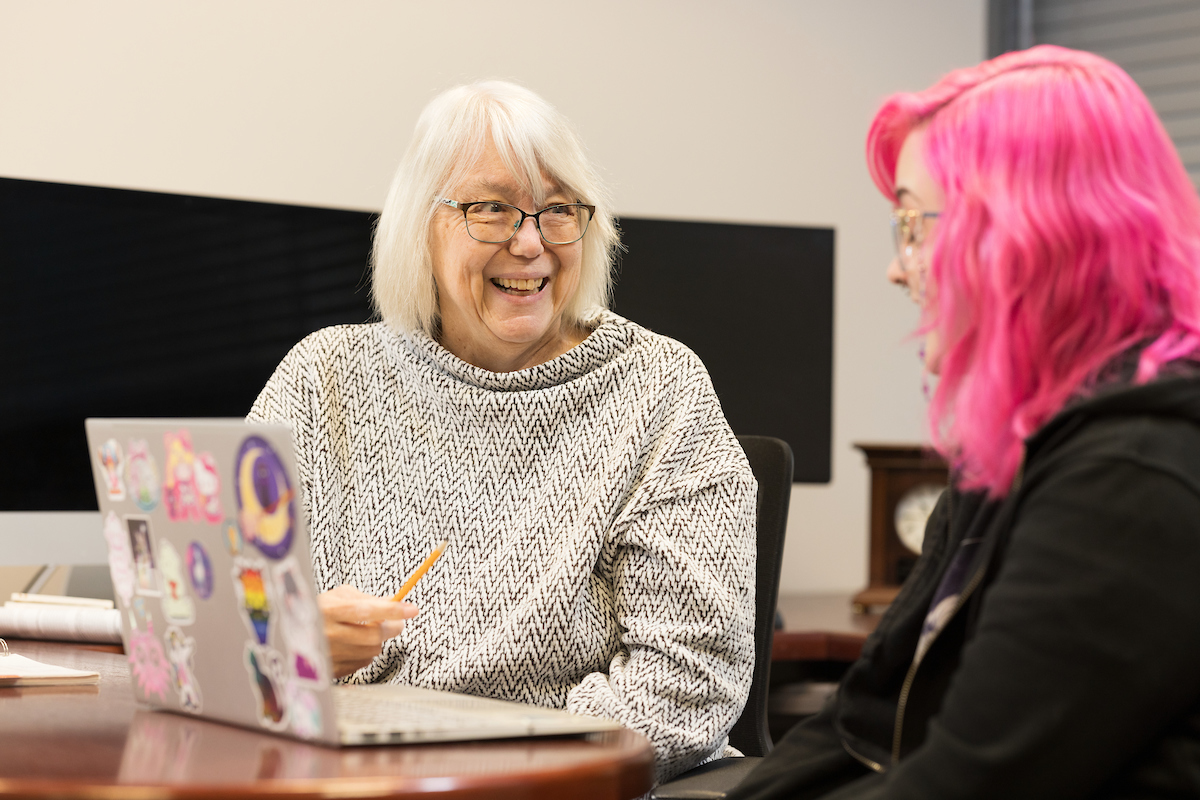
In March 2022, Deborah Taub, professor and chair of the (then) Department of Student Affairs Administration, attended the American College Personnel Association conference in New Orleans and listened with interest to the frustrations of the faculty and professionals in attendance with regard to new hires.
Many challenges were also reflected in what Taub was learning from recent graduates.
“What I hear from our new graduates is that there are gaps in what they know and what they know how to do,” Taub says. Students said they struggled with budgeting and supervision, and it was because they didn’t have opportunities to perform these tasks as graduate assistants.
Armed with the perspective of her peers and recent graduates, Taub was inspired to sketch out the notes for a major overhaul of the curriculum — the first in decades. Taub wanted to tweak the program in a solid pedagogic way that would specifically help Binghamton graduates be more career-ready and more competitive in the job market.
She presented her ideas to the faculty and received positive feedback. From there, revisions were made throughout the summer and fall. “We ended up talking about several things,” Taub says, “one of them was expanding opportunities for hands-on experiences.”
The result of that work is the new Higher Education and Student Affairs program. The name change is meant to reflect that the organizational structures of many colleges and universities are evolving, says Brian Rose, vice president for student affairs and a faculty member who worked with Taub on the revamp.
“Our students are going to learn the skills to be capable of filling all those kinds of positions,” Rose explains. “We wanted the program name to be reflective of the breadth of careers within higher education.”
Ready to launch in fall 2024, the program now encompasses multiple hands-on learning experiences in various campus departments.
“We have a great laboratory on our campus,” Rose says. “We have an award-winning career services program; we’re doing things within Residential Life that are first of their kind, like introducing social workers and clinical social work students to Residential Life staff. We also have an approach to health education and health and wellness that is nationally recognized, so we know we provide a really great employment context for students to learn from.”
The program will require students to rotate through several campus offices, exposing them to various functions and jobs they might not have considered pursuing. “This is aimed specifically at skill building in each area,” Taub explains. Students will learn how different functions like academic advising or student affairs contribute to student success, and where they fit within the university. “The students will also work on things like administrative skills or working one-on-one with students,” Taub says.
Students will then be required to complete a 10-hour-per-week internship that will place them within a specific office for the entirety of the semester. Finally, during their last semester in the program, students will have something akin to a field placement in education or social work, where they will work approximately 20 hours a week and receive a stipend.
“We think this will distinguish the program in terms of preparing students to be successful right out of the gate when they start in jobs, and will also help them be more successful in finding jobs right out of school, because they will have genuine professional experiences from within the program itself,” Rose says.
“Every program will say they do theory-to-practice,” Taub says. “However, I think this brings a greater intentionality and commitment on the part of Binghamton University and this program to really put theory to practice and do it well.”