Binghamton University PhD student wins award for pancreatic cancer treatment research
Steven McKay, a third-year PhD student, is using the memory of his grandfather as motivation to find a cure
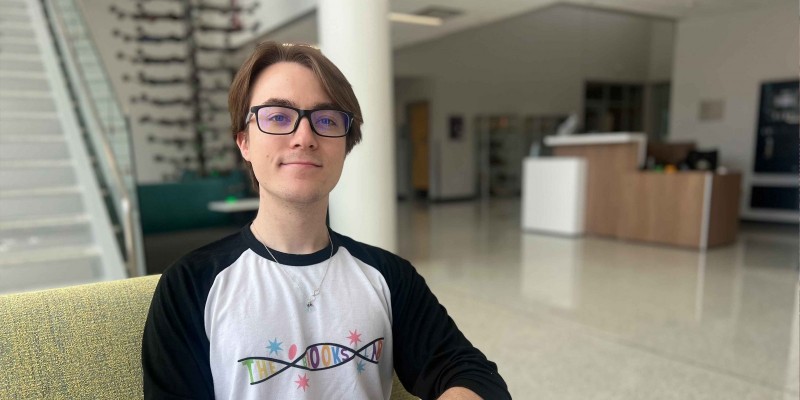
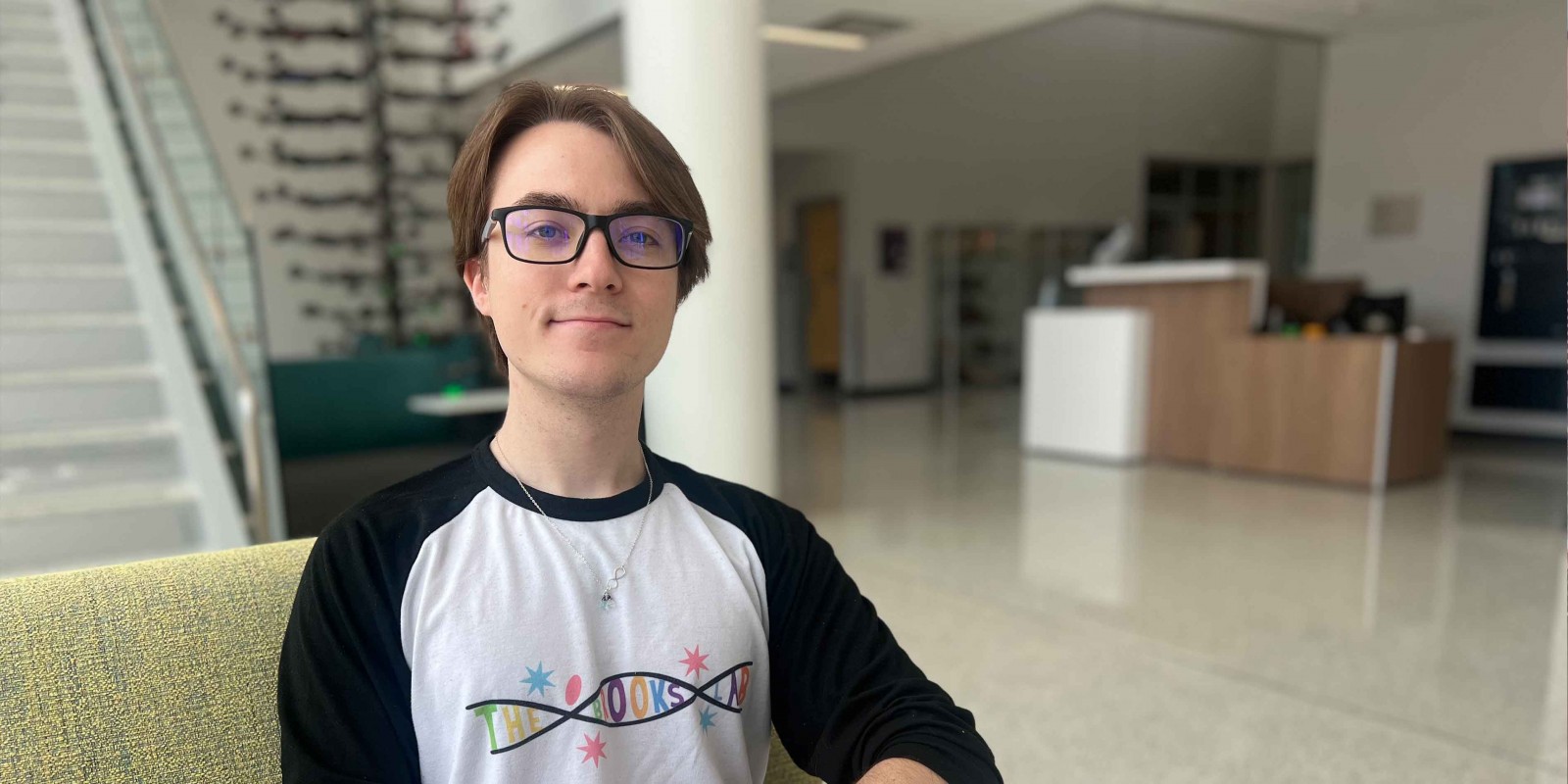
Third-year PhD student Steven McKay’s motivation for enrolling at Binghamton University’s School of Pharmacy and Pharmaceutical Sciences stemmed from the loss of his grandfather to pancreatic cancer. Now, his research on pancreatic cancer treatment has won him the American Foundation of Pharmacy Education (AFPE) Pre-Doctoral Fellowship Award and $10,000 to further fund his work.
“When my grandfather passed away from pancreatic cancer, it really hit me and my family hard,” McKay explained. “His passing is why I’m here today. It motivated me to enroll so I could do this type of research and help others battling the same fight my grandfather faced.”
McKay’s research is focused on a small molecule protein degrader. This class of molecule, called a PROTAC, can remove specific unwanted proteins.
“What I want to do is attach other things to that small molecule inhibitor. So link it via this chemical linker to another small molecule inhibitor and on the other end, it will attach to an E3 ligase,” he said. “This involves hijacking the ubiquitin-proteasome system to degrade the targeted protein.”
Through this process, McKay believes it can be used to destroy cancer cells, specifically in pancreatic cancer.
“I want to go after a target protein in pancreatic cancer that is overexpressed and the cancer cells depend on its function,” he said. “Once I can degrade it, the protein is completely out of the body, ideally leading to the cancer cell self-destructing through apoptosis.”
For McKay, the award and $10,000 prize that will be used to further fund his research, is a sign he is on the right track.
“When I got it, I was really surprised but very happy,” McKay said. “This showed me the positive impact I can have, and I appreciate the recognition.”
McKay added he celebrated with his family and mentor Tracy Brooks, associate professor, vice chair of pharmaceutical sciences at Binghamton and menner family endowed faculty fellow, when he received the news. But after the celebration was over, he got right back to work.