Career collision
Decker alumnus combines auto parts expertise and nursing skills, earns fellowship at CDC
Michael Bach, PhD ’15, grew up in his family’s automotive parts distribution business. He began as a delivery person, moved into sales and in 1998 launched an industrial paint division for the successful, Scott Township, Pa., company.
Two years later, this married father of two began volunteering in the local community.
“I was working 8 to 5 and I wanted to help my community and learn something different,” he says. Bach joined the Tunkhannock Community Ambulance Association Dive Rescue Team in August 2000, and by the following spring was taking classes to become an emergency medical technician.
“I volunteered my time weekly for ambulance coverage and was available as a rescue diver,” Bach says. “I found there is no better feeling than making a positive difference when someone is in need.”
In 2001, Bach left the automotive business to become a certified nurse’s aide while taking core classes for a degree in nursing. But two years later he rejoined his family’s business whey they expanded into a new facility. Nursing remained Bach’s dream, however; and in 2009, he left the automotive parts business for a second (and final) time and entered Penn State University, where he earned a bachelor’s degree in nursing.
Following graduation, Bach worked as a registered nurse in the intensive care unit (ICU) at Community Medical Center in Scranton, Pa. He then took a position closer to home, working in the ICU and emergency department at Tyler Memorial Hospital in Tunkhannock.
Around the same time he changed hospitals, Bach decided to pursue a graduate degree in nursing. He chose Binghamton University’s Decker School of Nursing for several reasons.
“DSON has a high-level reputation and they gave me confidence in their program,” Bach says. “But when I was accepted, I thought, ‘What did I do? I don’t have enough money for that!’”
As a male nursing student pursuing a graduate degree, Bach qualified for a Clifford D. Clark Diversity Fellowship. The funding he received enabled him to stop working at the hospital when it became too difficult to manage work and studies. It also gave him the opportunity to serve as a teaching assistant, an obligation of the fellowship.
“This perspective allowed insight to the intensive preparation Binghamton instructors and professors instill into their class and lab presentations,” Bach says. “These efforts are what make DSON a respectable and high-achieving learning institution.”
When it came time to select a dissertation topic, Bach found a way to bridge his passion for nursing with his background in the automotive industry.
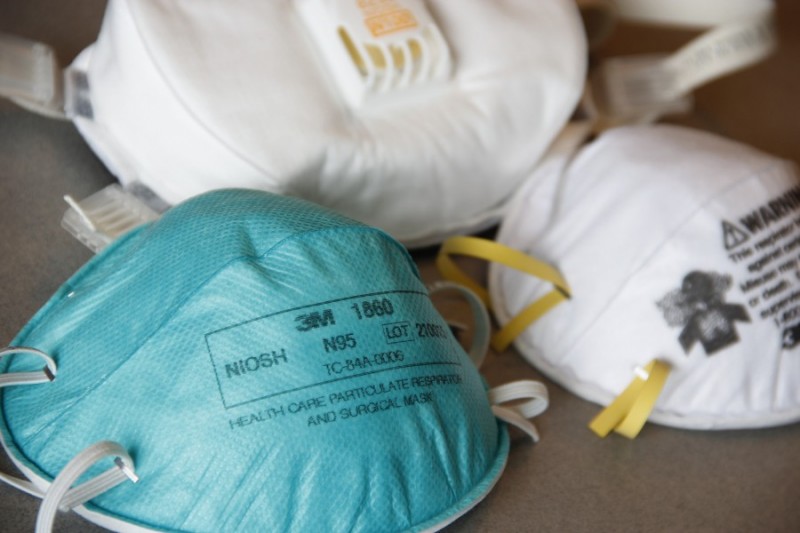
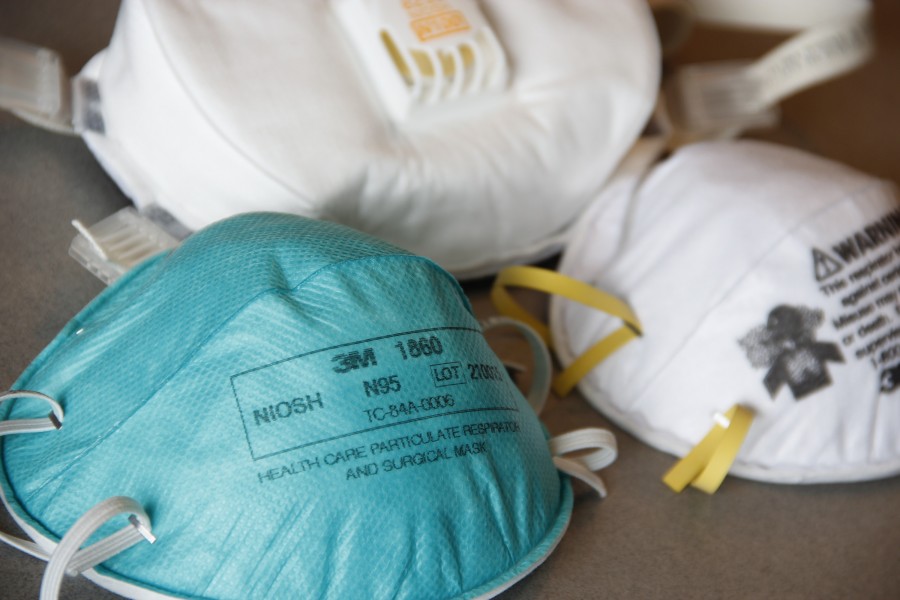
“I worked 20 years in the automotive industry calling on and selling to auto body shops that used PPE [personal protective equipment] daily,” Bach says. “Respirators piqued my interest because I never knew why the workers chose the respirators they wore. ‘Which ones were the best?’ When I became an industrial paint shop manager, I felt personally responsible to suggest the best respirator for my employees. At that time, I didn’t have any idea where to look. I Googled OSHA and spent a lot of time looking, but never found the answers to my questions.”
Bach’s dissertation, “Autobody Workers: An Assessment of Respirators and Levels of Fatigue,” gave him the opportunity to search for answers. He presented some of his findings at the American Public Health Association meeting in 2013.
After graduating from Decker with a PhD in May 2015, Bach “found it difficult to find the most appropriate fellowship that would serve my interests and my passion for research,” so he applied for teaching positions.
He was quickly hired as an assistant professor of nursing by Gulf Coast State College in Panama City, Fla., where he taught didactic and clinical nursing in two city hospitals and a nursing home. He then moved closer to home and joined the nursing faculty at Mansfield University in Sayre, Pa.
But in a perfect example of finding what you want only when you are no longer looking, Gale Spencer (SUNY distinguished teaching professor and Decker chair in community health nursing) told Bach she had heard about a fellowship opportunity to study respirators in healthcare. Offered by the American Association of Colleges of Nursing in partnership with the Centers for Disease Control and Prevention (CDC), the public health fellowship “was the exact research fellowship opportunity I was looking for,” Bach says.
In February, Bach began a six-month fellowship at the National Institute for Occupational Safety and Health (NIOSH) National Personal Protective Technology Laboratory (NPPTL) in Pittsburgh, Pa. NIOSH is an agency within the CDC.
“As an AACN fellow at NIOSH-Pittsburgh, I continue my learning in the area of population health-respirator research and gain hands-on experiences to enhance my preparation for professional practice in the field of research,” Bach says. “I’m fortunate to work with the nation’s leading experts on respirator use, and I am currently working on research articles for publication.”
Bach says he enjoys learning about other public health projects, sitting in on high-level research meetings and observing human-subjects testing. He anticipates getting a six-month extension on the fellowship and hopes it will “help launch me to a full-time research position, possibly within government research at NIOSH-NPPTL.”
Recently, Bach shared his professional journey with students during a “Life After Decker” video chat. Sponsored by the DSON Nursing Student Association, the video chats give undergraduate nursing students the opportunity to ask an alumnus questions in a casual, informal atmosphere.
“Anytime I can add insight or offer advice that helps nursing students navigate their individual pathways to their goals, I will be there,” Bach says. “The video chat may inspire others to pursue their own passion and fuel their drive to aspire and attain their personal goals.”