Community Engagement
The Binghamton University Community Schools-Whitney Point Central School District collaboration fosters an environment for student success.
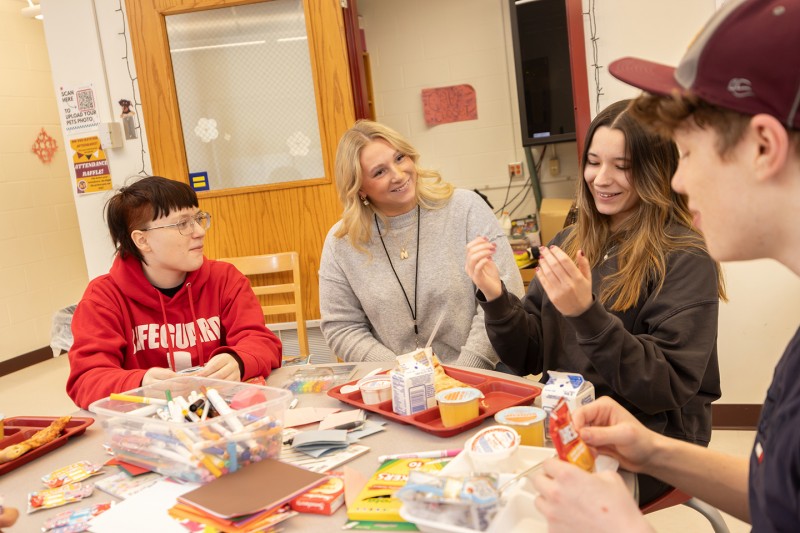
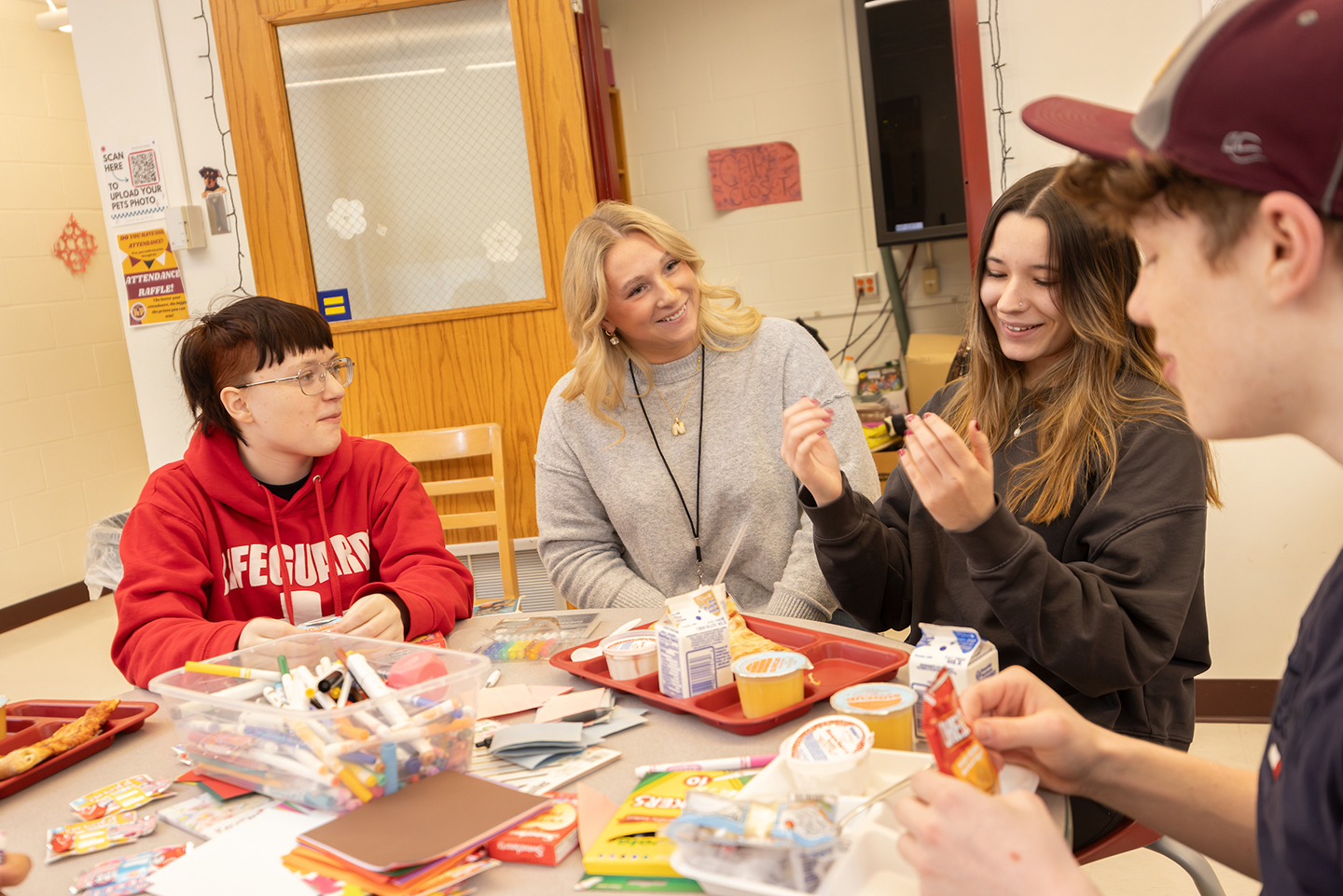
When it comes to the University-assisted Community Schools (UACS) model, the Whitney Point (New York) School District is all-in.
“They are one of our most committed partners,” says Luann Kida, executive director of Binghamton University Community Schools (BUCS) at the College of Community and Public Affairs.
The Whitney Point Central School District serves a primarily rural population about 20 miles north of Binghamton. Jo-Ann Sexton, superintendent of the district, says, “Our collaboration with the University is so powerful and meaningful to our district and the children and families we work with in so many ways. It would be such a different place here without that partnership.”
The genesis for the BUCS-Whitney Point collaboration began over a decade ago through the federal Safe Schools Healthy Students initiative. Binghamton University was a principal partner with Whitney Point, helping develop and implement a range of services to improve the school climate, prevent bullying and enhance collaboration with families. As part of this grant, Master of Social Work (MSW) interns were embedded in the school, expanding school-based services and community outreach.
The family engagement work that began in Whitney Point over 10 years ago is a critical yet frequently overlooked component of student success and achievement nationwide. Whitney Point wanted to enhance its outreach efforts to families that might otherwise be left behind. To achieve this, Kida and the social work interns reached out to families to discuss their experience raising a child in Whitney Point. Their goal was to amplify these families’ voices to address school climate issues and expand access to resources.
In a rural area where many families struggle with reliable transportation, this meant meeting families in their homes.
In 2019, a Full-Service Community Schools grant expanded family engagement efforts for families with children in pre-K through third grade and brought mental health services into the school system for grades 3 to 12.
Leveraging the UACS model
Today, Beth Whittaker and Julie Jurena serve as community school coordinators at Whitney Point, continuing the work initiated by the Full-Service Community Schools grant — supporting families with young children. Whittaker, Jurena and Joe Kucher, the family engagement specialist, are the core team at Caryl E. Adams Elementary School. A significant part of their work is community outreach and family engagement.
“Doing this kind of outreach means going into homes to assess families’ needs and learning how we can help meet those needs,” Jurena says. “Sometimes, it’s simply about ensuring that basic necessities — clothing, food and shelter — are in place.”
Student and family referrals come from various sources, including the school’s multidisciplinary Care Team, teachers and staff members. Referrals involve a range of issues, from attendance problems to the need for a signed permission slip or consent form for specialized services. Jurena says Kucher is the “go-to” person for locating missing consent forms and frequently assists families in completing and submitting the necessary paperwork. Often, his outreach involves helping families meet their basic needs, including finding safe housing or reconnecting utilities such as heat and electricity. Once, notes Jurena, he even helped a family move the trailer they were living in.
Whittaker and Jurena run parenting classes and small group interventions and manage the Early Eagles program, an outreach effort that targets children from birth to pre-K. Rather than wait for a child to reach school age, they are proactive in connecting with families with infants and toddlers. They distribute books, T-shirts and totes and encourage families to participate in enrichment activities, helping them understand there are services available and people who want to help.
“We find that people are really receptive to our home visits when we have something to offer them,” Whittaker says. “The kids are really excited to open up their bags and see what books they got.”
Once they make these connections, they stay in touch with their Early Eagle families; they host monthly Meetup Mondays featuring story time or arts and crafts. External agencies, such as Cornell Cooperative Extension, may be brought in to offer health and nutrition information through activities like creating a healthy snack.
Expanding mental health services
Expanding mental health services and making them available in schools is a key initiative of the UACS model at Whitney Point. Kristin Galusha, the mental health site supervisor, is part of a five-year Department of Education Mental Health Professional Services Demonstration grant allocated through BUCS. Galusha supervises the MSW interns, dividing her time between middle and high school. In middle school, she leads small social and emotional support groups for students who need extra assistance. In the high school, she manages a drop-in center for students who need a safe space or someone to talk to. An attached Care Closet provides clothing and hygiene products.
“Our interns are so important for the success of our work,” Galusha says. “They serve as another line of trusted adults who are not too far removed from high school themselves. So, they help connect our students to their future in different ways. For instance, it provides an example of not only why higher education is important, but also how it’s achievable.”
Avery Burnsworth is an advanced-standing MSW student who earned her undergraduate social work degree from Binghamton. Originally unsure of her post-graduation plans, her experience with the community schools program helped clarify her career goals.
“I have truly loved my experience working with the Whitney Point students,” Burnsworth says. “The students have been welcoming and accepting. We have been given the opportunity to challenge ourselves and be creative when developing interventions and skills to use with the kids. My site supervisor has a deep passion for helping the children here, which has inspired my growth and learning.”
Kida explains that the MSW social work interns are valuable team members, building their résumés and skill sets while applying what they learn in the classroom.
“They read about trauma,” Kida says, “but they don’t understand what trauma looks like until they actually see it.”
Galusha says the interns bring creativity and freshness to the services, citing a well-received attendance incentive initiative that was the brainchild of a previous intern. Like Kida, Galusha sees the internship program as mutually beneficial for the students and families it serves and the social work interns immersed in the holistic UACS approach.
“It is a really awesome partnership, with everyone getting something out of it,” she says.
Creating a climate for learning
Kida says community schools’ collaborative strategies benefit teachers and classroom learning: “Our teachers know kids are living in difficult situations, and it’s hard for them to do their jobs when kids come in hungry or without enough sleep. Addressing these gaps allows teachers to do what they were hired to do: teach.”
Kucher credits the success of the UACS model at Whitney Point to the collective investment of the parties involved; whether serving through a BUCS-supported grant or the school district itself, there is a shared sense of teamwork and purpose.
“There is a total alignment from the superintendent and the Board of Education, right down to a part-time guy like me,” he says. “It’s an alignment of values and mission from everyone involved. We are all on the same page, and we are all working together. And it’s successful, so the teachers are very thankful, and so are the parents.”
Community Schools is a transformative strategy that brings together children, families, schools and community partners to achieve optimal learning and student success, and Whitney Point embodies its potential.
“We are looking at the whole child, the whole student,” Galusha says. “We’re looking at the home, the grades, the transportation and resources issues. And we start early, so by the time they reach high school, a comprehensive support network is in place. I don’t know another program where this kind of work is happening.”