Theatre Department prepares for Wilde time in season’s final show
‘Lady Windermere’s Fan’ runs through May 7 on Watters Theater stage
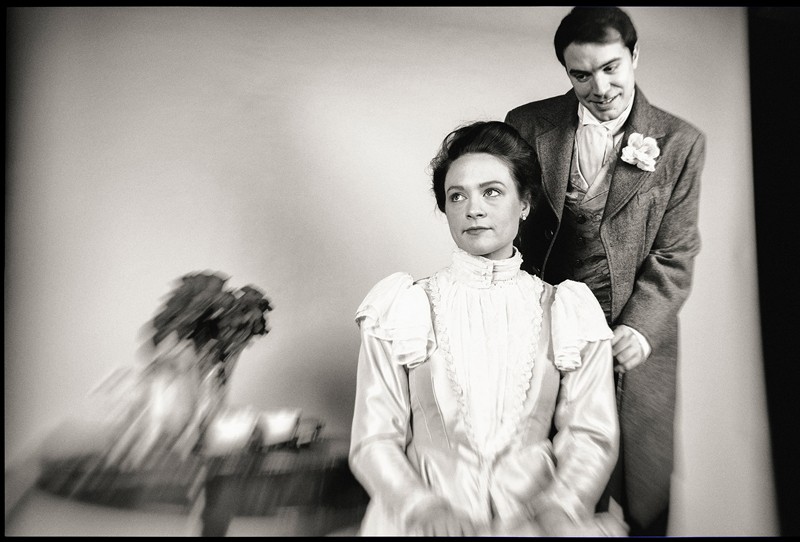
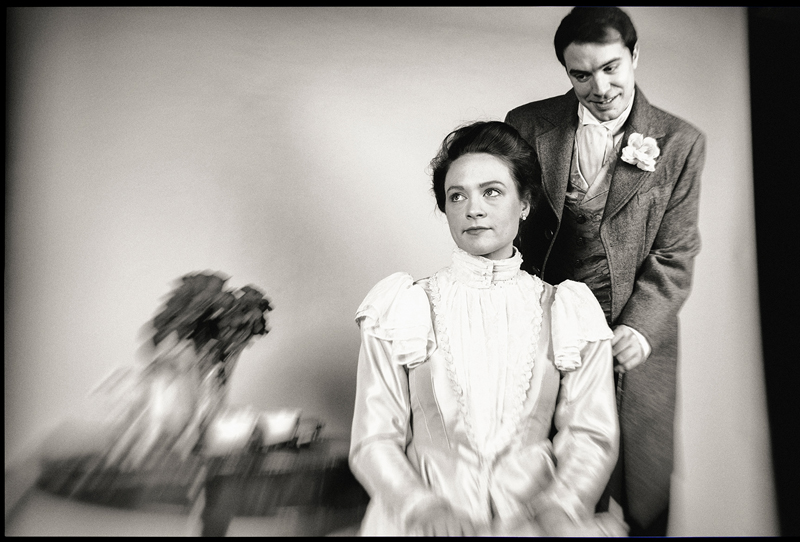
Senior actors Stephanie Herlihy, Danielle Nigro and Jeff Tagliaferro are ending their Binghamton University theatre careers with one last challenge: the language of Oscar Wilde.
“We’ve been able to play with it and fail at it,’” Tagliaferro said. “If any of us had it down on the first day, it would have been more difficult to play with it. This has been a journey that we’ve all taken together.”
The journey will lead the trio and the 13 other cast members to the Watters Theater stage, where they will present Wilde’s 1892 play “Lady Windemere’s Fan.” The show will take place at 8 p.m. April 28-29 and May 5, and 2 p.m. April 30 and May 7. Tickets are $18, general admission; $16, alumni/faculty/senior/staff; and $10, students ($5 for students on opening night at the Anderson Center Box Office).
Director Tom Kremer said that the Irish playwright’s prose is difficult because “it’s never just a simple phrase.”
“It’s a collection of phrases – some of which are parentheticals within parentheticals within parentheticals!” said Kremer, a professor of theatre. “That’s when it becomes difficult to keep an idea afloat in the air so the person knows you are not quite done yet. You’re adding things on until you get to the point!
“The language is difficult, but the difficulty is also its beauty. It is beautiful to listen to when we are on top of it.”
Tagliaferro agreed, saying that although the language and dialect can be frustrating, it is also part of the rehearsal process.
“There were times when I thought: ‘Why doesn’t (Wilde) just say three words?’ said Tagliaferro, who plays Lord Darlington. “But that’s the beauty of the language and what makes it so rich and inviting for the audience.”
Wilde’s language is a constant from the beginning of “Lady Windermere’s Fan,” as the title character (played by Herlihy) prepares for her elaborate birthday bash. But Lady Windermere begins to suspect that her husband, Lord Windermere, is having an affair with a mysterious woman named Mrs. Erlynne (played by Nigro) who has been invited to the ball.
As the gossip swirls around Lord Windermere and Mrs. Erlynne, Lord Darlington makes his pitch to run away with Lady Windermere. Mrs. Erlynne then makes a decision that affects the future of the Windermere union.
Herlihy said she relates to Lady Windermere and the question of what it is to be good.
“I go through my life every day trying to be the best person I can be,” she said. “But you face challenges every day. When faced with massive challenges and having people turn out to be something they are not, what do you do?”
Nigro called Mrs. Erlynne “an incredible, smart and alluring” character.
“She lives her life the way she wants – and faces consequences because of it,” Nigro said. “She’s trying to make her way back after being shunned by society. Getting an invitation to the (Windermere) ball is a big step for her. When things start to unfold at the ball, her power and force start to waver.”
For Tagliaferro, Lord Darlington is the only character onstage who sees the high-society world as it is.
“There seems to be this idea that things are either good or bad, black or white, with most of the characters,” he said. “Lord Darlington doesn’t feel that way. Good people can do bad things. Bad people can do good things. He tries to impart that on other characters, particularly Lady Windermere. … He doesn’t care for the facades that everyone else is putting up. He can see through the masks that everyone else wears.”
Those facades and masks are represented by Kremer’s unique adaptation of the play.
“We left the play in 1892, but we are not doing it the way Oscar wrote it,” Kremer said. “It’s his language, but we’re presenting it in a way that I don’t think he would have thought of.”
Kremer’s desire to show the duplicitousness of the characters led him to keep all of the characters onstage at the same time. The secondary characters, in particular, form a chorus that stands, watches, makes comments about others and sometimes directly enter the scenes.
“People enjoyed seeing others get in trouble and seeing others make mistakes,” Kremer said. “It’s like what goes on in social media today, to some extent.”
Although they’ve performed in numerous Mainstage shows, Herlihy, Nigro and Tagliaferro all stressed that the learning has not stopped with “Lady Windermere’s Fan.”
“It’s a never-ending process,” Herlihy said. “Through each play and character, you get to learn something else about yourself.”
“Almost every aspect of this show has been a learning experience for me,” Nigro said. “The way Mrs. Erlynne interacts with the characters onstage is different from almost every other character I’ve had a chance to step into. The corsets, the petticoats, the way you sit on the furniture – it’s a different world to be a part of.”
The learning process is just beginning for young actors such as Herlihy, Nigro and Tagliaferro and the rest of the “Windermere” cast, Kremer said.
“I’ve been acting for more than 40 years,” Kremer said. “The one thing I know about acting is that you’ve got to be in love with the idea of learning. You are going to be learning about this craft for the rest of your life until the day you die.”