Year One: Watson College dean reflects on what he’s learned so far and where to go next
Since arriving at Binghamton University last summer, Dean Atul Kelkar has hit the ground running
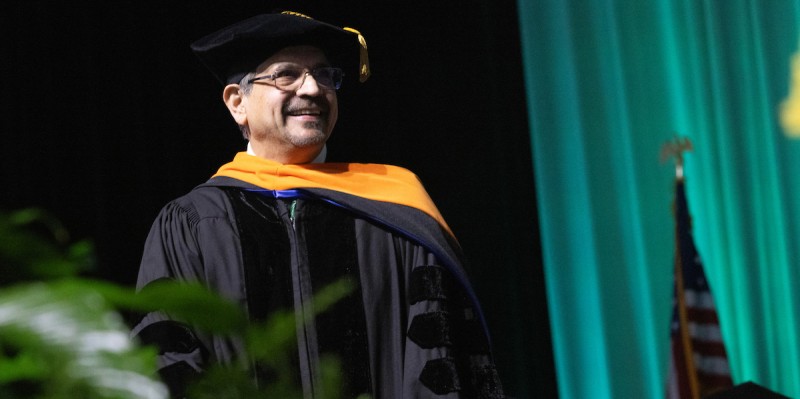
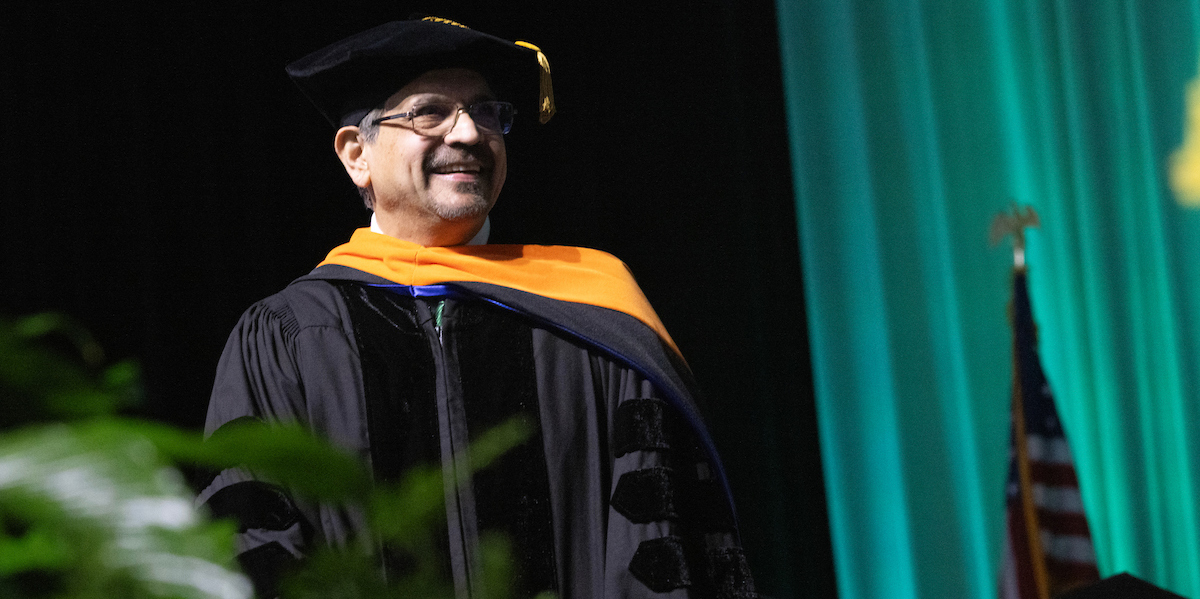
Dean Atul Kelkar believes the future of Watson College is built on three pillars: the student experience, research and societal impact.
“The student experience is number one,” he says. “We exist because of students.”
Since arriving at Binghamton University last summer, Kelkar has hit the ground running with various initiatives to enhance undergraduate programs, expand graduate programs and research, and foster more interdisciplinary collaboration among faculty researchers. He also wants to boost Binghamton and Watson’s visibility nationally and globally.
Q: What attracted you to Binghamton University and Watson College?
A: I’d finished roughly six years at Clemson, and I realized a lot of what I did as a department chair would benefit a college, too. Before that, I was not entertaining the idea of becoming a dean, but it got me thinking that I should explore opportunities to have a bigger impact.
To tell you the truth, Binghamton wasn’t on my radar. A colleague who knew people from Binghamton said, “Oh, that’s a younger SUNY institution, but you should seriously look into it, because they have a lot going on there right now.” That prompted me to dig deeper, and I realized that Binghamton has made great strides in academic excellence and research. Watson College also is the size where many new initiatives can be implemented, which can further push this institution to the next level. I always use an analogy to the stock market: You want to bet on something that is on the rise.
And timing-wise, the NSF Engines award was not out yet, but I heard that they were applying. I knew Stan [Whittingham, distinguished professor and Nobel Prize winner for inventing lithium-ion batteries] was here, and the University received federal Build Back Better funding and the Regional Tech Hub designation. Gov. [Kathy] Hochul also announced the New Energy New York initiative.
Just looking at the energy sector, this institution is a one-of-a-kind opportunity for somebody running the engineering programs to take advantage of all these federal and state investments. I said, “It looks like the stars are aligned for Binghamton to really take off, and I want to be part of that progress.”
When I visited here, I got a very warm vibe from everybody I met in the Watson dean’s office. During my lunch interview with [President] Harvey [Stenger], he was extremely open — I could talk to him like a colleague. My dinner with the provost [Donald Hall] was also very collegial, and both were extremely receptive to my ideas.
I’m thrilled to find that Watson already has reached great heights, and I’m excited for what’s next.
Q: Now that you’re here, what do you see as Watson College’s strengths?
A: All departments and schools have a critical mass in certain research areas that is not really recognized, including cybersecurity, electronics packaging, manufacturing, materials science, health science research and SSIE [systems science and industrial engineering]. We need to get our brand out more. We need to have an awards committee to promote our researchers through national-level awards.
The second thing I realized is that people are very collaborative. Because I am a cooperative type of person, with my entrepreneurship experience and my previous roles, I like to put teams together for better success. Sometimes two plus two is not four — two plus two is five.
I see four research areas of national importance where clusters might form at Watson and the University as a whole. One is green energy and sustainability. Second is artificial intelligence, data science, cybersecurity and robotics. The third one is manufacturing, including battery and semiconductor manufacturing. Fourth is health technology. We have big health systems in this region, and we recently signed an agreement with Guthrie. Our Biomedical Engineering Department does a lot of very good research, and we have a partnership with Upstate Medical University. SSIE was at the forefront of implementing industrial and systems engineering in the healthcare field, it has its exceptional Manhattan executive program in health systems and partners with over 15 hospitals on sponsored research.
None of these areas is going away anytime soon, and we can build on the strengths we already have.
Q: How can Binghamton and Watson College enhance the student experience?
A: From the many interactions I have had with students at different schools over the years, I am always interested in finding out: Why did you choose to come here, and did you have any options at a better-ranked school? Ninety percent of the time, the students come to a specific school because they had somebody — seniors from the school or family members or alumni — tell them they will have the best student experience in that place.
Getting a degree is important, but it’s a crucial four years for somebody coming out of high school. They’re also coming out of parental shelter. After these four years, they go into an independent lifestyle and probably start a family. So these years are critical as a holistic experience, not just educationally but also as a good citizen. They learn how to be stewards of technology that impacts society, they do networking, and they become accustomed to different cultures and customs to get a global outlook.
That’s why I think the student experience is key, and that means having a proper support system — not just educational support, but also social support. We need to remove the barriers for academic progress. That does not mean a less stringent curriculum — you maintain the vigor, but you remove the other barriers.
Q: Where do you think Watson College goes in five to 10 years?
A: I would like to see Watson have the maximum impact at the national level for technology, innovation and educating future successful engineers and entrepreneurs. Watson should be in the top 10 with whatever metrics you want to use.
Q: What are your favorite experiences at Binghamton so far?
A: I really enjoy interacting with students and seeing how energetic they are. You can see they’re hungry for experiences on campus, and they’re hungry to see what their future will be. Another thing is celebrating the achievements of our faculty and staff, those who are award-winners — that is very fulfilling for me.