Many paths: Armaan Rizvi makes the most out of his liberal arts education
With three majors and two minors, Harpur College senior embraces an expansive view of life and learning
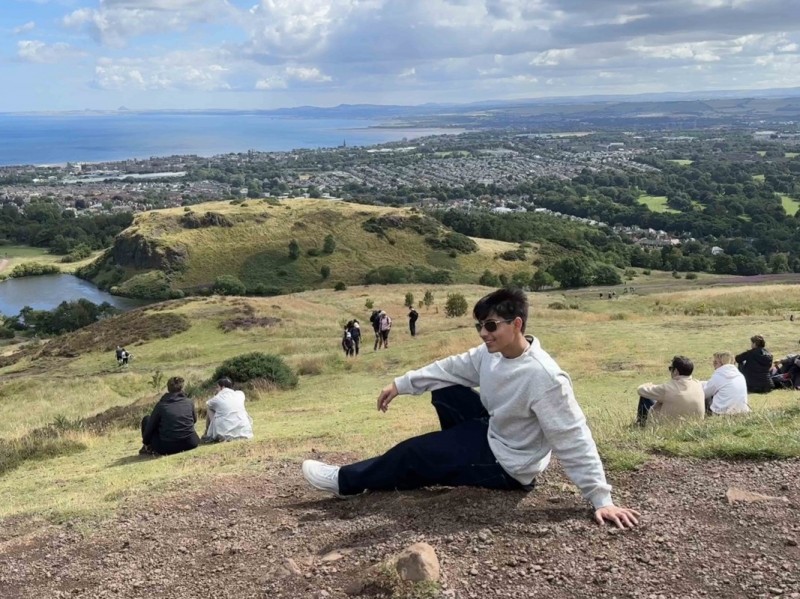
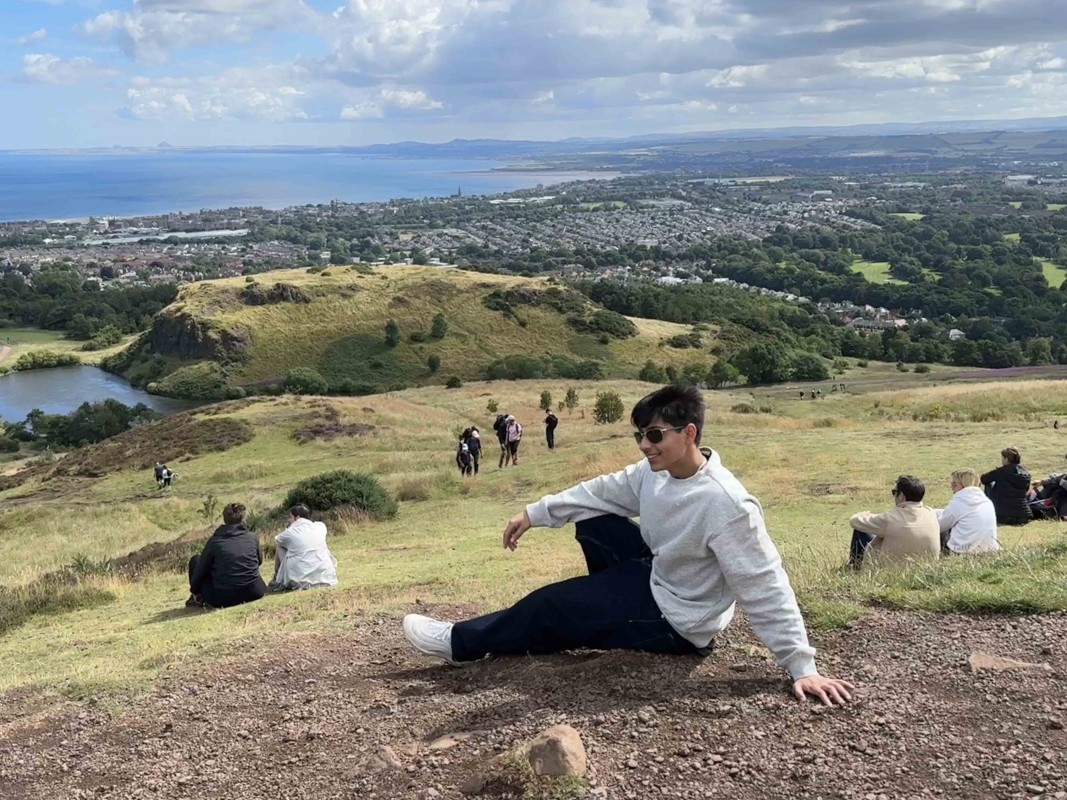
One of the perks of a liberal arts education is the sheer breadth of interesting subjects available for study.
For Armaan Rizvi, learning is sure to be a lifelong endeavor. The Binghamton University senior is pursuing three majors: history, anthropology and political science.
During his first year at Binghamton, he was part of the Source Project’s History and Capitalism stream, which introduced him to research. A member of Phi Beta Kappa, he’s also active in club sports and president of the Binghamton Law Quarterly, which publishes an annual journal of undergraduate research.
He considered an honors thesis during his final year but ultimately decided against it. Instead, he added a second minor in English, along with his previously declared minor in religion.
“I wanted to broaden more than specialize. That’s been my struggle point: Do I want to go deeper into this very specific topic and become a specialist, or go as broad as I can? I’ve chosen the broad route,” he said.
You can trace Rizvi’s diverse interests to his diverse upbringing: His father was in the Indian army and, like army kids everywhere, he was frequently on the move. He’s lived in places all over his native country but finished high school in New York City after his family emigrated in 2021.
“I’m a person who has moved around a lot in my life. I went to three different high schools in four years,” he reflected. “Even though I’ve been living in New York City for five years, I’ve barely spent any time here except for the summers.”
His various life experiences have brought him into contact with people of all kinds, and his curiosity about others in turn led him to the social sciences. One of his favorite things to do is explore course listings and then plot a trajectory that includes as many fascinating topics as possible. He’s met inspiring professors that way, including Distinguished Professor of Anthropology Douglas Holmes, History Professor Fa-ti Fan, Associate Professor of History Heather Welland, History Professor Donald Nieman and multiple faculty members in political science.
“If you’re able to draw on a variety of perspectives and subjects, it helps you become more creative with the ideas you’re able to come up with,” Rizvi said.
He offered an example. During the spring semester, he took a course in the history of objects and another on justice and courts in England. Inspired by both, he ended up doing a research project on how the Enfield rifle transformed warfare.
“I was trying to show how one technology can change how we conceive of war,” he said. “It was a completely new way of doing history for me, which I thought was super-interesting.”
In addition to academics, Rizvi has made sure to diversify his social options, too.
He lived in Oneida Hall his first year and joined the Oneida Hall Council; later, he became social vice president for College in the Woods and helped organize multiple social events and fundraisers. He is also a member of Phi Alpha Delta, the pre-law fraternity on campus, which gives him the opportunity to connect with peers with similar professional interests. Peers can have useful advice about matters such as law school applications, he said.
He encouraged Binghamton students to seek out and ground themselves in community, and to capture college memories before they fade. And while studying is important, expand your comfort zone: Forge connections with your peers. Make time for late-night discussions. Check out that interesting club.
“College can get very isolating, but there’s always something you can do,” he said. “If I didn’t expand into all those different groups and organizations, meeting all these different people, I would have been too scared to take all these classes with professors in different departments.”
The future’s many possibilities
Like his academic interests, Rizvi’s vision for the future is expansive.
He’d love to do multiple PhDs in his areas of interest, but not right away — maybe in his 30s, he surmises. Right now, he’s aiming his sights at law school, ideally Yale. To improve his chances, he spent the summer doing an internship at a New York City law firm, where he has been working on commercial litigation cases as part of the Harpur Law Council Private Sector Law Internship Program.
Maybe he’ll go to Europe first for a master’s degree in one of the social sciences — one he’s currently studying or a new field, such as psychology. If he doesn’t get admitted to law school right away, he’s also considering a two-year stint in the U.S. military.
“My dad was in the Indian army, so I see how transformative that lifestyle is, the shock value it can bring to someone’s life,” he said. “As a person, I admire that.”
Or maybe travel to some far-off place and spend six months working on his writing in a grass-thatched hut, he added.
Ultimately, the journey itself will shape the road of his future. It’s an open-ended approach, Rizvi noted.
“There’s so much I want to do with my time. The only way I’m going to explore those different things is if some other things I want to do don’t end up happening,” he said. “And I’m fine with that.”