HRSA grant continues to fund nurse practitioner students at Binghamton University
Four-year, $1.9 million grant aims to increase healthcare providers in rural areas
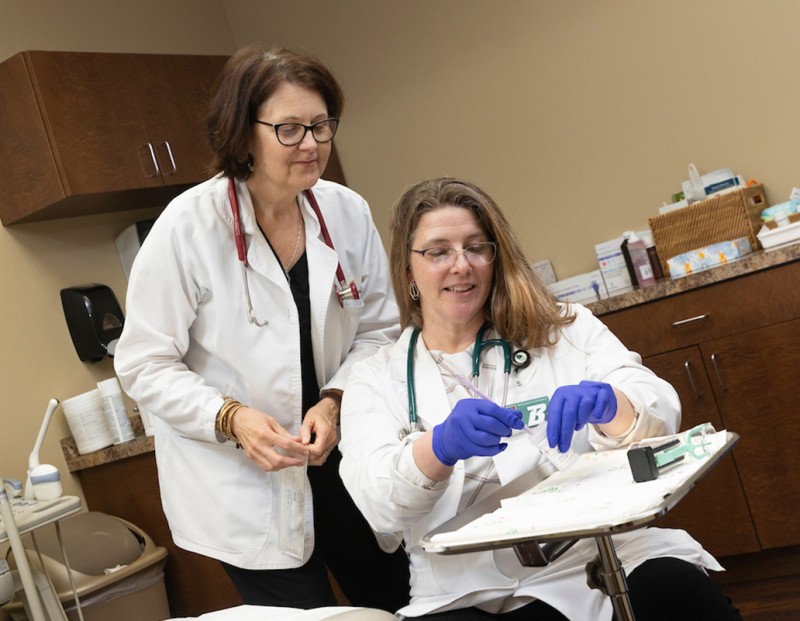
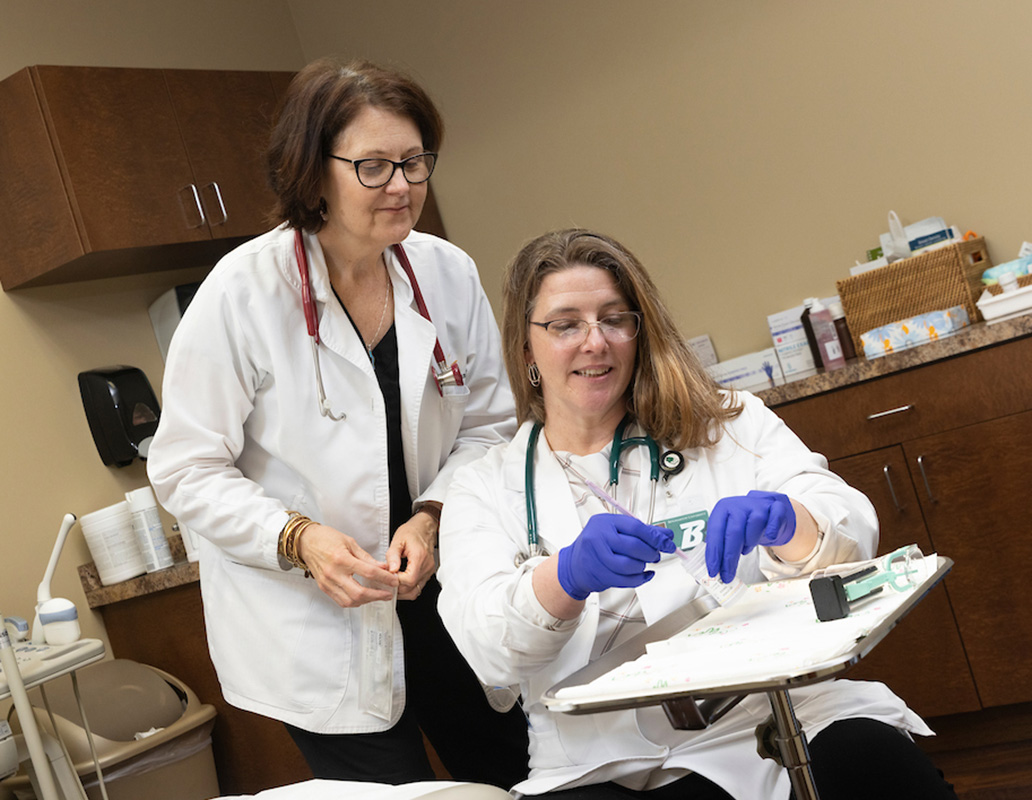
In July, the U.S. Department of Health and Human Services (HRSA) Advanced Nursing Education Workforce (ANEW) program confirmed the continuation of a $1.9 million grant to Binghamton University’s Decker College of Nursing and Health Sciences to financially support graduate nursing students. The four-year grant was initially awarded in 2023; the award for the 2025-26 academic year is $649,000.
The HRSA ANEW Scholars program mainly supports students in Decker College’s Family Nurse Practitioner program who come from rural areas and intend to practice there after becoming credentialed. HRSA’s goal in funding the grant is to increase the number of advanced-practice nurses trained as primary care providers in rural and underserved areas.
Decker College has received multiple consecutive HRSA workforce grants since 2016, and more than 120 Decker-trained nurse practitioners have received this funding, with 17 graduating in 2024 and 14 in 2025.
“We understand how difficult it is to recruit healthcare providers to rural areas,” said Nicole Rouhana, associate professor of nursing and director of graduate nursing programs, who authored or co-authored the grants and directs the ANEW program. “For that reason, our program starts with students who already live in a rural area.”
Students chosen as ANEW Scholars must come from areas with a rural status of 4 or higher, as defined by the locale’s Rural-Urban Commuting Area Code determined by the U.S. Department of Agriculture’s Economic Research Service, or they must live in a medically underserved area or one with a shortage of primary care or mental health professionals.
“We go into some of the most rural and remote parts of New York state to recruit,” Rouhana said.
These students are matched with rural healthcare sites within their communities, where they complete hundreds of hours of direct, supervised patient care, working closely with a clinical preceptor.
“This extended clinical placement fosters an incredibly strong connection between the students and the hosting clinical sites and often results in long-term employment,” Rouhana said.
To qualify for the program, students must first be admitted to Decker’s graduate nursing program, be registered nurses and have an unencumbered nursing license.
According to Rouhana, the grant will fund 23 students this academic year.
To address the challenges of rural practice, students receiving HRSA funding must complete two courses: one in rural sociology and another in caring for individuals with opioid use disorder.
“One of the characteristics of rural healthcare is that you don’t do specialization; you have to be ready for anything that comes through the door,” Rouhana said.