Binghamton Venture Fund gives students hands-on experience in venture capital
Students hear pitches from battery entrepreneurs
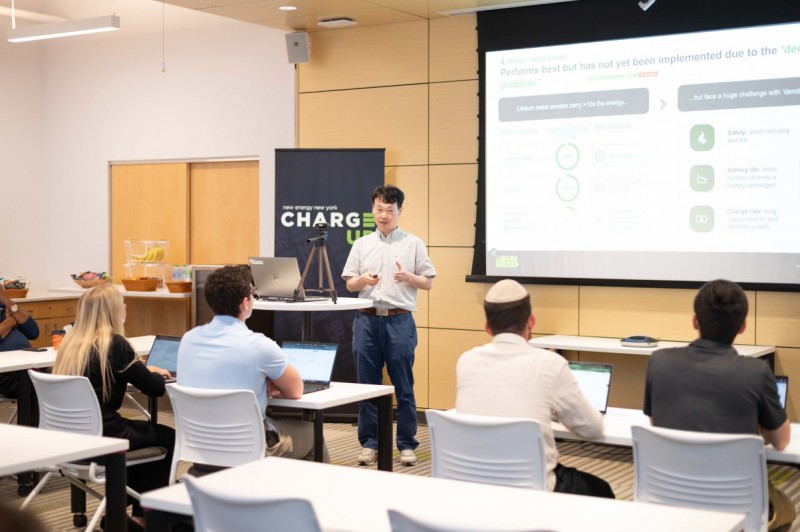
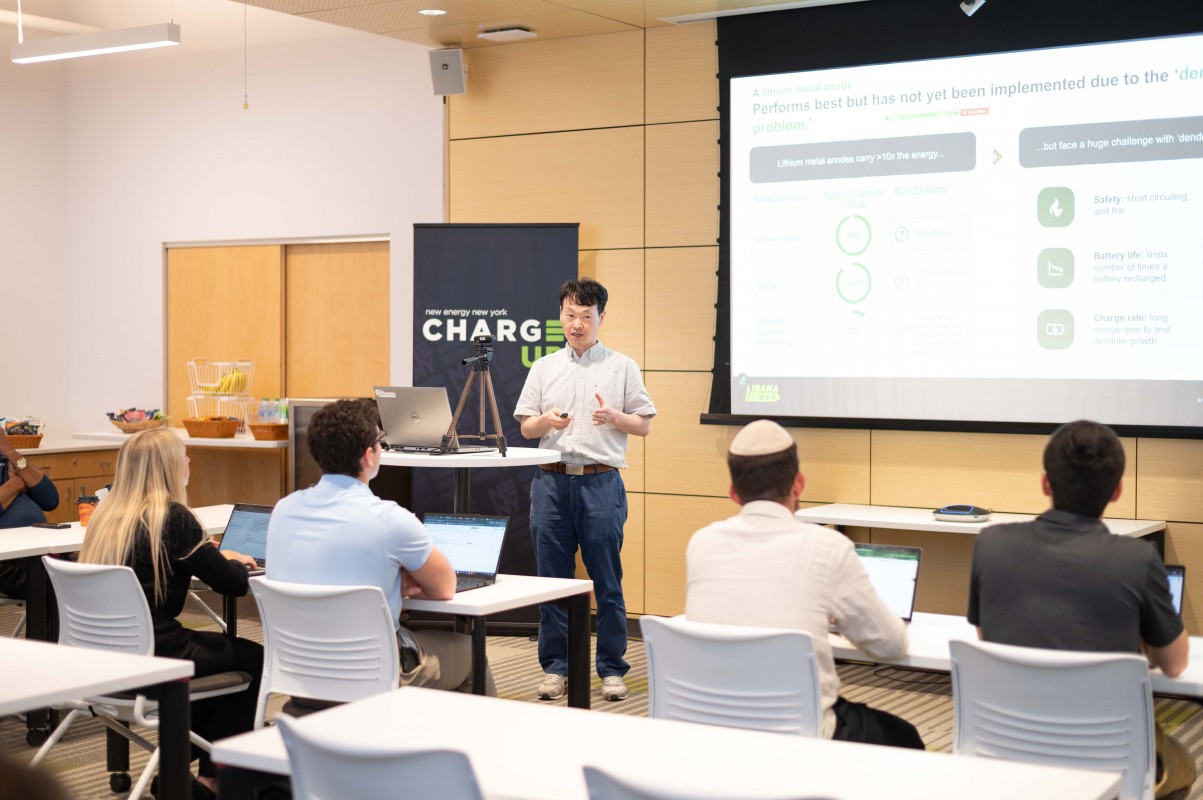
Binghamton students had an opportunity to hear pitches from seven battery startups, in a first-time collaboration between the nation’s premier battery-focused accelerator program, ChargeUp, and the new student-managed Binghamton Venture Fund.
“For the Venture Fund, we’re looking at investment opportunities in companies that could be built out, especially in the renewable and battery storage space, and companies that probably can provide greater benefit to the United States and the rest of the world,” said Binghamton senior Ashley Reed, who serves as one of the portfolio managers of the group.
At the Binghamton Venture Fund (BVF), students gain real-world experience and crucial practice in investing. While the traditional Binghamton Investment Fund, introduced in 2016, focuses on later-stage, public businesses, the BVF, in turn, exposes students to early-stage, private companies.
“With this, we’re looking to target, potentially, investments in the hundreds of thousands of dollars or more,” added senior Theodore D’Onofrio, portfolio manager for the fund and a member of the Board of Directors at the Investment Fund. “This is a lot of capital, and it can really help these businesses thrive.”
Though managed by students, the fund is headed by Anthony Del Vecchio, a School of Management adjunct professor who is also the director of the Investment Fund.
Del Vecchio teaches a course in Entrepreneurial Finance. “I started the BVF to give students a front-row seat to venture investing while also fueling startups that can create jobs and drive economic development,” he said.
As the BVF grows, students will learn the ins and outs of venture capital sourcing, investing and dealmaking while contributing to economic growth by working directly with and backing young, innovative startups in the clean energy and sustainable technology sectors.
Its mission aligned well with the ChargeUp Accelerator’s goal to support and mentor companies dedicated to advancing battery innovation and technology. The accelerator is housed in the Koffman Southern Tier Incubator. It’s one of the Binghamton-led New Energy New York’s programs that aim to bolster the region’s battery ecosystem.
“I think the Koffman and ChargeUp have a very good understanding of the space. If we can work together and understand this space better than anyone else, we will be able to identify the best companies in this space and really help push this initiative for these clean energy companies,” D’Onofrio said. “It’s a really good alignment of values at the right time. Hopefully this connection can grow into bigger and better things.”
D’Onofrio and Reed, alongside fellow BVF analysts and juniors Daniel Kovan and Michael Levin, sat in for just over two hours on a September afternoon to hear pitches from ChargeUp companies. They asked company leaders questions about their products and plans for the future.
“It’s an incredible opportunity just to witness those pitches,” said Levin, who also serves on the Board of Directors at the Investment Fund. “There’s only so many colleges in the United States that have student venture funds like this, that are actually able to go into their community and pick the top companies to expand past geography and actually contribute to what’s getting built out in the United States.”
ChargeUp’s companies offer a variety of solutions to create a cleaner, more energy-efficient world. These ideas range from self-heating lithium-ion batteries that can power through extreme cold to cells made of more abundant alternatives, including sodium, zinc and even solvents derived from fermented corn.
Collaborating with the Binghamton Venture Fund was a mutually beneficial experience for the companies and students, said Bandhana Katoch, executive director of the Koffman Southern Tier Incubator.
“Students gain real-time, hands-on experience in evaluating ventures, building the critical skills needed to succeed in the world of entrepreneurship and investment. At the same time, companies benefit from fresh perspectives and meaningful investor-style feedback that helps sharpen their strategies and accelerate growth,” Katoch said. “Together, this partnership fosters a dynamic ecosystem where learning and innovation thrive side by side.”
Kovan, who also heads the technology sector at the Binghamton Investment Fund, added, “The opportunity to hear a bunch of startups pitching is not something many undergraduates have. The more reps you get of that, and as early as possible — I mean, that’s the whole skill set.”
The BVF is also collaborating with the Koffman Southern Tier Incubator. D’Onofrio said that partnership will continue to enable BVF members to evaluate and invest in companies like the ones they heard pitch through ChargeUp.
“These are investments that may not pay out in a year from now, but they could pay out in potentially five to 10 years,” he said. “We’re really looking forward to this opportunity and really appreciate the opportunity to see these companies today. It was very interesting.”
For these students, managing both the Binghamton Investment Fund and Venture Fund has been a boost in helping them land internships and break into the industry.
Not only has this experience taught him how to think like an investor, D’Onofrio added, but it also gives students the potential to make a tangible impact on companies that need the support.
“The public companies that we invested in in the Investment Fund, they’ve already received their funding,” he said. “These companies need the funding to start additional research and development, hiring, and really, just get off the ground and start to run as businesses. So, it’s been a very different lens of thinking — and from the little experience we’ve had, it’s been an enormous learning experience so far.”
As the battery ecosystem continues to grow in upstate New York, Reed is looking forward to seeing where these startups will go.
“We’re all learning about it as we go as well, but it’s really interesting to see what’s going to power the future. These companies and the technology they’re talking about are ultimately what will shape our future and our energy needs,” she said. “I think we’re all young enough where we’re going to see that first, so I think we all find that part really exciting.”