Visiting Artist Tony Cokes explores politics and power through his multimedia work
MacArthur 'Genius Grant' winner discusses his inspirations and experiences with Binghamton University students and faculty
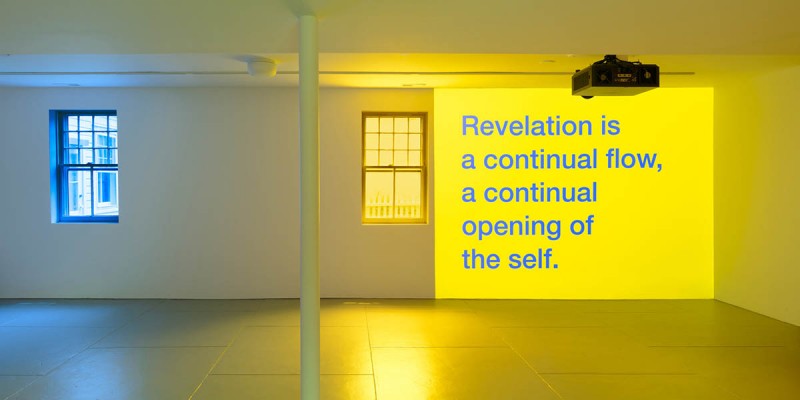
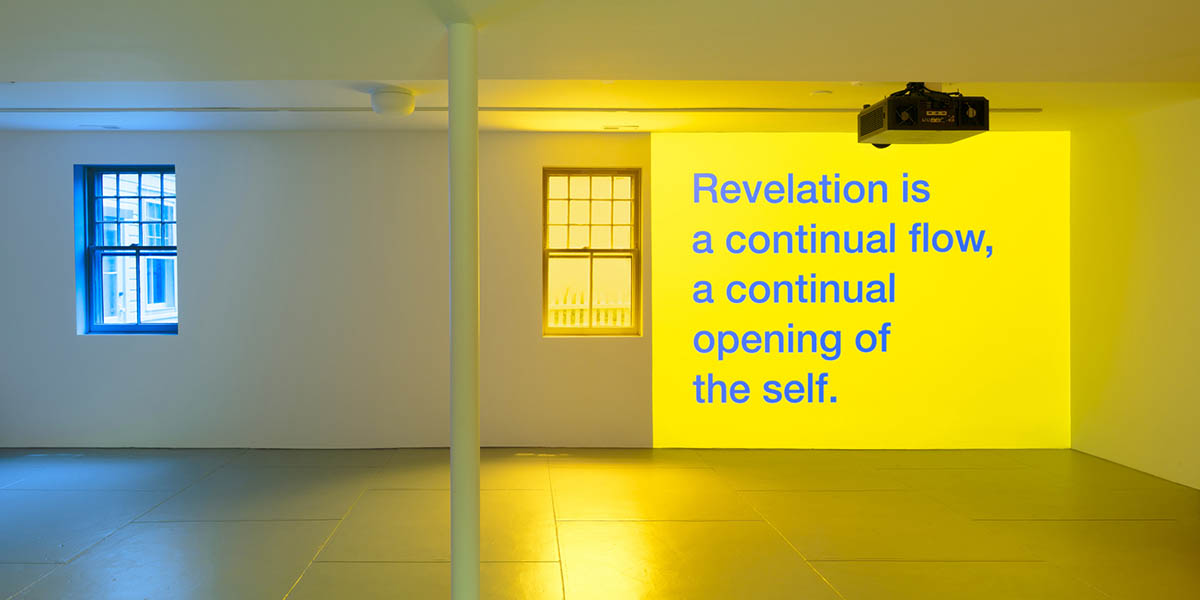
Artist Tony Cokes critiques politics and power through his creations, using music and media to bring insight into modern culture. A professor in Brown University’s Department of Modern Culture and Media, Cokes is the inaugural Visiting Artist at the Binghamton University School of the Arts.
On Nov. 17, he discussed his life and work with a campus lecture. A recipient of the MacArthur Foundation Fellowship (also known as the “Genius Grant”), Cokes’ work has inspired movements, noted Art History Professor Tom McDonough, who compared him to conceptual artists such as Walter Benjamin and Adrian Piper.
“Tony Cokes proposes a new model of reading for us in this world,” McDonough said. “A model that is at once collective and embodied, critical and sensory at the same time.”
During his talk, Cokes discussed how he takes a multidirectional “time-travel” approach to his art and seeks out opportunities for intervention in urban media. He attempts to explore the ways in which sound can relate to or juxtapose textual codes and imagery through framing different fragments of text over vibrant colors and a variety of music.
“Words are considered outside the page,” Cokes said. “But when you think of reading in and as a social context, I try to consider the productive interferences between text and context.”
He has recently been experimenting with displaying artwork in public spaces, curious about what happens when cultural and political art goes beyond a personal space and into a broad, public sphere, he said.
The first piece he shared focused on graffiti artwork on Confederate statues amid the Black Lives Matter protests. Titled “On Anti-Monumentality,” the photo collage, accompanied by the music of resistance, represented the sentiment Cokes and others felt throughout the protests. Cokes encapsulates the way art was used as a political tool during that time, aiming to give visibility to those whose voices are so often ignored.
In pieces such as “If UR Reading This It’s 2 Late Vol. 2,” “Music, Text, Politics,” “4 VOICES / 4 WEEKS,” “This isn’t theory. This is history,” “Fragments, or just Moments” and “Pittsburgh.isms (Nobody really looks at anything),” Cokes displays text in various public settings to recontextualize both historical and cultural points. The artwork deals with themes of political violence and war across history, using mass media and pop culture to offer new perspectives and critiques.
He also shared work that dealt with the coronavirus pandemic. “Of Lies and Liars” portrayed text over alternating red and blue backgrounds, questioning President Donald Trump’s actions during the pandemic’s early days. “A difficult question: How to mourn mass death” offered a critique on public health infrastructure, evoking a sense of sadness and defeat attributed to the pandemic.
Cokes the switched gears, presenting “Free Britney?,” a piece that focuses on the harm of conservatorships. He placed text recounting Britney Spears’ experiences throughout her years in a conservatorship over vibrant neon colors with a techno remix of one of her popular songs. Cokes used these aspects in relation and in contrast with one another, displaying the topic in a new manner that opened up opportunities for interpretation.
Other pieces discussed nostalgia in recounting history, used slideshows centered on individual words to critique global capitalism, and reflected on the 2019 death of Elijah McClain in Colorado following his arrest by police.
Following his talk, Cokes offered a quick Q&A session about his medium and the inspiration behind select pieces and style choices. Students also had the opportunity to meet with and learn from him as part of the Inaugural Visiting Artist Series.
School of the Arts founding director Christopher Robbins believes Cokes’ artwork and critical stance on media messages are central to the values of the arts here at Binghamton University.
“His interdisciplinary approach (text, image, sound, media culture) aligns well with the School of the Arts, because we help people expand possibilities across majors, not just within ‘traditional’ art disciplines,” Robbins said. “His work connects to multiple disciplines and addresses broad cultural issues. He pushes us to see how power and meaning get built through media and culture — exactly the kind of critical awareness that helps students become creative leaders in whatever field they enter.”