Making connections for meaningful change
Binghamton hosts the second annual National Day of Community Healing
On Tuesday, Jan. 20, Binghamton University held the second annual National Day of Community Healing (NDOCH) in the University Union’s Mandela Room. Established in 2017 by the W.K. Kellogg Foundation as part of its Truth, Racial Healing, and Transformation (TRHT) initiative, NDOCH highlights the shared responsibility of individuals, institutions and communities to address systemic racism and to foster a society grounded in equity and respect.
The event began with a land acknowledgement by Tonya Shenandoah, assistant director for Native American and Indigenous Student Initiatives, followed by welcoming remarks from Vice President for Diversity Karen Jones. The program featured breakout sessions, including restorative circles focused on LGBTQ+, racial and spiritual topics. Additional activities included a faculty panel titled “Our Stories, Our Strengths” and an art project led by Kayla Colon, coordinator at the Multicultural Resource Center.
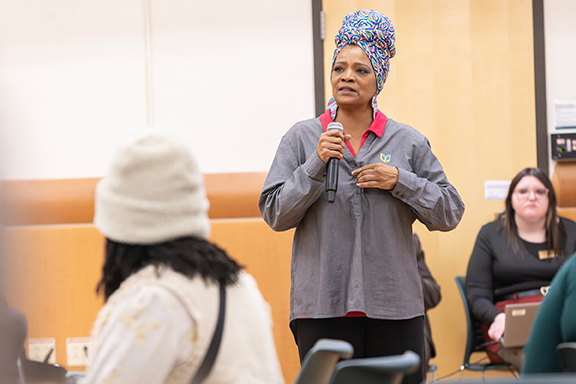
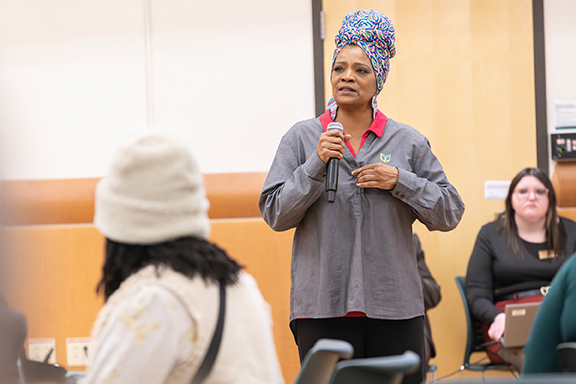
The post-lunch keynote address was delivered by Denise “Circlemamma” Holliday – a nationally respected educator, keynote speaker and practitioner of restorative practices with more than 20 years of experience working with schools, organizations and communities across the country. Holliday is known for guiding audiences on a journey of healing focused on community, connection and purpose. By sharing a story of resilience and reflection, she encourages participants to embrace the effort needed for growth, accountability and self-discovery.
“This experience challenges limiting misconceptions and opens space for truth and renewal,” said Holliday, “participants will leave grounded, inspired and reminded that healing is both personal and essential to how we support one another and our communities.”
Jen Smith, interim assistant director for restorative practices at UDiversity and a principal event organizer, notes that while such events help connect people, community healing through restorative practices requires ongoing, active commitment from all participants to achieve lasting change.
“Community healing is not a one-day event; it’s a commitment, said Smith. “It’s about acknowledging harm, honoring resilience, and reminding people that healing is possible when we show up for one another.”