Graduate student continues research and activism through Binghamton’s Kaschak Institute
Gustavo Sanchez-Bachman looks to bring awareness to communities that are often overlooked through their work in anthropology.
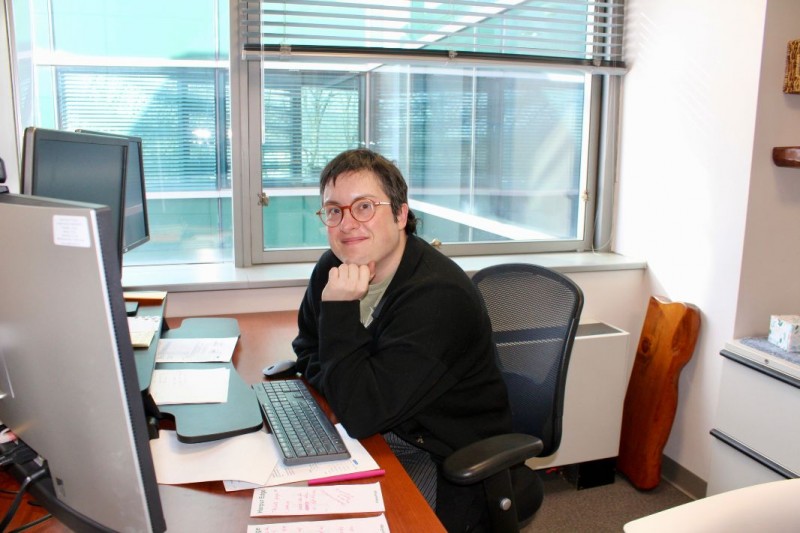
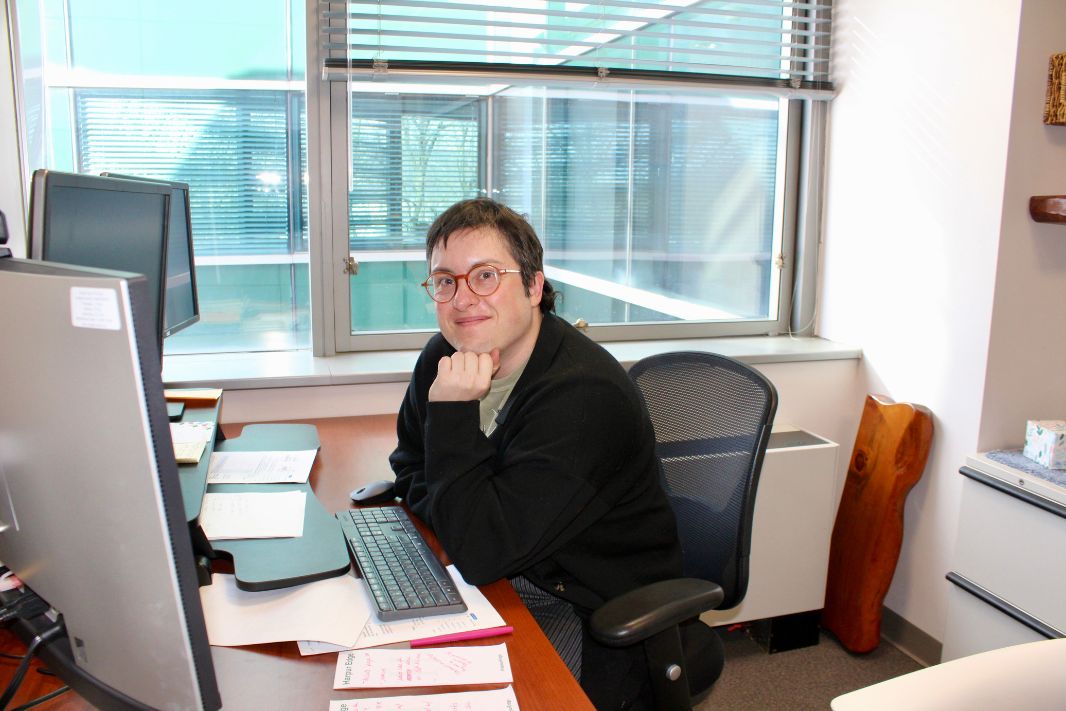
After completing an undergraduate degree in anthropology at Arizona State University, Gustavo Sanchez-Bachman came to Binghamton University to make a change through the Ellyn Uram Kaschak Institute for Social Justice for Women and Girls as they pursue a PhD in the same field–anthropology.
“I really love the way that anthropology can humanize communities that are overlooked all the time. But I think there needs to be the other element of why should people who make decisions care about this beautiful story of this beautiful family who crossed the border.” Sanchez-Bachman said.
While in Arizona, they became deeply involved in volunteer work and activism related to desert and migration issues, which fueled their passion for anthropology. This passion led them to Binghamton, where their research is now centered on ethnography–the practice of studying the customs of individual people and cultures. Sanchez-Bachman uses ethnography to track how people live and what that means for them. They aim to answer the questions: How does policy affect them? And what are the solutions?
“If there are a lot of people dying crossing the desert in the southwest [to immigrate], and there are, what’s the solution for that? And the solution is probably policy-related,” Sanchez-Bachman said. “Getting involved with the institute and all this policy work that they do, especially international level policy, showed me how these processes [work], how the policies are developed, how the treaties are negotiated, and then what that actually means for communities on the ground.”
Sanchez-Bachman’s research led them to Kaschak, where they have contributed to many projects and research initiatives over the past three years. These projects include the Climate Change Gender Action Plan (ccGAP), the Ecosystem-Based Adaptation (EbA) project, as well as various other events and research initiatives throughout campus.
The ccGAP was their first project, and the one that initially got them involved with Kaschak. This is a process where certain countries conduct research and community engagement to develop a climate change plan that specifically addresses the impact on women. This project provided Sanchez-Bachman with the opportunity to travel to Guatemala and contribute to their own research.
“I applied to do [the ccGAP project] with them; it seemed like a good opportunity,” Sanchez-Bachman said. “I study migration on the US-Mexico border, and a lot of people migrate from Guatemala, so there’s an interest, and that went really well; we did a lot of travel together that year.”
From that point on, Sanchez-Bachman remained with the institute, volunteering and continuing as a graduate assistant for other areas of need. They collaborated on a project with UN Women to create a scorecard assessing how well countries are achieving the goals they stated when including gender as part of their latest climate analysis. Additionally, they participated in organizing a summit on climate change in Black communities, a process that spanned two years.
“With the Institute, you sort of just end up doing a lot of different things as they come up,” Sanchez-Bachman said. “I’m the lead of their EbA project we’re doing now, which is Ecosystem-Based Adaptation, [and] we’re training women from countries with a lot of desertification, how to become involved in these large UN climate conventions and how to advocate on behalf of their community.”
Throughout their time with Kaschak and the team, they have progressed from graduate assistant to graduate researcher. They have taken on roles that involve leading projects, traveling to different countries, conducting research, training for conferences and working throughout campus to engage students.
“They’re an amazing team,” Sanchez-Bachman said ”It’s a really small team, but there’s a lot of room to grow in the Institute.”
To join the Kaschak team, fill out the Google Form here!