Binghamton pharmacy students advocate for reproductive healthcare access in Albany
Support shown for emergency contraception access and pharmacist-prescribed birth control legislation
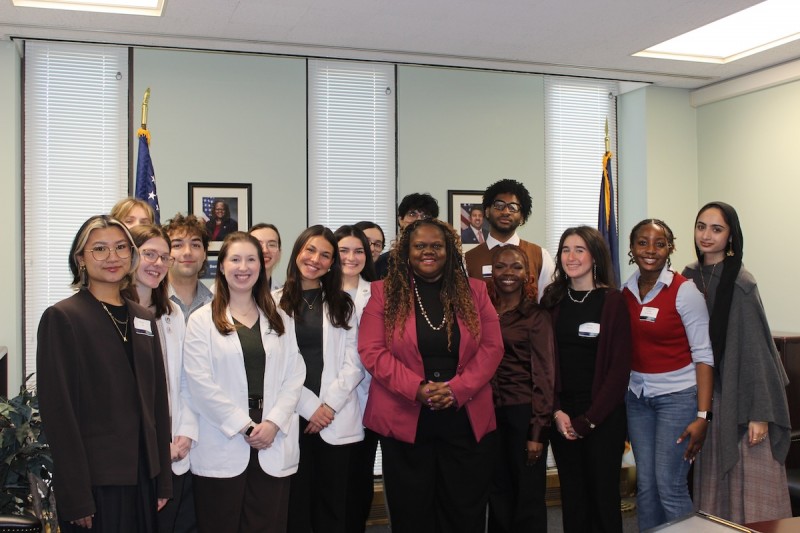
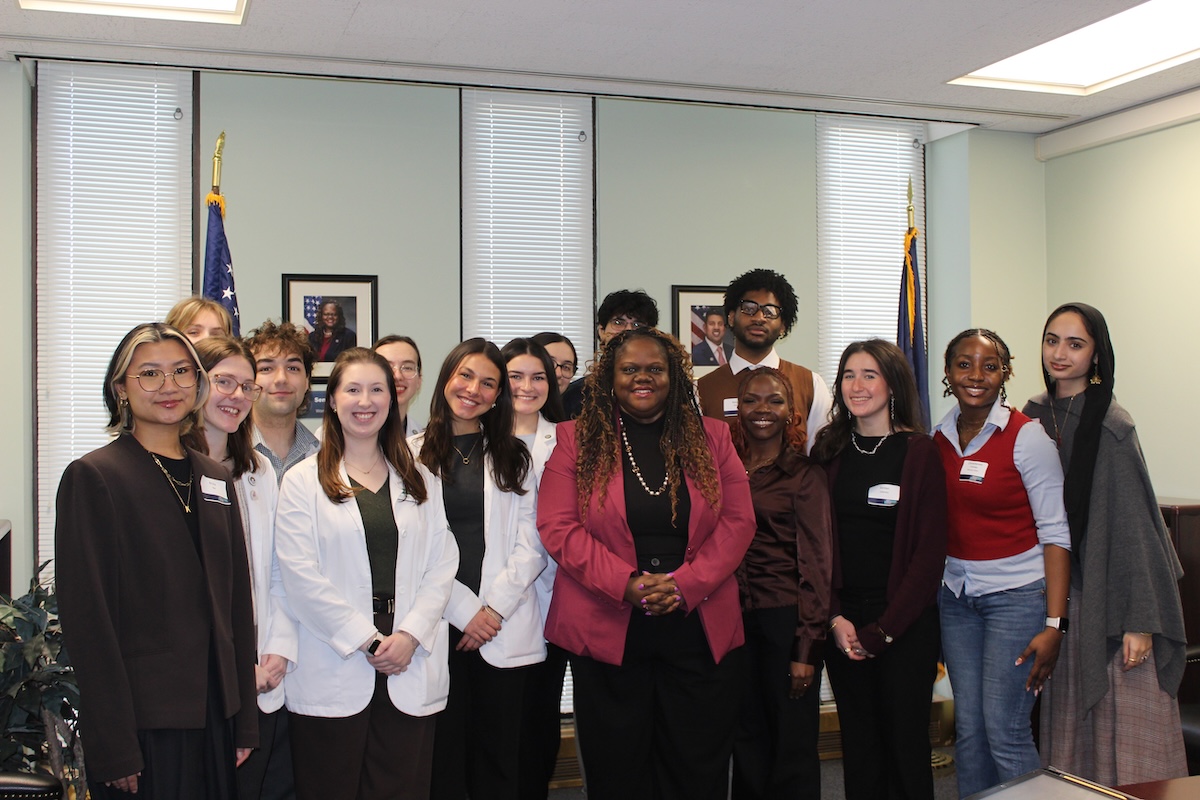
In collaboration with the NY Birth Control Access Project (NYBCAP), Binghamton University School of Pharmacy and Pharmaceutical Sciences (SOPPS) students visited the state Capitol with the hope of expanding access to reproductive healthcare.
“We spoke with legislators and their staffers about the Campuses With Emergency Contraception Act, which would require SUNY and CUNY campuses to have at least one emergency contraceptive vending machines on campus,” said Andrea Settembrini, a participating second-year PharmD student. “We also spoke about bill S1703/A2514, which would allow New York pharmacists to prescribe, dispense, and administer via standing order the hormonal birth control shot.”
This initiative — the first “Albany Day” of the year — took place on Monday, Feb. 9. For students like Settembrini, this was a valuable opportunity to connect with various individuals across the state to learn more about the impact of birth control access.
“I was able to hear a wide variety of stories that reinforced the importance of equitable access to women’s healthcare,” she said. “From individuals sharing how birth control helps them live with their PCOS, to others being the first individual in their family to achieve higher education simply due to this access, I saw many ways in which birth control is integral to our daily lives.”
To participate, students needed to attend a total of four training sessions. On the first day, student reviewed how a bill becomes a law in the state legislature, what a committee does, and the governor’s role in passing or vetoing legislation; the second day covered the legislation that the group advocated for and how the legislation will address the problem. The third explained how to speak with legislators and taught students how to share personal anecdotes to highlight the importance of the legislation; and the fourth meeting reviewed the agenda for the day and logistics.
But the fundamental knowledge is something that all pharmacists passing through SOPPS encounter and must learn how to address. Settembrini first encountered the topic from Taylor Clark, a clinical assistant professor of pharmacy practice, who taught about birth control in an Integrated Pharmacotherapy course, and through Sarah Lynch, assistant dean for academic affairs and clinical associate professor of pharmacy practice, whose work revolves around women’s health.
“NYBCAP has been such an important advocate, not only for contraceptive access in New York but also for the pharmacist’s role in that access,” Lynch added. “We have them to thank for their strong advocacy, which resulted in our recently expanded scope around self-administered hormonal contraceptive dispensing. It is a fantastic opportunity for students to participate in events like Albany Day so that they can better understand the importance and role of professional advocacy and how it can impact our profession.”
After arriving at the Capital in Albany and meeting with legislators, students also had opportunities to participate in a table talk lunch with a guest speaker, tour the capitol, and sit in on the Senate or Assembly session.
“As future pharmacy professionals, we provide a unique set of skills and knowledge that has the power to affect patient lives and the future of the pharmacy profession. It is important to use our pharmacy-related expertise to advocate for equitable healthcare access to better serve the public,” Settembrini said. “Participating in events like these further your knowledge on how the government works, how laws get made, and how we can have an active role in this process.”