Beyond the degree: How Binghamton is closing the financial literacy gap
Michael Wan ’16 returns to campus to lead a new era of financial empowerment at the Fleishman Career Center
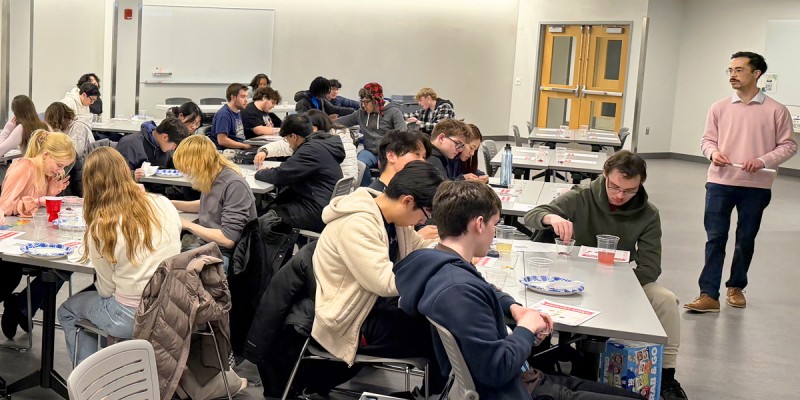
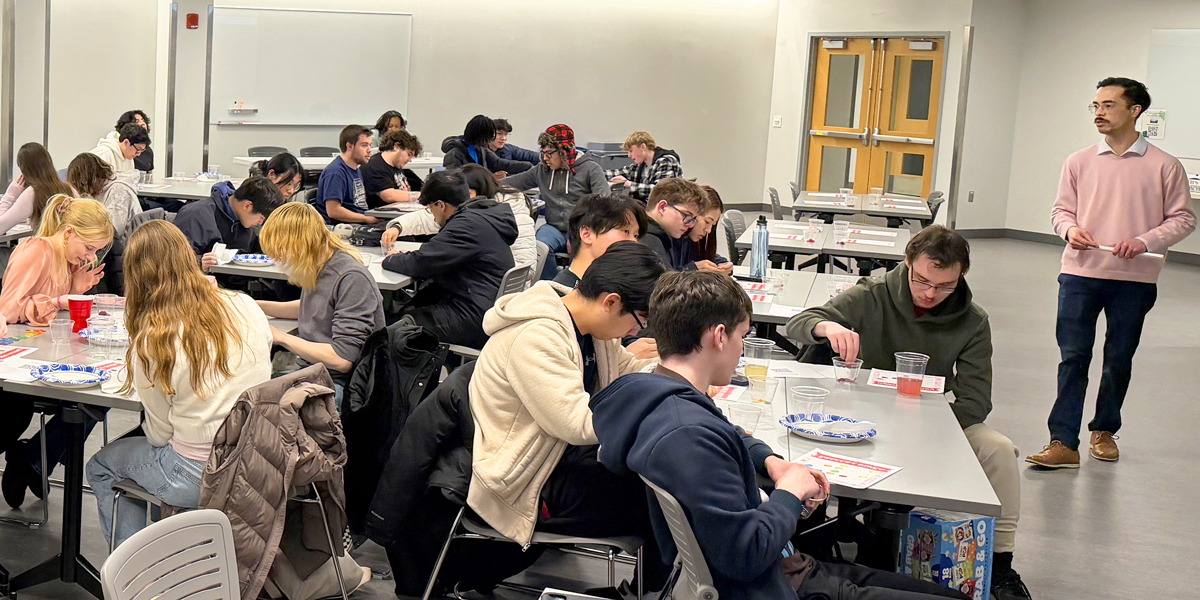
Credit cards, budgeting, and banking are essential in day-to-day life post-graduation, and proficient financial-literacy skills are required to manage money effectively — a gap that is often overlooked throughout the college experience. The Fleishman Center for Career and Professional Development is setting out to ensure Binghamton students are set for success.
Since joining the Fleishman Career Center in 2024, Michael Wan ’16, financial literacy program specialist, has met with Binghamton students to help them independently and successfully navigate their finances. With one-on-one appointments tailored to students’ personal objectives and collaborative workshops in classroom settings, Wan leads students through the steps they can take toward financial freedom, teaching skills like budget management, credit score maintenance, and salary negotiation.
“Building financial-literacy skills empowers students with the confidence and clarity to navigate college, launch their careers, and pursue their goals with purpose,” Wan said. “These skills are a core component of career readiness and equip students to thrive both on campus and throughout their lives.”
Among the many students Wan has met with is Jose Villatoro-Amaya, a sophomore who has transformed his perception of credit cards after their appointments. Initially under the impression that they were a “debt-trapping device,” Villatoro-Amaya reframed his understanding of both credit and debit with Wan’s help and was inspired to share what he’s learned with his family.
“Before college, I never knew how a credit card functioned,” he said. “People close to me either never had one or couldn’t explain to me how it worked in a way I could understand. Taking advantage of the resources here at the University, I was able to learn all about credit cards.
“Using what I now know, I want to share that knowledge with my loved ones, so that they can make better choices for their future and be better off in the long term,” he added. “These concepts at first are difficult to grasp. But with more conversation and time, I believe a better understanding can be achieved.”
Villatoro-Amaya reflected on some of the largest actionable takeaways he acquired from his conversations with Wan.
“The biggest piece of advice I received was that our spending habits are closely tied to the debt we accrue,” he said. “If we build healthy spending habits, then having a credit card becomes less stressful and easier to manage. We need to closely think about who we are as spenders and see if a credit card at our current stage of life is really for us.”
For Süheyla Noyan MFA ’25, an international student now pursuing freelance filmmaking and editing, credit cards proved to be an equally intimidating subject. Getting approved for a credit card in the past was a strenuous process, due to the absence of any pre-existing credit history.
She met with Wan to learn more about credit-building, where he provided clarifying answers and explanations that helped her see the bigger picture and understand how small, consistent decisions can contribute toward long-term goals. After two years of struggle, Noyan has now successfully applied for and been approved for a credit card.
“Being approved felt like gaining both freedom and relief,” Noyan said. “In practical terms, it opens many doors in the U.S. When you want to rent a home, just to have a roof over your head, many landlords or real estate agencies look at your credit history. Financing a car and making future investments also become much more attainable.”
Armed with valuable insight into how credit cards work and taking proactive action to monitor her new accounts responsibly, Noyan feels that she now possesses the dexterity to confidently take on the ups and downs of an unpredictable film industry.
“Financial skills give me both stability and creative freedom,” said Noyan, who advises other international students to take their financial journeys one step at a time and steadily seek out resources as soon as they can. “Filmmaking always involves money — from transportation to production costs — and most of the time, you need a budget to make things happen.”
“Understanding budgeting, taxes, and cash flow helps me make stronger, more confident decisions,” she said. “Adopting a producer’s mindset — making the most of what you have — makes projects more feasible and reduces stress. That’s why Binghamton University’s financial resources, and Michael’s clear guidance in particular, have been so valuable: they make complex topics feel manageable.”