Binghamton University celebrates Carnegie Classification for Community Engagement
Campus event highlights partnerships, student initiatives and collaboration across the region
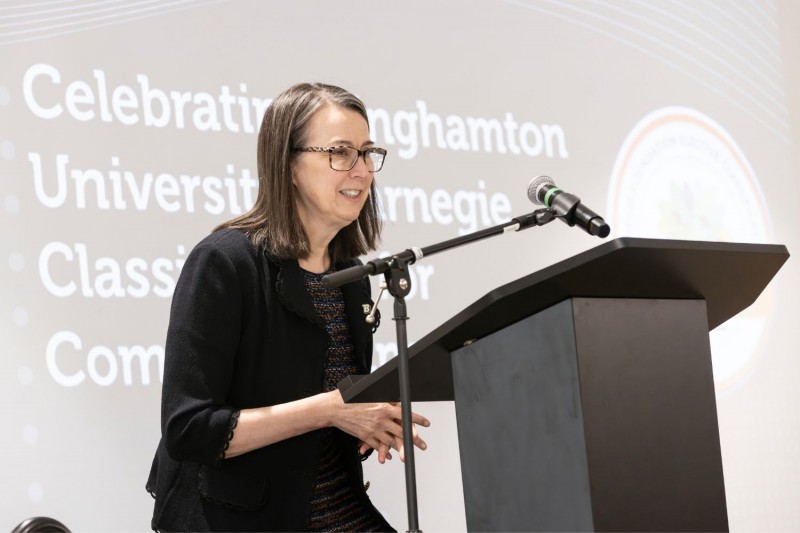
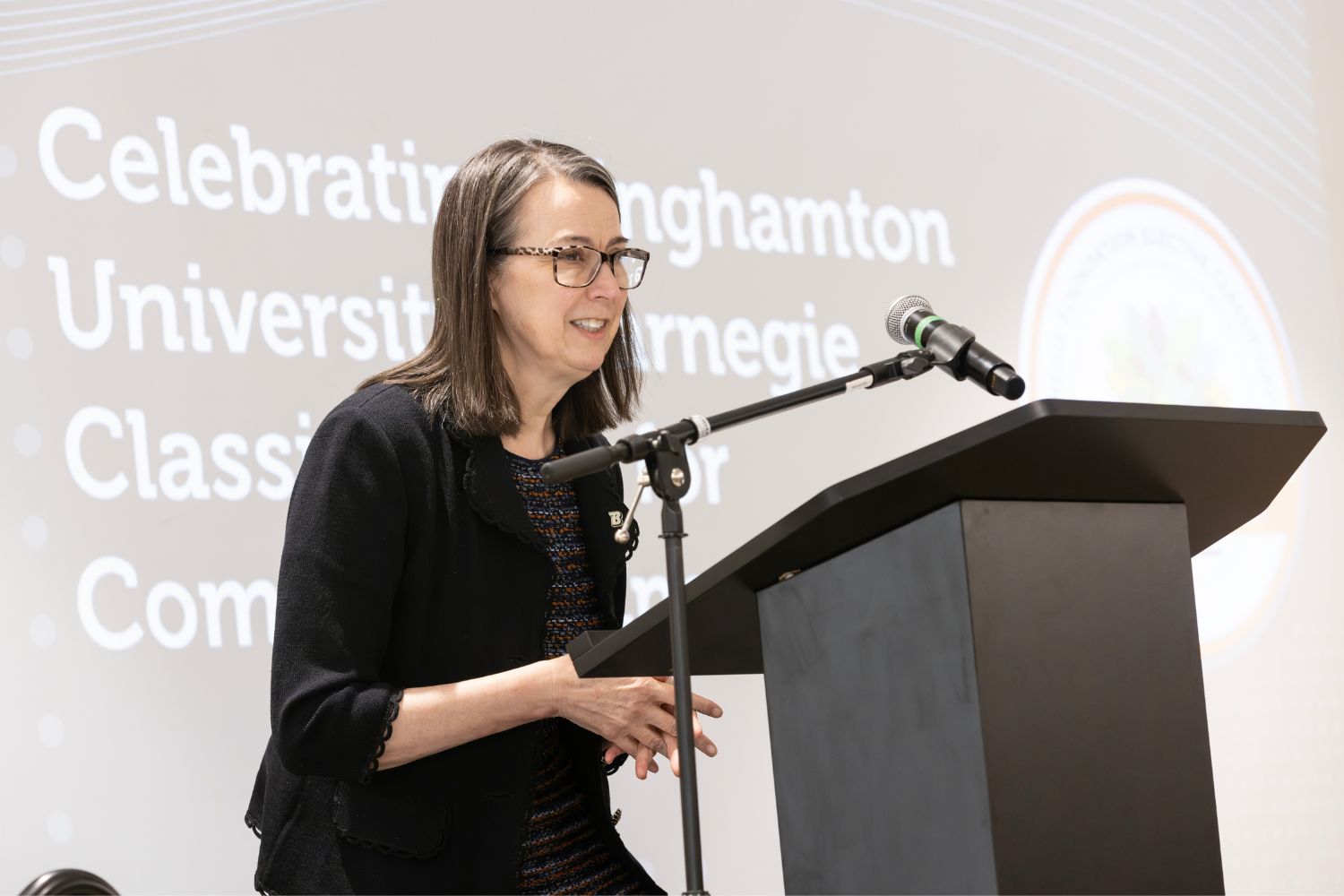
Members of the Binghamton University community gathered on March 2 to celebrate the University’s Carnegie Elective Classification for Community Engagement, a national designation recognizing institutions committed to building strong partnerships with their communities.
Awarded by the American Council on Education and the Carnegie Foundation for the Advancement of Teaching, the classification recognizes universities that integrate community engagement into teaching, research and service. The designation reflects years of collaboration among faculty, staff, students and community partners working together to address community needs, while also creating valuable learning opportunities for students.
Members of the campus and local community came together for the event to reflect on the work that led to the achievement and to highlight the many ways Binghamton students, faculty and staff engage with organizations across the region. During the program, campus leaders highlighted the significance of the recognition and the role community engagement plays in the University’s mission.
“This isn’t the finish line, because I know that for us here at Binghamton, this comes from the heart,” Binghamton University President Anne D’Alleva said. “This is who we are as a University, and I feel confident that we will move the work forward with all of your help.”
Displays highlighting community-engaged teaching, research and service initiatives illustrated the range of partnerships connecting the University to local schools, nonprofit organizations and community groups. The projects showed how students and faculty apply classroom knowledge to real-world challenges while working alongside community partners.
Many students experience this work directly through coursework and volunteer programs that connect academic learning with issues affecting the surrounding community. Joseph Murtha ‘26, a senior nursing student from Long Island, participates in community-based asthma education through his Nursing 499 course. Working alongside faculty and local partners, he visits schools to provide asthma education and resources to children and their families.
“We go into different schools and work directly with students and families on asthma education and pediatric asthma management,” Murtha said. “It’s great to get out into the community and work with people who are affected by asthma locally.”
Through partnerships with organizations such as Project Head Start and the Family Enrichment Network, Murtha and his classmates help identify children who may be at higher risk for asthma while connecting families with educational materials and resources. The experience has allowed him to see firsthand how community partnerships can support both public health and student learning.
Community engagement initiatives also connect Binghamton students with local classrooms and schools. Alec Guglielmo ’25, MSed ’27, a graduate student studying early childhood and special education and a graduate assistant with the Center for Civic Engagement, coordinates volunteers through the Youth Initiative program. The initiative connects Binghamton students with internship and volunteer opportunities in local schools.
“Coming from Long Island, I didn’t know much about the Binghamton area,” Guglielmo said. “The program helped me learn more about the community and the needs of local schools.”
Working directly with students has been one of the most rewarding parts of the experience, he said, noting that the program allows Binghamton students to support local classrooms while gaining valuable experience for their own careers in education.
“Just being able to work with students and watch them grow has been really impactful,” he said.
For Murtha, experiences like these demonstrate how community partnerships allow students to apply what they learn outside the classroom while addressing real needs in the region.
“There’s a lot that we can do if we leave the Binghamton University bubble,” Murtha said. “I’ve been really glad to be part of that.”