Binghamton University Art Museum, Watson College Fabrication Lab collaborate to expand accessibility through 3D technology
Partnership creates tactile models of artwork that visitors can explore through touch
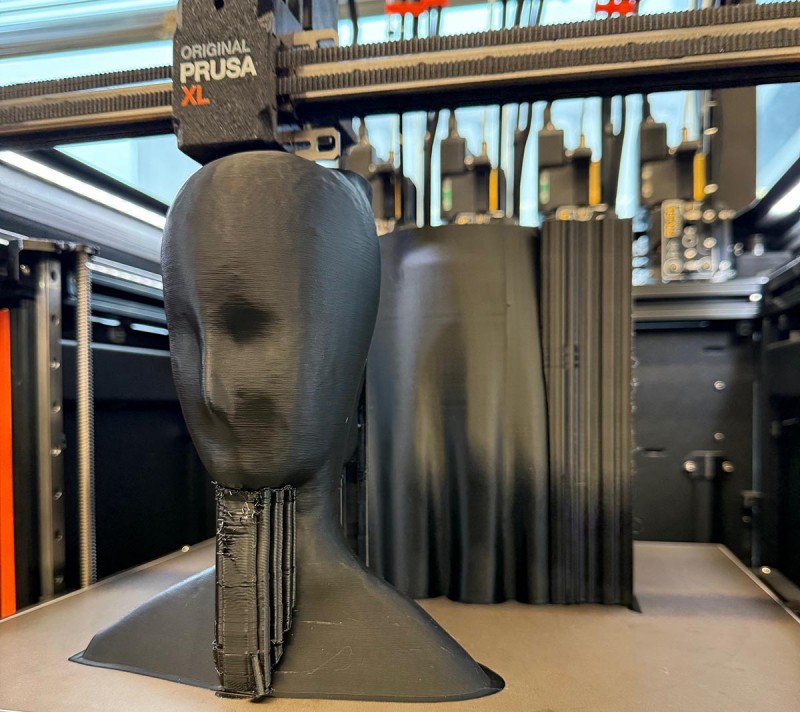
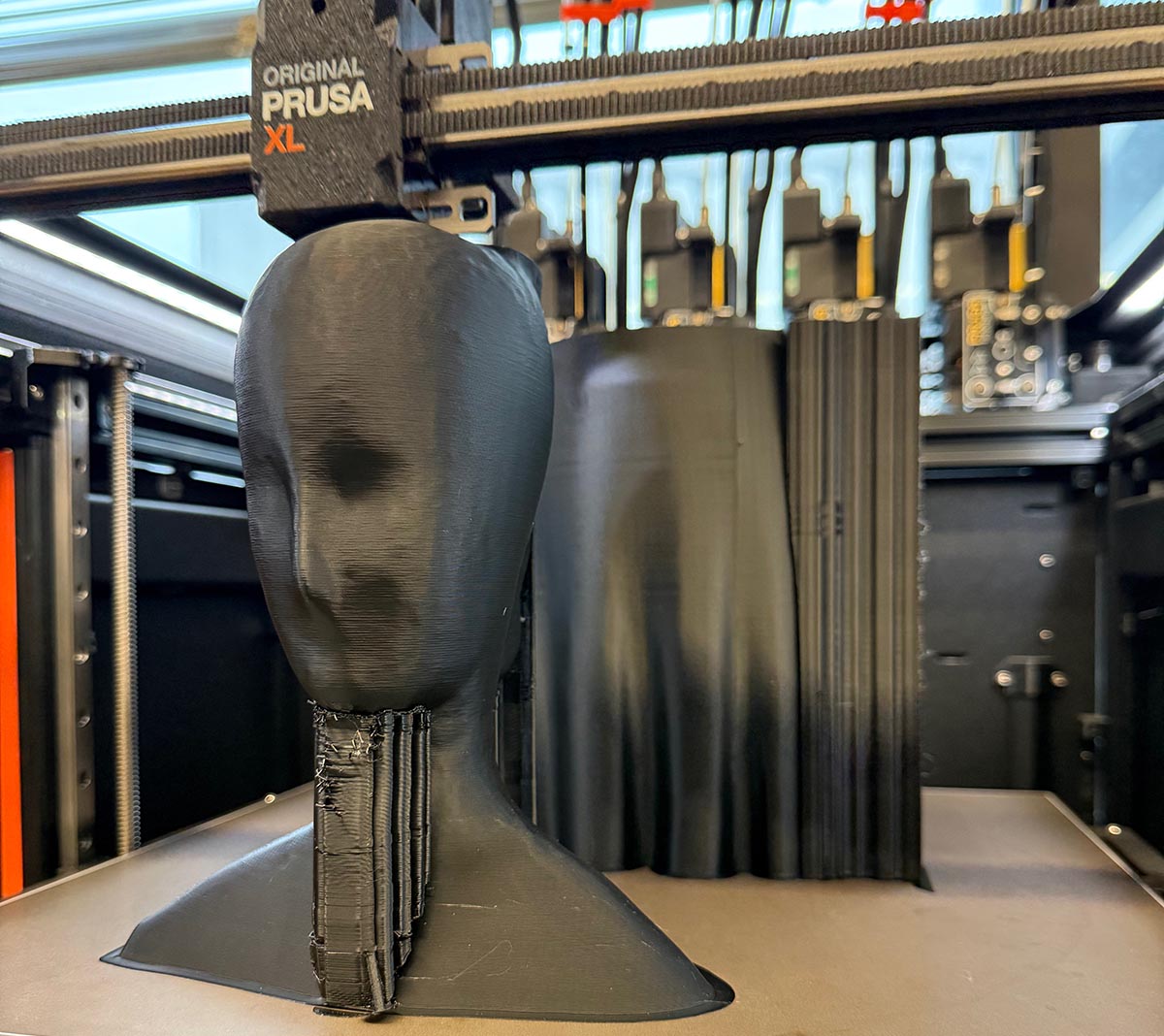
Visitors to the Binghamton University Art Museum are usually asked to look closely at the artwork on display – but not touch. However, a new collaboration with the Thomas J. Watson College of Engineering and Applied Science’s Fabrication Lab is changing that by using 3D scanning and printing technology to create tactile replicas of artworks that visitors can touch and explore.
The project focuses on “Chanteuse,” a sculpture by artist Eli Nadelman that is currently on loan to the museum through the Art Bridges Foundation. The collaboration originated from an Art Bridges grant encouraging the museum to experiment with new ways to connect with audiences and expand accessibility programs.
“This started as a grant opportunity through the Art Bridges Foundation,” said Amanda Lynn, the museum’s coordinator of education and public programs. “The way Art Bridges funds is they want you to do something that you’ve never done before, so we started thinking about what we could do to reach audiences we hadn’t worked with before.”
As the team developed the idea, museum staff explored ways to create physical models of artworks for visitors to handle through touch. “We thought, ‘Why don’t we try to create something for folks who might not be able to see what we have on display?’” Lynn said. “So we thought, ‘Why don’t we 3D print replicas of some of the works so people can actually touch and engage with art in a meaningful way?’”
The sculpture “Chanteuse” was the first work to be recreated because it was one of the pieces loaned to the museum through the Art Bridges program, and its recognizable human form makes it easier for visitors to interpret through touch.
“The key to our Art Bridges grants is that we have to use the work that they loan us,” Lynn said. “‘Chanteuse’ was what we were getting on loan, and it turned out to be a great choice because it’s something people can understand. You can feel the face, the hair, and the pleats in the dress – it’s not too abstract.”
To bring the idea to life, Lynn contacted the Watson College Fabrication Lab to see if engineering technologies could help scan and reproduce the sculpture. Vincent Brady, the director of engineering laboratories and learning environments at Watson College, said the project immediately stood out as a unique opportunity for cross-disciplinary collaboration.
“When Amanda reached out to us about the project, it seemed like a great opportunity to work with the Art Museum to see how we could help,” Brady said. “Among all the resources we have here in Watson and the Fab Lab, we have 3D printing and scanning capabilities, and we were actually in the process of upgrading our scanning technology.”
Using handheld scanners from the company Creaform, the team captured detailed digital data from the sculpture in the museum gallery. The scanning process generated a highly detailed three-dimensional model that could later be used to produce printed replicas.
“Creaform came and did a demo for us of one of their products, and they scanned a sculpture that’s in the Art Museum,” said Colleen Jennings, instructional technician at Watson College. “During that time, they explained how the platform, the software and the tools work, and we ended up with a fully rendered 3D model of the sculpture.”
Jennings said the team is now using the digital rendering to produce multiple printed versions of the piece.
“We’re now in a stage where we’re taking the model we already made and printing it on the 3D printer,” she said. “We’re making small and to-scale models of the sculpture, and then we’ll give them to the museum. Some of these are for education, so people can hold things in their hands.”
The collaboration has already expanded beyond the original sculpture. Museum staff and Fab Lab technicians are also working on ways to adapt two-dimensional works into tactile formats by adding raised surfaces and varied textures to help visitors identify different elements within a composition.
For Lynn, the partnership shows how combining artistic and technical skills can open new opportunities for accessibility and engagement in museum spaces: “You don’t often think of art museums and engineers as great partners, and this has been such a fantastic collaboration. Having that support on campus has been huge for us.”
Looking ahead, the museum hopes to continue working with the Fab Lab to create more tactile models and expand accessibility programs using pieces from the museum’s collection.
“This gives us a chance to think about ways we can become more accessible with the works of art we have,” she said. “Being able to reproduce things safely means more people can interact with the artwork, whether they are visually impaired or just want to experience it differently.”