Yuridisi: Play reimagines ‘Orpheus and Eurydice’ myth through a Filipino lens
A new adaptation by masters student Jamie Papa is scheduled for March 14 and 15
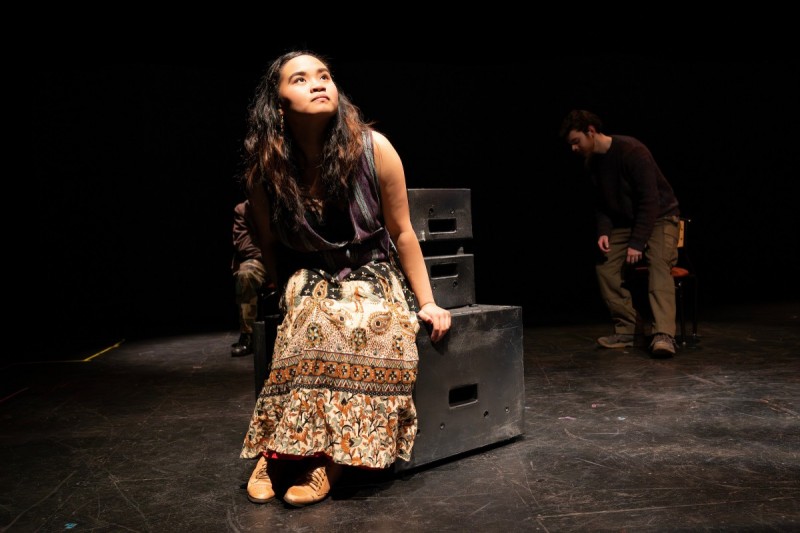
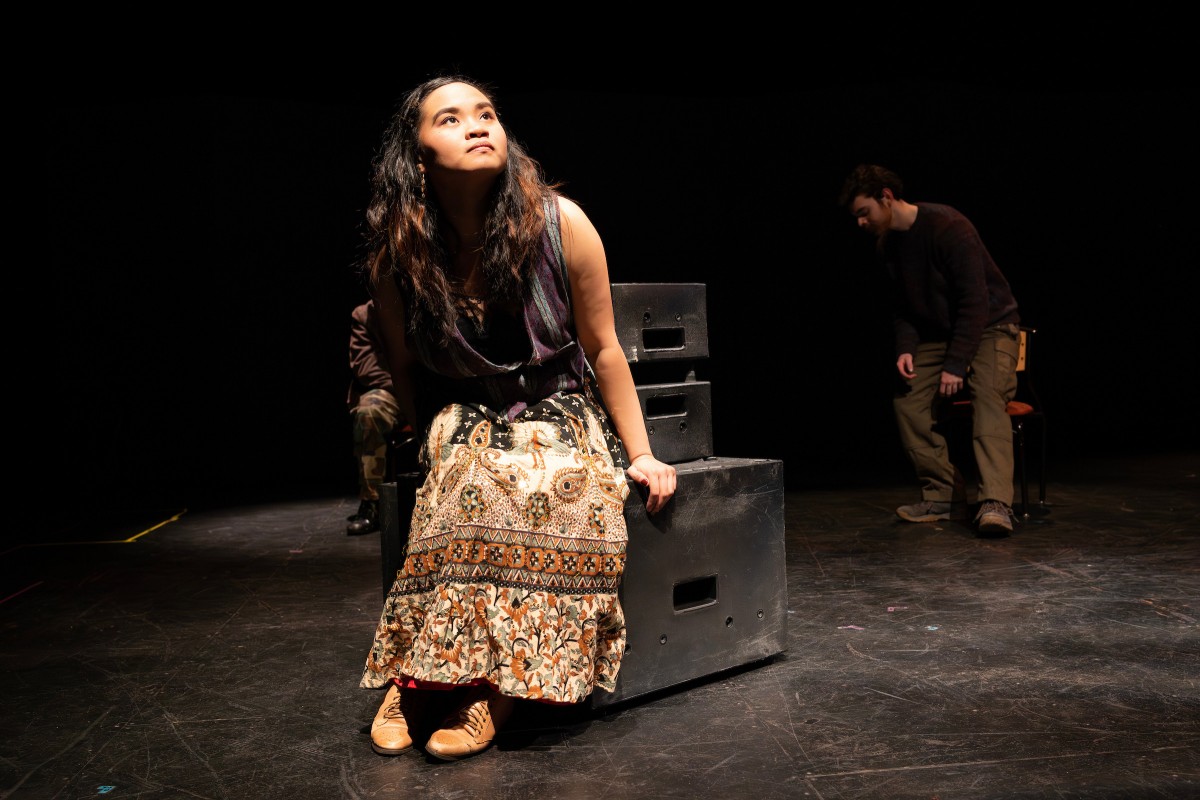
Reflective of the Filipino experience, a graduate thesis adaptation of “Orpheus and Eurydice” will be staged at 7 p.m. March 14 and 15 in Studio A of Fine Arts.
The rendition, titled “Yuridisi,” was produced by Jamie Papa, a second-year masters student of theatre with a concentration in acting, under her advisor Elizabeth Mozer, an associate professor of theatre. Her adaptation will differ from classical accounts by depicting Eurydice in a decolonial light and as an active participant in the story, while also revealing the parallels between Filipino women and the mythological character.
“This is not only a culmination of my work so far as an actor and a master’s student in theater but also a reflection of learnings and journeys that I’ve gone through, reflected upon, and observed,” Papa said.
She will be playing the lead role of Eurydice, nicknamed “Yuring” after a common older practice among Filipinos. The spelling of the show is phonetic as a reference to how “Eurydice” is not intuitively pronounced around the world, clarifying how the show says it.
Papa struggled to find representations of Filipino culture outside of multicultural organizations like the Philippine-American League and Asian Student Union. Because she hadn’t seen art that reflected her experiences on campus, she felt that her production could “give a piece of herself to the Binghamton community” in addition to dealing with prominent themes like immigration, diaspora, and identity.
“Yuridisi” weaves Filipino language and history into the script and reveals parallels between Eurydice’s lack of agency and past colonization of the Philippines through male/female power dynamic she depicts. She formed her work through researching pieces including Ovid’s “Metamorphoses” and modern adaptations such as Anais Mitchell’s “Hadestown” and Sarah Ruhl’s “Eurydice,” which bring different approaches to Orpheus and give Eurydice more depth.
“Eurydice herself is what I think of as the Filipino woman,” Papa said. “I saw parallels in her mobility, in her movement, in her spirit, in her metamorphosis. And then for Orpheus — Orpheus has been depicted so differently throughout history. Some renditions are romantic, while others are more aggressive or complex. These developments of his character reminded me of aspects of Philippine history, like Spanish and American colonization and the occupation of the country by Japan in World War II, represented by three actors who each play a different version of Orpheus.”
Papa is playing Eurydice, but she also took on many other roles, including playwright, director, dramaturge, stage manager, and graphic designer. While it’s been challenging, especially in the final week of planning, she’s enjoyed the process and has learned a lot from the experience.
“The whole piece reflects so much of myself that I can recognize the entire thing as something I’ve done and put work into,” Papa said.
A key aspect of the adaptation’s reflection of her identity is the incorporation of the Filipino language throughout the show in monologues and dialogues. Papa explained that her acting process wouldn’t be complete without her use of language, because she often paraphrases scenes or monologues that aren’t immediately clicking into Filipino to process them. This personal experience of conveying feelings in a native language is represented through Eurydice.
“It’s also a way of Eurydice privatizing her thoughts and processing things by herself — almost like it’s a secret for people who don’t understand her language,” Papa said. “Most people won’t understand what she’s saying, but there are some people who will, and she knows that she wants them to.”
The show will be free of charge and run for approximately 40 minutes. Having produced her thesis with the hopes of platforming Filipinos, especially those who attend Binghamton, Papa expressed what she hopes audience members will take away from “Yuridisi.”
“There is nothing inherently wrong with any worldview we have, because they are shaped by our lives,” Papa said. “I think that’s honestly really beautiful, that all our worldviews are specific. But they should also stay dynamic and open like the myth has been. I hope people can become more open-minded and knowledgeable when it comes to the myth, Filipino history and culture, and the world.”