Changing campus drinking culture
Research guides student-athletes in campus leadership institute
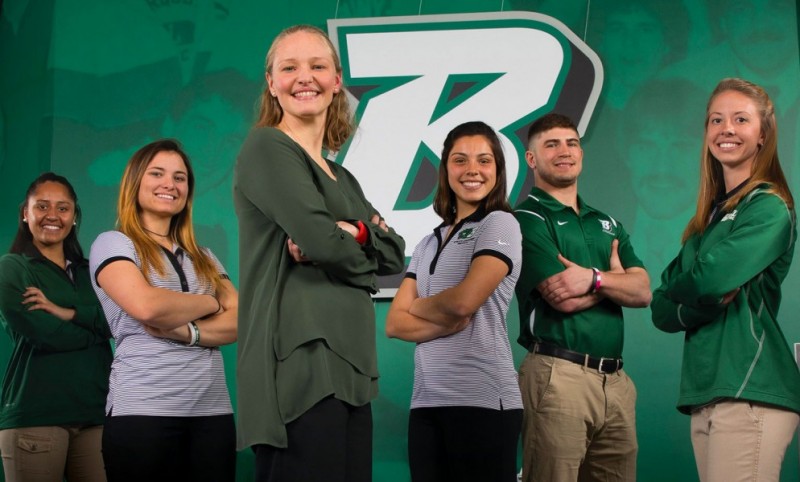
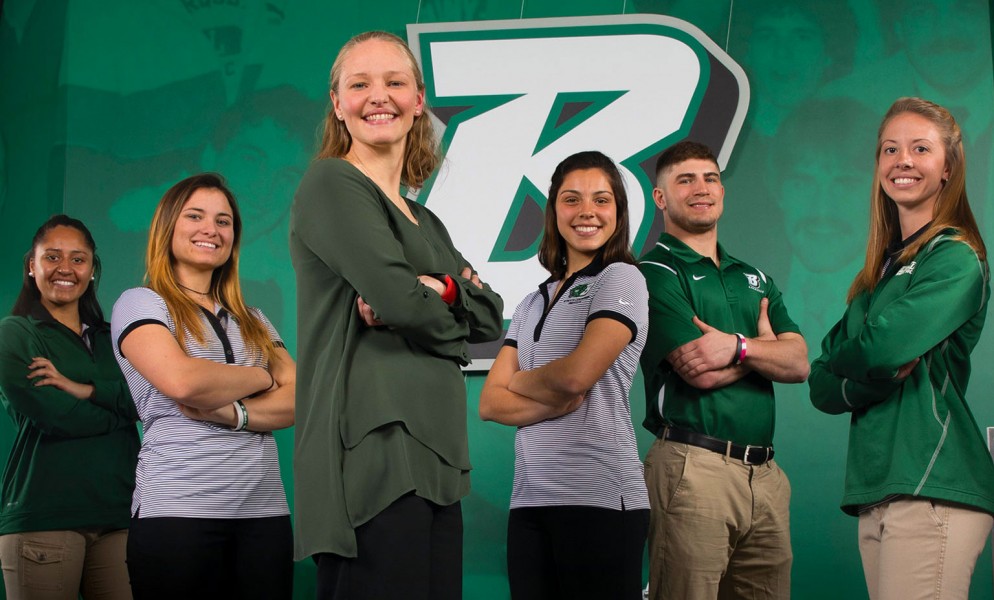
Student-athletes are on a mission to impact lives, and possibly even save them. A new campus leadership institute, guided by researchers in the College of Community and Public Affairs (CCPA), is designed to address an ever-increasing concern on college campuses: excessive drinking.
Binghamton University’s “Explore, Engage and B You” — a three-year program funded by a National Collegiate Athletic Association (NCAA) Choices grant — empowers student-athletes to make better decisions about partying and alcohol consumption. Principal Investigator Kristie Bowers ’07, PhD ’17, academic counselor and assistant for student-athlete development, is working with Associate Professor Shelley Dionne (School of Management) and Assistant Professor Nadine Mastroleo (CCPA) to develop the University’s first institute dedicated to leadership training in alcohol interventions. Assistant Athletic Director for Student-Athlete Development Linda Reynolds is guiding the team in its mentoring/counseling, community outreach, fundraising and event-planning efforts.
She says Dionne’s expertise in transformational leadership and Mastroleo’s expertise in substance-use interventions enabled the “Explore, Engage and B You” program to establish a leadership institute to train the student-athletes in alcohol interventions. According to Bowers, the students receive training and support to help them feel comfortable talking to other students about the risks associated with alcohol use, underage drinking and peer pressure.
The first cohort of 18 students received training in the 2016–17 academic year; Bowers says two more cohorts will be trained before the grant ends in 2019.
Bowers, who played soccer and majored in human development as an undergraduate, says Mastroleo, her dissertation advisor, introduced her to the literature and research on college student drinking. They felt campus could benefit from an alcohol-education program to address common student misperceptions of campus drinking behaviors; Bowers led the research and writing to apply for the NCAA grant to support “Explore, Engage and B You.”
Bowers says the program’s curriculum includes building a knowledge base around alcohol use, communication and transformational leadership.
Dionne, who is also the faculty representative for the Division of Athletics, cited several factors that distinguish “Explore, Engage and B You” from other alcohol-education projects on other campuses:
- University Athletics’ focus on holistic student development including academics, athletics, well-being and leadership
- Mastroleo’s extensive research on alcohol interventions in college students
- The University’s Center for Leadership (CLS) expertise in leadership training and development
- The partnership with Residential Life and Athletics to identify high-potential students to serve as leaders and mentors within the institute.
As associate director of the CLS, Dionne focuses on leadership development and group dynamics.
“Interdisciplinary collaboration is often where most innovation begins, and the University’s commitment to interdisciplinary research and academic pursuits offers the perfect environment for the implementation of a program that involves researchers from several disciplines, different kinds of students, and the divisions of Athletics and Student Affairs,” she says. “I am impressed by the dedication of the student-athletes in committing to dozens and dozens of hours to training — this is beyond their classroom and their athletic commitment.”
This is no small commitment.
Students meet monthly with Dionne, Mastroleo and Bowers throughout the academic year for a three-hour training session designed to:
- Create a foundation for alcohol knowledge and understanding
- Develop trust and support collaborations within the group through team-building activities
- Practice transformational leadership
- Enhance communication
Role playing is an important way for the students to gain the skills that will help them challenge traditional party norms while in college.
Mastroleo, a substance-abuse researcher who specializes in brief drug and alcohol interventions and works with college students, says members of the leadership cohort are receptive to learning best practices.
“Nearly all students will encounter alcohol at some point, whether they use it themselves or deal with a roommate, a friend or a neighbor who is drinking. It’s important for students to understand how these so-called ‘risky drinking behaviors’ affect them not only that night, but impact their social development, academic goals and so on,” Mastroleo says. “The student-athletes have embraced the process of learning new ways to talk to their teammates and peers. As we continue to build the program we are looking for more opportunities to reduce harmful alcohol use among our athletes and non-athlete students.”
A new game plan
Mastroleo says the team is coordinating alcohol-free programming on the nights historically recognized as those of “high-risk student consumption” (i.e. weekends, holidays and other campuses events).
More than 250 people came out on a Friday night in early spring to watch the student-athletes race hobby horses across the University’s West Gym. The event’s proceeds of nearly $1,000 benefitted the Addiction Treatment Center of Broome County; it was an idea that came from the students.
“Everyone who signed up committed to being alcohol-free that night,” Mastroleo says. “Obviously, Friday night is a popular night for students, and it’s a commitment for them to come and enjoy being substance-free.”
“They are really trying to change the way in which they’re motivating others to make life changes and make positive choices,” Bowers says. “They came up with the idea for ‘Night at the Races,’ and they have executed everything from signing up volunteers to organizing the event and running it.”
She says an objective of the leadership institute is to better integrate student-athletes into campus activities and provide them opportunities to expand their network of peers.
“This grant represents a growth opportunity for student-athletes, contributing to their personal development through the process of helping themselves and their peers,” she says. “They will be the face of change and this program.”
Reynolds says the work of the student-athletes supports the overarching mission of University Athletics.
“The program offers an opportunity to identify and develop student-athlete leaders to improve the alcohol-related choices of Binghamton University students. I know they are up for this challenge,” she says.
Olivia Batista, a freshman and member of the women’s lacrosse team, wasn’t sure what to expect from the institute. But, she says, “I was interested in learning more about how to portray my leadership skills and in getting involved with the University beyond just Athletics.”
She said it was uncomfortable to talk to students about their drinking habits at first.
“I’ve learned some people may not be interested in the idea that you can have fun and socialize without alcohol or other substances,” she says. “It’s important to remind people you can enjoy yourself in college without binge drinking or making bad choices.”
Oyin Adewale, a junior and member of the women’s track team, believes the program can make a difference in challenging perceptions that there is a link between alcohol and having fun in college.
“The experience has been eye-opening and has enhanced my leadership skills at practice, in meets and so many aspects of my life,” Adewale says. “This program has taught me so much about myself and how to be a role model to my peers. I’ve learned how to discuss topics (like drinking) that are usually difficult to talk about and how to be more open-minded and guide others to realizing the dangers of excessive drinking.”