Lessons from Sudan: Public health graduate student inspired to help others
Osama Mohamed, MPH '26, is grateful for the opportunities at Binghamton University and Decker College
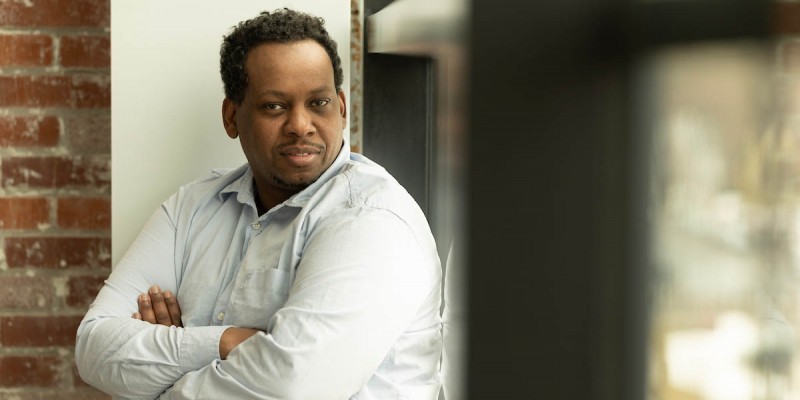
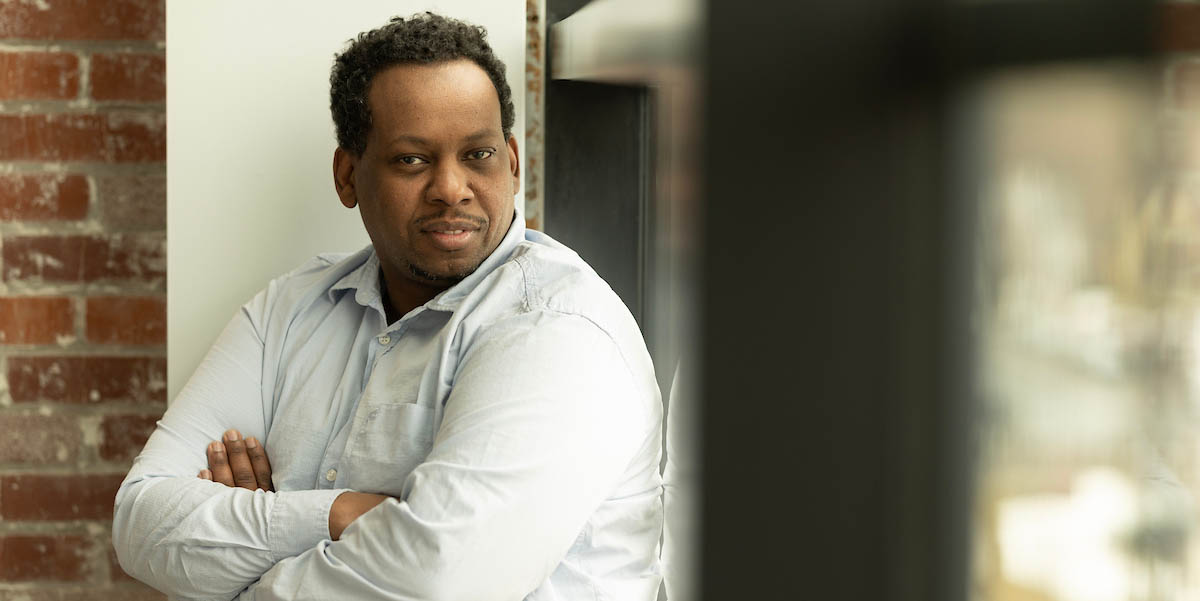
Osama Mohamed, MD, is a certified dermatologist and a Binghamton University Master of Public Health (MPH) student, motivated by his love for his family, community, and home country to study healthcare and help those in need.
Dr. Mohamed has been a U.S. citizen for over a decade, but was born in Saudi Arabia and raised in Sudan. He studied medicine and practiced dermatology for several years there before emigrating with his family to the U.S. Although Mohamed is grateful for the opportunities that Decker College of Nursing and Health Sciences has offered him, he will always consider Sudan his home.
“I miss life in Sudan. There is real life there,” he said. “The way people interact, the community engagement, friendships, and relations are so different there than in the U.S., where you feel more isolated. I miss everything: the people, the community, the nature, the food, the dancing, and my job as a dermatologist.”
Family ties
Mohamed chose to study dermatology after watching his oldest daughter suffer from atopic dermatitis, which is a severe form of eczema. His lifelong interest in health sciences and compassion for others inspired him to pursue a master’s in public health at Binghamton.
“For me, medicine is a knowledge and service at the same time,” he said. “I like to help. I like to change people’s lives, especially those with lots of diseases. If I can understand the system in the U.S., then I can fix the collapsed system back in Sudan, since the U.S. and MPH program prioritize prevention, which significantly reduces the spread of disease.
One skin disease that he especially wants to target in Sudan is leprosy. Many patients suffer from the loss of their legs or hands by auto-amputation if the damage to their nerves gets bad enough. However, the disease is curable if patients are diagnosed and treated early.
“By reducing stigma, providing proper medication, and properly training staff,” he said, “I hope to eradicate diseases like leprosy back in Sudan, which I believe the MPH program will help me with.”
Aside from being a student, Mohamed is a husband and father of five, one girl and four boys, which made his academic journey more challenging as he juggled his responsibilities to schoolwork with his duties to his family.
“I am a father before I am a student. Family is always my first priority,” he said. “I love my family, and I love to be around my kids, so I always try to make time for them. My wife is one of my greatest supporters. If there is anything I cannot do, she will instantly pick it up. She understands when I am busy with classes and fills the gap, but I’m always a father first.”
Sudan at war
Since moving to the U.S., Mohamed has regularly returned to Sudan to continue his work as a dermatologist and, more recently, to ensure the safety of his loved ones amid the ongoing civil war.
He stays informed through videos posted by those who remain in Sudan.
Like thousands of other Sudanese families, Mohamed’s parents fled their home in search of refuge. From the capital city of Khartoum, his parents went to Ethiopia, then to Saudi Arabia.
As of December 2025, the U.S. government barred Sudanese immigrants and non-immigrants from entering its borders, forcing Mohamed and his family to remain separated.
“I asked my dad what he misses about Sudan. He said he misses our memories because our house has a lot of pictures of me, my siblings, and our certificates,” Mohamed said. “He built our house with love, and then he got displaced from it. You don’t have options. If you stay, you will die.”
The lack of news coverage and foreign aid Sudan receives from the world frustrates Mohamed, and he wishes that more governments and civilians, including the U.S., would regard Sudan’s suffering as equally important as other global crises.
“Sudan is part of me, and I keep tracking the news and feeling sorry because most of the world won’t stand up for what’s going on,” he said.
‘Create a network’
Reflecting on his time at Binghamton, Mohamed is proud of all he has accomplished in both his personal and academic life.
However, the civil war carries an ongoing feeling of uneasiness.
“Constantly worrying about my friends, my family, my loved ones, and my memories was not easy while also trying to achieve my master’s degree, so I’m proud of my ability to stay focused on my goals,” he said.
Mohamed credits the support he received from MPH staff members, as well as Dr. Yvonne Johnston, Dr. Miesha Marzell, and Dr. Thomas Foley, with being pivotal to ensuring he could complete his journey at Binghamton.
The lessons he gained along the way are ones he’s not likely to forget any time soon.
“Don’t wait until you become overwhelmed to ask for help. Create a network with your classmates and peers,” he said. “You will learn from them, and if there is something you don’t know, ask your professors. They are valuable and will always guide you.”