Civil dialogue project connects Binghamton University with local schools
Through partnerships with Union-Endicott and Vestal students, the project is teaching the next generation how to turn disagreement into understanding
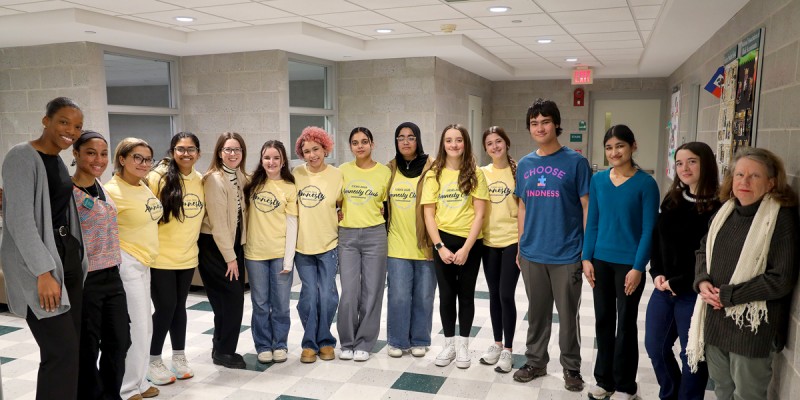
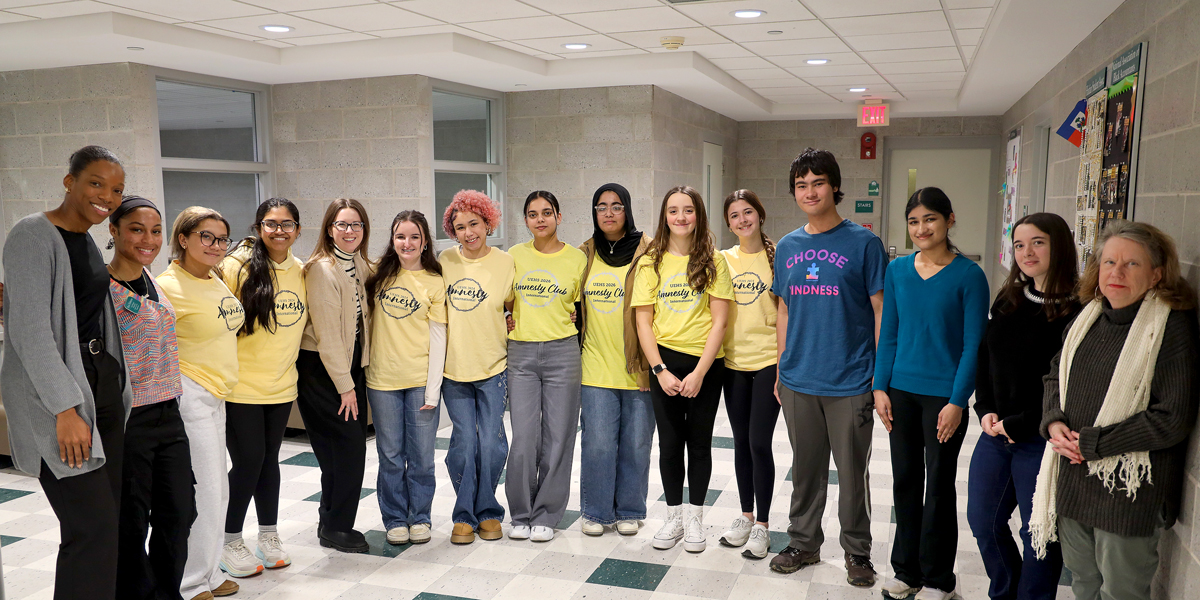
As students navigate increasingly complex social and political issues with their peers, Binghamton University is creating spaces for these conversations and helping students build the skills they need to engage in constructive dialogue and navigate disagreement through the Civil Dialogue Project. This semester, the Civil Dialogue Project, in partnership with the Constructive Dialogue Institute, is extending its work beyond campus by hosting events with local middle and high school students to explore civic issues while practicing thoughtful communication.
In early February, students from the Union-Endicott High School Amnesty Club visited campus to participate in workshops centered on building better conversations and the psychology behind disagreements. The student-led grassroots club focuses on human rights advocacy, encouraging discussions around fairness, equity, and civic responsibility. During the visit, members explored activities designed to help them reflect on their values and consider how bias shapes communication. Through guided reflection, participants revisited past interactions, identified moments where misunderstandings emerged, and reconsidered how those conversations might have unfolded differently. The exercises emphasized that disagreement does not need to end a conversation, but can instead serve as a starting point for deeper understanding.
Advisor Elizabeth Scalcione, a social studies and global studies teacher at Union-Endicott High School, emphasized the value of bringing students to campus and engaging with college-level discussion.
“I wanted them to have an experience that benefited them — to be here on campus and talk with college students. That’s really what today is about, giving back to them,” she said. Scalcione noted that opportunities like this help students prepare for the transition after high school while building confidence in sharing their perspectives.
The collaboration continued a few weeks later, when students from the club returned to campus for a deliberative dialogue workshop, held in partnership with Uncommon Grounds, a Student Association-chartered organization dedicated to fostering challenging and respectful conversations to help students responsibly engage and understand themselves, each other, and their community. The workshop focused on voter access, equity, and election security, guided by the question: “How can we guarantee fair and equal voting for all?”
As part of the session, Amnesty Club members gave their own presentation on the Democracy in Detention Act, advocating for expanded voting access for individuals in detention. Students outlined challenges such as confusion about eligibility, limited access to registration, lack of identification, restricted access to information, mail-in ballot delays, and frequent transfers between facilities. They also discussed how the proposed legislation would allow correctional facilities to establish voting centers and provide voter registration opportunities.
Following the presentation, the high school and university students moved into conversations about unequal representation, discomfort with aspects of the paper ballot process, and whether voting procedures should be more consistent across states. Students also shared differing views on the Electoral College, with some emphasizing its role in the current system and others describing it as outdated and in need of reform. As the dialogue progressed, the room grew more animated with participants responding directly to one another, building on shared ideas, and raising new questions.
The Civil Dialogue Project continued this work later in March with students from Vestal Middle School, with a foundational civil dialogue workshop. Through guided activities, students discussed which values resonated the most with them and how those values influence communication. Many students connected with the idea of respect, emphasizing how important it is to feel heard and understood in conversations with others, which helped bring the group together. The workshop then invited students to reflect on how values shape communication and influence the way disagreements unfold, while also introducing strategies for listening and responding thoughtfully.
Carla Taveras, an eighth-grade student from Vestal Middle School, said the workshop helped her think differently about how she approaches conversations and disagreements.
“Understanding other perspectives can not only make you more intelligent — it can also help you understand why other people are against what you believe,” she said. Taveras explained that these skills could be applied both at school and at home, highlighting how dialogue extends beyond structured workshops.
"It’s amazing that we can invite local K-12 schools to participate in civil dialogue programming at Binghamton University and provide students with a unique opportunity to engage in conversations with college students on issues that impact people in their communities,” said Saida Burns-Moore, civic engagement coordinator in the Center for Civic Engagement. “We are also helping students explore the 'why' behind what drives them to care about certain issues. The Civil Dialogue Project aims to continue developing partnerships with our local schools and to create more robust programming that can better equip our local youth to improve their connection to civic life and increase their confidence in sharing their perspectives on complex issues."