Re/sonic: Initiative highlights contemporary compositions for traditional instruments
Founded by artistic director and composer Hippocrates Cheng, the East Asian Music in the Contemporary World Initiative starts its New York tour on April 13
How does the Chinese lute known as a pipa interact with the Korean daegeum? And how does the daegeum differ from the Chinese dizi and Japanese ryūteki, all of which are traditional bamboo flutes?
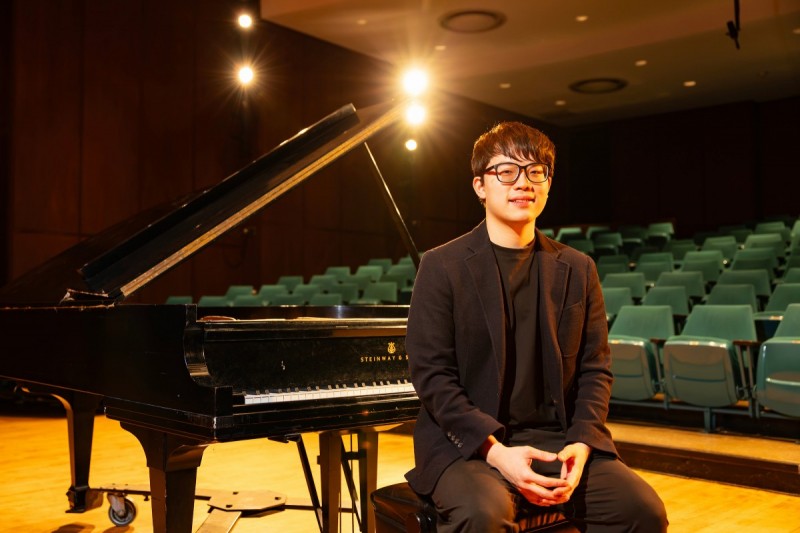
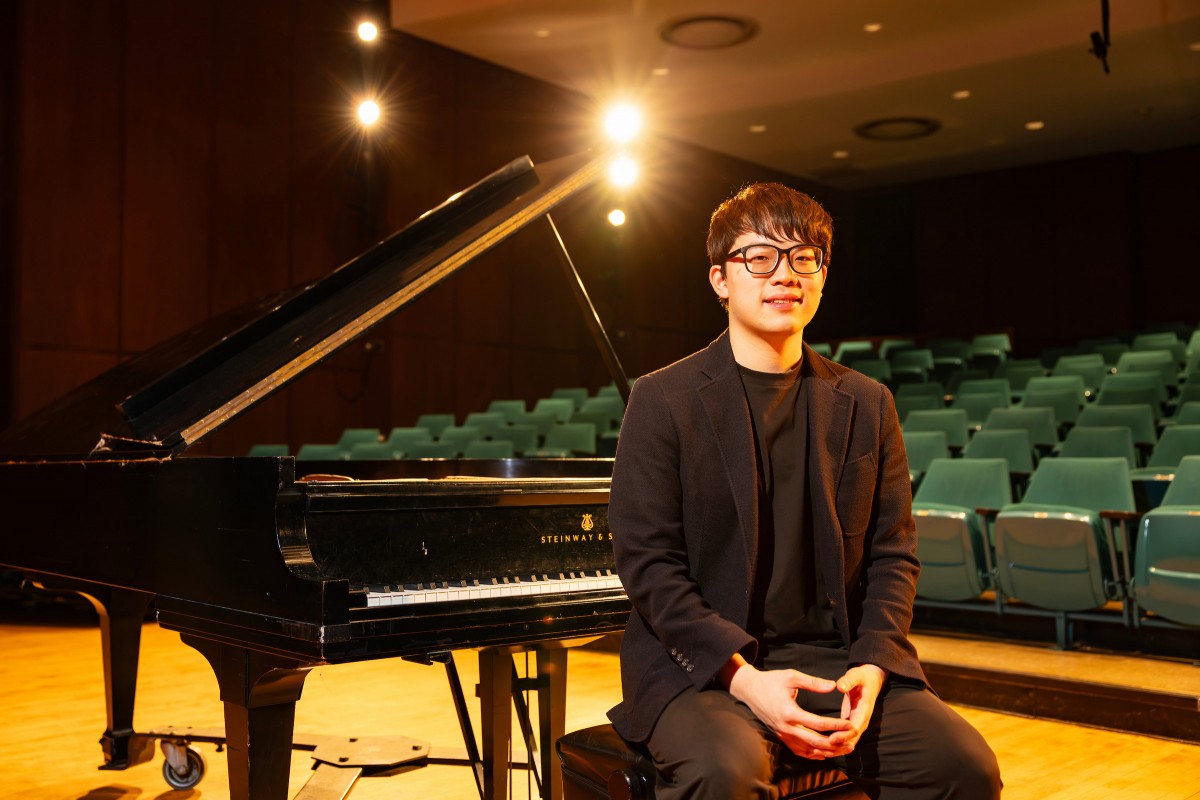
The names of these instruments may be unfamiliar to many Americans, but they have ancient and storied histories, and a wealth of repertoire. In the East Asian Music in the Contemporary World (EAMCW) initiative, Binghamton University Assistant Professor of Music Theory and Composition Hippocrates Cheng introduces these instruments to new audiences through the creation of new, contemporary compositions.
EAMCW is embarking on a New York tour during the week of April 13. The tour features nine musicians from across North America, divided equally among Chinese, Korean and Japanese instruments. These musicians include:
- Hong Da Chin on the dizi (Chinese bamboo flute)
- Beitong Liu on the erhu (Chinese fiddle)
- Yang Jin on the pipa (Chinese lute)
- Harrison Hsu on the shō (Japanese mouth organ)
- Lish Lindsey on the ryūteki (Japanese bamboo flute)
- Thomas Piercy on the hichiriki (Japanese double-reed instrument)
- Junghwa Lee on the gayageum (Korean zither)
- Sunghee Lee on the haegeum (Korean fiddle)
- Woosung Jung on the daegeum (Korean bamboo flute)
“My ultimate idea is to present concerts featuring new music for these instruments, inspired by both the languages of East Asian music and Western classical music,” Cheng said.
After their residency from April 13 to 15 on the Binghamton campus, they will head to New York City for an April 17 talk at New York University, in collaboration with the American Musicological Society, followed by an April 18 concert at the National Opera Center’s Marc A. Scorca Hall. Then it’s back to Binghamton for a concert — the official name is Re/sonic: New Music for East Asian Instruments — at the Anderson Center of the Performing Arts’ Chamber Hall at 3 p.m. April 19. After that, they head to Cornell University for an April 20 workshop, ending that night with a final concert at Ithaca College.
Sponsors and collaborators of the New York tour include Harpur College of Arts & Sciences, Binghamton University’s School of the Arts, the departments of music and Asian and Asian American Studies, and the Institute for Asia and Asian Diasporas, as well as Random Access Music, Tokyo to New York, the American Musicological Society, Ithaca College, Cornell University and New York University.
In concert and the classroom
EAMCW began in the fall of 2025, in collaboration with Northern Illinois University’s School of Music. As a composer-in-residence, Cheng gave lectures and workshops on composing for East Asian instruments and presented a concert of his work with local musicians. At the University of Toronto’s Cheng Yu Tung East Asian Library, Cheng wrote music for the area’s East Asian musicians and also gave a lecture and workshop.
The initiative’s concerts feature four pieces: one each for the Korean, Chinese and Japanese instruments, and then a larger work with all nine instruments together, Cheng said.
Typically, Chinese, Korean and Japanese musicians play in their own ensembles, mainly focusing on traditional repertoires. However, there are many commonalities between East Asian musical traditions; Japanese and Korean music, for example, were influenced and inspired by each other historically, Cheng said.
“They share commonalities; the instruments look alike or sound similar,” he said. “But they also have distinct characters, influenced by society, culture and philosophy.”
There’s also a classroom component. To provide a holistic experience for Binghamton students, Cheng developed a course on East Asian music in the contemporary world, with a focus on composing for instruments from these cultures. Cheng has incorporated the class into the tour, collaborating with student assistants in music, cinema and computer science.
“East Asian and other non-Western music receive less attention than Western music, such as classical, pop, jazz and other styles. When composers try to write for these instruments, they try to apply the knowledge they have from Western instruments,” he said.
But that sort of approach doesn’t work; the two-string Chinese fiddle known as the erhu can’t be played like a Western violin, for example. Instruments have cultural value, idioms and applications, he said.
In his class, graduate composers learn about the history and culture behind the instruments, and work with musical artists who play them. Throughout the semester, they write a short melody for the musician, who then workshops and records it for the student.
“It’s a hands-on seminar course that is quite experimental in terms of class format,” Cheng said.