Student leaders drive interprofessional impact through TRUST
Binghamton University, Upstate Medical students expand learning in rural and underserved communities
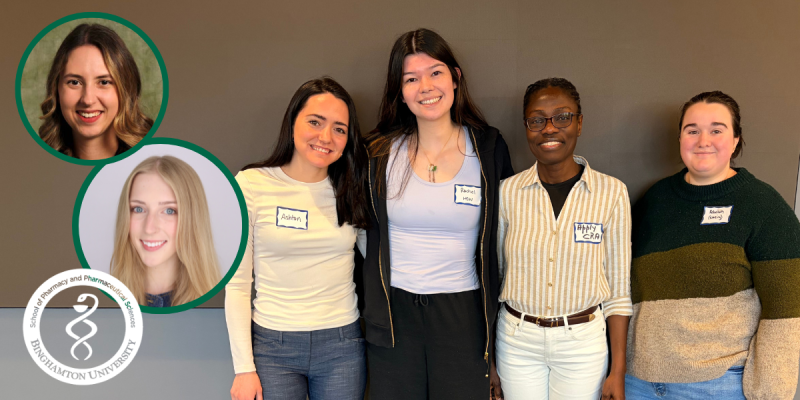
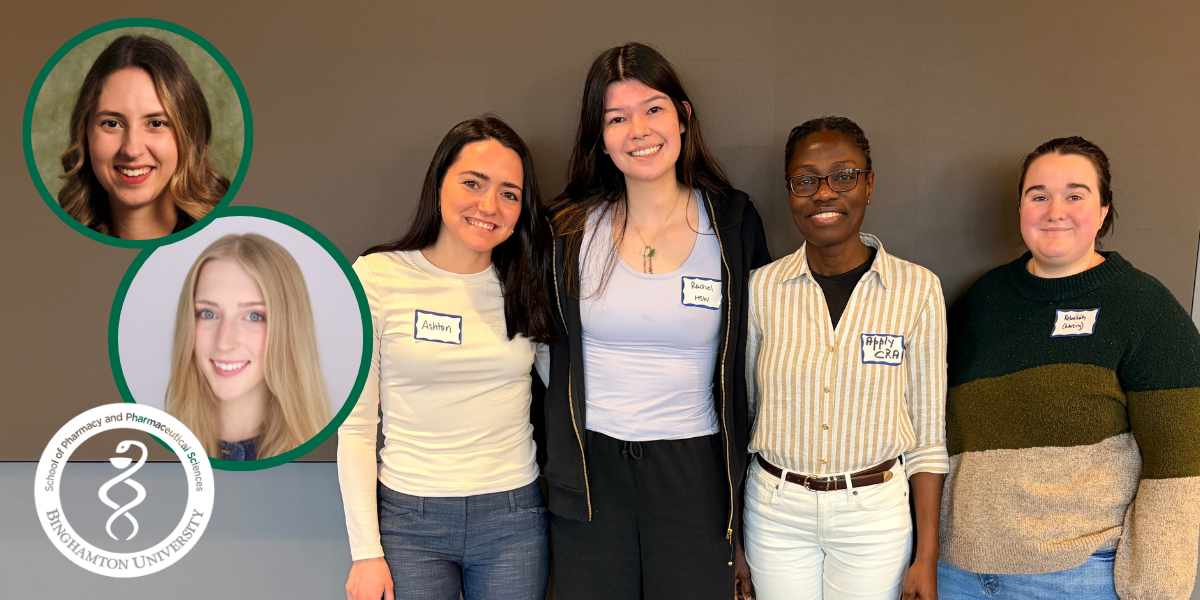
Binghamton University is full of scholars at every edge of innovative research and practice. Along with that excellent education comes an expert group of mentors, opportunities to extend your knowledge beyond the main curriculum, and, for some students, a chance to serve in a leadership role themselves.
The Rural and Underserved Service Track (TRUST), an interprofessional collaboration between Binghamton University’s Decker College of Nursing and Health Sciences, the College of Community and Public Affairs (CCPA), and the School of Pharmacy and Pharmaceutical Sciences (SOPPS), as well as SUNY Upstate Medical University and the greater community, is a two-year “add-on” program that runs concurrently to each discipline’s main curriculum.
Beyond the interprofessional, collaborative nature of the program itself, the Student Advisory Board (SAB) — an initiative created in 2024-25 — creates opportunities for TRUST scholars to take leadership roles.
“Through my experiences working as a pharmacy technician, EMT, and pharmacy intern, I saw how many patients face healthcare barriers,” said Danielle Lougen ’22, a third-year PharmD student and SAB member who earned her bachelor’s degree in integrative neuroscience from Binghamton before joining SOPPS. “TRUST aligned with my interests and helped me prepare for my career by giving me opportunities to work with students from other health professions and participate in community outreach. I wanted to take a more active role in the program!”
By promoting health literacy/cultural competency and participating in community education/outreach, TRUST scholars collaboratively provide much needed care to underserved, rural populations. SAB members serve as liaisons between professional staff and TRUST members, helping communicate ideas, concerns, and opportunities in both directions.
Currently staffed by six members — one from each discipline — the SAB engages with just under 100 total students in the TRUST program. It was initially established during the 2024-25 academic year to promote interprofessional student leadership and student feedback in the TRUST program.
“The TRUST SAB has been instrumental in ensuring concerns from each discipline are heard and addressed by both students and faculty and ensure equal representation amongst disciplines,” said Rachel Lucas, director of TRUST and a clinical assistant professor of pharmacy practice. “They have provided feedback that has continuously improved the program, and have provided mentorship to other interprofessional TRUST Scholars related to community-engaged service activity development. Our second year of SAB members have continued to expand upon and start new initiatives to better support student success in TRUST!”
Ashton Ariola, who spearheads the medicine students from Upstate Medical, plans to graduate in 2028. Growing up in a rural community outside Syracuse herself, she believes that TRUST is filling a gap in the current medical school curriculum. A first-gen college student, she was drawn to the mission and the opportunity to devote more to the program and help it expand.
TRUST scholars also participate in service activities and four learning retreats a year, focusing on rural and underserved patient populations; second-year TRUST scholars, like Ariola, volunteer and lead their own service activity, typically done in conjunction with a community organization or partner, in addition to finding ways to improve the TRUST experience for other students.
“A service initiative that I’ve been involved in includes a crafting support group at Crouse Hospital for hospitalized, antepartum, pregnant patients,” Ariola said. “The SAB is also currently exploring the idea of a ‘TRUST Survival Guide’ for new TRUST scholars, a carpooling group chat for our TRUST scholars to travel to our retreats, which are split between Binghamton and Syracuse, and a mentorship program to pair first-year TRUST scholars up with second years to maximize their experience.”
In many ways, the SAB is a microcosm of TRUST. In the same way these retreats are interdisciplinary, the advisory board purposefully works with people from every program — a continuation of the goal and message that learning to work with people from other professions is essential for good patient care.
SAB members also help in recruiting efforts; for members like Ariola and Rebekah Warner, the nursing program’s representative, this helps them personally grow confidence now, as well as in their future careers advocating for patients.
“To try and make sure everyone’s opinions and voices are heard is very important to me. Ultimately, my goal as part of the board is to be a voice for everyone,” Ariola said. “Before my experiences in TRUST, I wouldn’t have known how to create a service project and get people involved. Thanks to this programming, with a lot of help and resources and support, I have a better understanding and know how to identify needs in a community to create a project that serves the people. Because of this experience, I will also now be a lot more likely to continue to be civically engaged and help others throughout my career.”
Warner, who said that her small town had “more cows than people,” applied to Binghamton with the HRSA grant and joined TRUST as a requirement, but she so enjoyed the interprofessional collaboration that it was second nature to help spread awareness and engage with other students. Her service activity this year is a collaboration with the Poison Control Center at Upstate Medical.
“We’ve had two or three events so far where we share information about what the Center does, who it serves, to various communities. With my home background in mind, we’re planning an event in coordination with the Center that’s focused on agricultural safety. Being able to merge where I grew up with my career in healthcare and TRUST has been amazing.”
Ammcise Apply is a doctoral student in her third year in the community, research, and action program at Binghamton. From Haiti, she pursued her master’s degree in public health and earned a Fulbright to continue her studies; she originally joined TRUST because it reminded her of the people in her home country, who she hopes to one day serve again.
“Even though I worked for years in public health settings in my country, TRUST helped me to better understand how community action works in the States, and how different disciplines can come together and end up creating important outcomes,” Apply said.
Now, she sees the SAB and TRUST as a way to bring that passion for community action into practice, and that includes connecting other students with opportunities to excel.
“We serve as a bridge between students in and out of our disciplines with TRUST,” she added. “The program is so valuable in preparing students to work and collaborate in real-world settings. I often feel as if some students who don’t primarily have a clinical perspective believe they don’t belong to TRUST. But TRUST can help any student, and particularly students dedicated to working and engaging communities in the research.”
Together with the support of faculty members, the SAB creates a dynamic, collaborative program, empowering students to lead and innovate, extending TRUST’s impact beyond one individual’s impact.
“Each of these students has been very successful in implementing new service activities and have been a leader in developing them,” Lucas said. “Thank you to each member of the SAB for being leaders in your own professions, and in TRUST!”