Hiding Places: Filmmaker’s work explores the boundaries of human and non-human
Magda Bermudez’s experimental film will screen at the European Media Art Festival in Germany
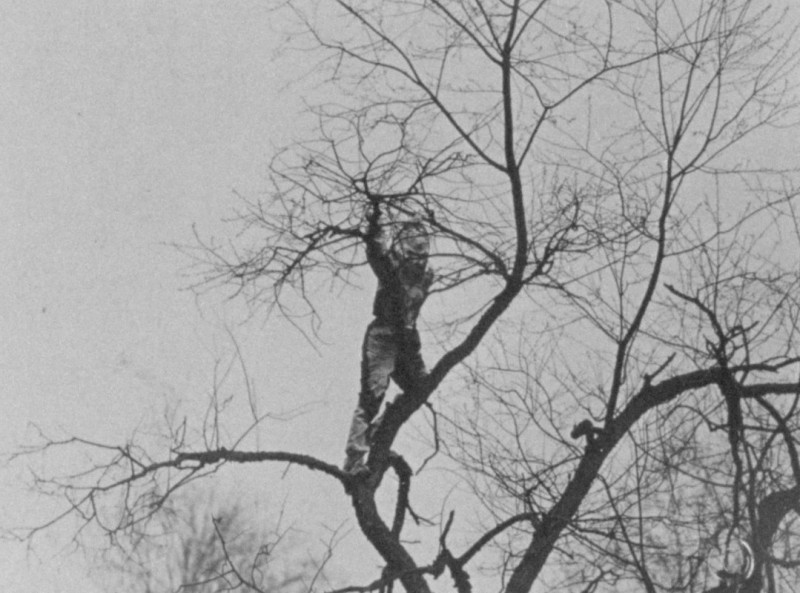
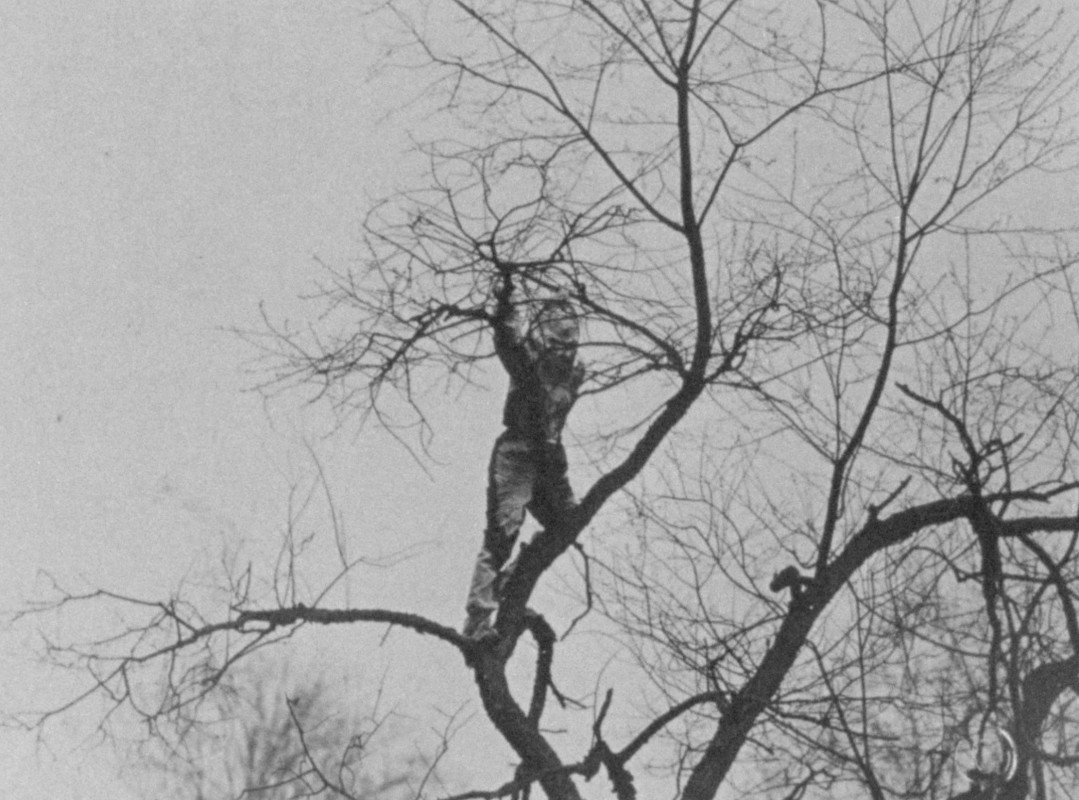
Women pretend to be rocks. Military operations masquerade as art education. One woman deserts to pursue a radical act of unselfing.
That’s the synopsis for Binghamton University Assistant Professor of Cinema Magdalena Bermudez’s experimental film Hiding Places, which will be screened on April 25 at the European Media Art Festival in Osnabrück, Germany.
Bermudez, who completed her MFA in Cinematic Arts from the University of Wisconsin-Milwaukee, joined Harpur College’s Cinema Department a year and a half ago, drawn by its long legacy of experimental film.
“When it was founded, the intention was to support artists who thought in divergent ways about filmmaking rather than the Hollywood model,” she explained. “That’s what I do in my work. I had known about (Binghamton) for a long time.”
Completed last summer on 16 mm film, Hiding Places is about the Women’s Reserve Camouflage Corps of 1918, a group of female artists from central New York and Philadelphia who were conscripted by the military during World War I. Their goal: Use their creative skills to create military camouflage suits.
Bermudez chanced upon a photo archive of the Corps in the Library of Congress. As soon as she saw the images, she was struck by their possibility.
“Some of the stills look just like a landscape. You don’t see anyone in it because they’re camouflaged,” she said. “Then I realized, there she is: She’s that rock, or she’s behind that tree. They look like they’re having a lovely time, but there’s an interesting tension because of the reasons behind it; they’re participating in a war.”
The film includes both archival still images and reenactments of those images, in which the figures begin to move in subtle ways, eventually becoming animated.
While Hiding Places has expository, documentary aspects, Bermudez uses the material to create a fictional story, told with text on the screen. A woman who loves to draw realizes that she is becoming the non-humans that she is mimicking, relinquishing her sense of self.
So far, the film has made the rounds at film festivals around the world, including the Wunderground Film Festival in Belgium, the Onion City Film Festival in Chicago, the International Film and Multimedia Festival in Argentina, and the Alchemy Film and Moving Image Festival in Scotland. It received an honorable mention at both the Chicago and Argentina events.
Bermudez’s films frequently examine the relationship between humans, the natural world and technology, using a variety of media and techniques. She’s fascinated by the complex and murky boundaries between the human and non-human, and the idea of mimicry, she said.
“It’s core to filmmaking; making images is a form of duplicating the world around us,” she explained. “In this project, I loved this idea of the human becoming the non-human, the blurriness of that.”
Her current project continues to explore these themes; it centers on Boquila trifoliolata, a South American vine that mimics the leaf shapes of other plants in its environment. Scientists still don’t understand the mechanism, she said.
“My work is a way of learning about the world,” she said. “When people watch my films, I want them to have a sense of something unfolding, and lean into that process, becoming more engaged and surprised.”