Source Project class transcribes census records from rare Sephardi script
Students’ knowledge of Solitreo, a handwritten form of Ladino, is helping preserve records from a now-lost diaspora
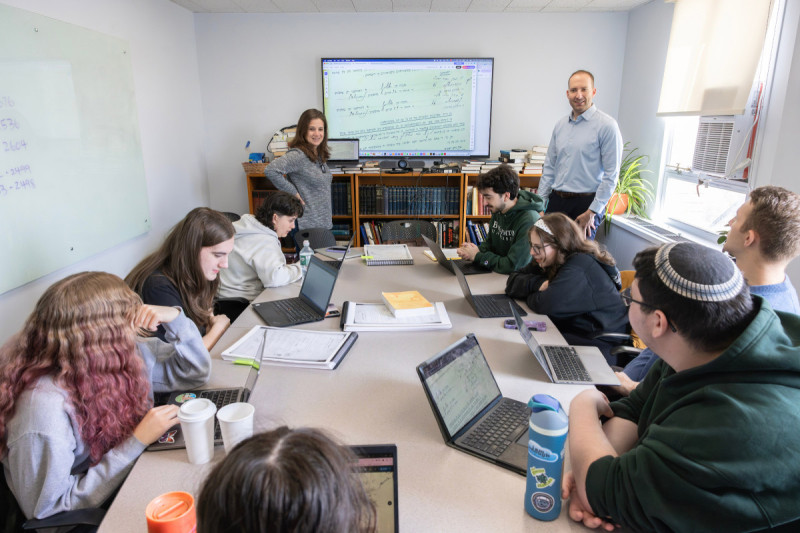
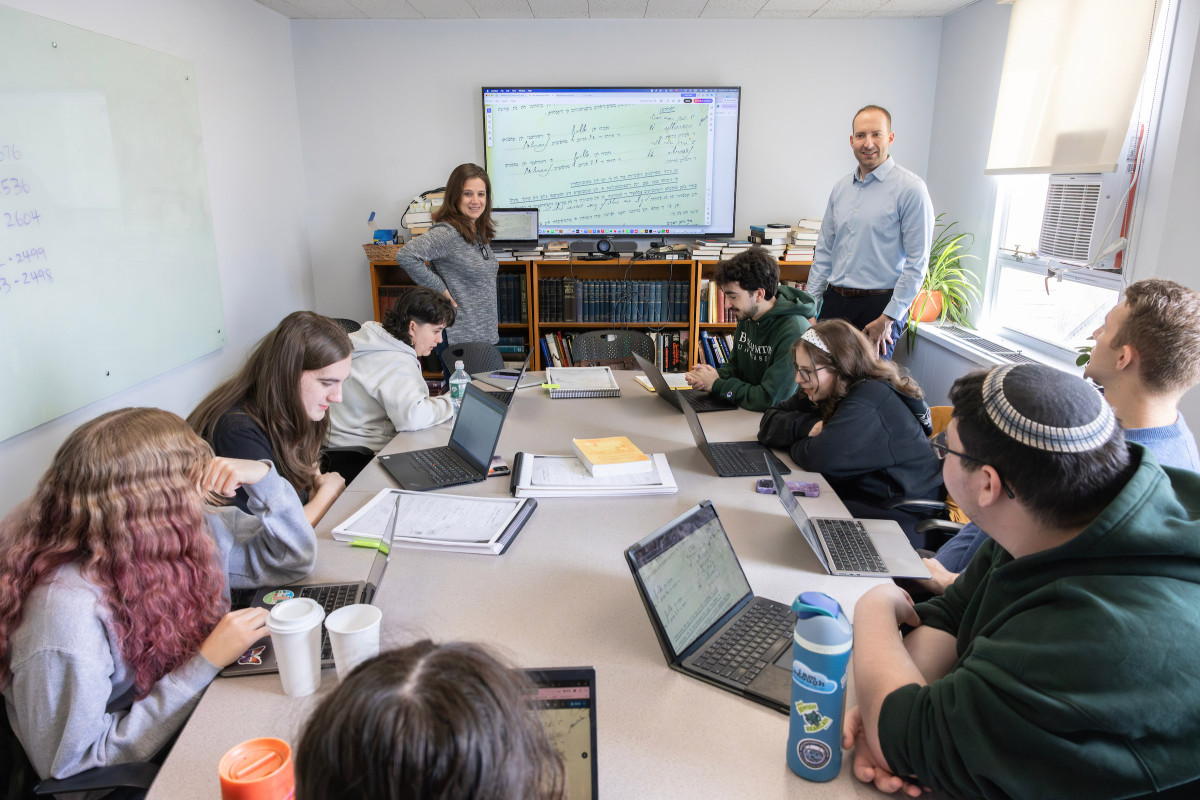
On the screen, the census records formed a complex alphabet soup.
Headings were in a heavy black Meruba print, with smaller letters in Rashi underneath, interspersed with a florid Solitreo scrawl. And then there were street names in Greek; this was Salonica after all, today known as Thessaloniki.
Associate Professor of Spanish and Linguistics Bryan Kirschen and Associate Professor of Judaic Studies and History Dina Danon co-teach Roots and Routes in Sephardic Studies through the Source Project, which offers first-year students the opportunity to engage in authentic humanities research. Through this class, students are documenting a nearly lost community: Salonica’s Sephardic Jews, who were decimated during the Holocaust.
“These are census records from the Jewish community in Salonica, Greece, in the 1930s. They’re written in Ladino, which is the Spanish that these Jews spoke, but much of it is written in a very rare type of cursive,” explained Aaron Miller, a first-year student majoring in Greek and Latin. “We’ve been learning how to read it.”
Technically, the students are performing transliteration, in this case, rendering Hebrew characters into Latin characters.
Meruba, Rashi, and Solitreo are all based upon Hebrew characters; the first is analogous to today’s Hebrew writing system. The Rashi script, which is similar to block print, was used for Ladino texts throughout Ottoman lands. Hebrew speakers today may be able to fumble through Rashi letters, since they are derived from Meruba
Solitreo, however, is a cursive Sephardi script that most people can no longer read; the cursive form of modern Hebrew is Ashkenazi in origin, Danon explained.
“That style of writing has not been used by writers of the language for a few generations, and we are quite impressed by how the students are able to navigate texts in that script, especially when they work together,” Kirschen said. “Dina and I would be surprised if there are even 100 people in the country with this ability.”
Discovering the diaspora
The class is working with the genealogy organization JewishGen, with the goal of making the records publicly available at some point. They consist mainly of addresses, dates and names, listing parents, children and the professions of people in this community. Many of the subjects represented in these records were manual laborers, noted first-year linguistics major Erin Keating.
Salonica was a major center of Jewish life in the eastern Sephardic diaspora, explained Rafi Josselson, a first-year student majoring in Judaic Studies and history.
“It’s really important that we’re getting down all these records because many of the people in this community will be murdered by the Nazis 10 years later in the Shoah,” Josselson reflected. “It’s important to keep their memories alive by making sure we have these records in a way that can be understandable. For many of these people, this may be the only documentation or photo we have of them.”
In the Source Project stream, the students spend two semesters learning Ladino and the history of the Sephardic diaspora. Ladino itself is complex, mirroring the journeys and diverse lives of the Sephardic people; elements of Hebrew and Spanish intermingle with other influences, such as French and Turkish.
Working with the census records is a way to put their knowledge into practice. Letter by letter, students puzzled out names and addresses, cross-referencing their findings with a database of Salonica’s streets.
“I’m surprised they were able to read their own handwriting,” quipped first-year student Leila Falkovsky, who is majoring in biological sciences and evolutionary studies.
The class also includes two peer mentors — sophomores Adina Steiner and Flora Brill — who took a Source Project course last year and contribute their knowledge of Hebrew, Greek and bookmaking, Kirschen said. Brill is majoring in linguistics and Judaic Studies, while Steiner is an anthropology and Ancient Mediterranean Studies major.
By the end of the academic year, the class will have worked through more than 100 pages of census records from 1934 and 1935, a complete volume. Many more volumes remain for future transliteration.
“It took some time to get used to it, but at a certain point, it became very intuitive,” Josselson reflected. “It became a very satisfying intellectual, logical exercise to transcribe this, something different from reading or doing math problems or writing a paper.”