Harpur College students compete in Greek and Latin recitation contest
First-year student Grayson Weiss won first place in the annual NYC event
“Of all creatures that have breath and sensation, we women are the most unfortunate,” laments the character Medea in the ancient Greek tragedy that bears her name.
What follows is a grim soliloquy on the position of women: Sold off to husbands, they must center their entire lives on men — not by personal choice, but for survival.
“It’s a surprisingly forward-thinking takedown of the treatment of women in ancient Greece,” observed first-year Ancient Mediterranean Studies major Grayson Weiss. “It’s really interesting to me that these thoughts and feelings are being portrayed so long ago by a man, for men, from this feminine perspective.”
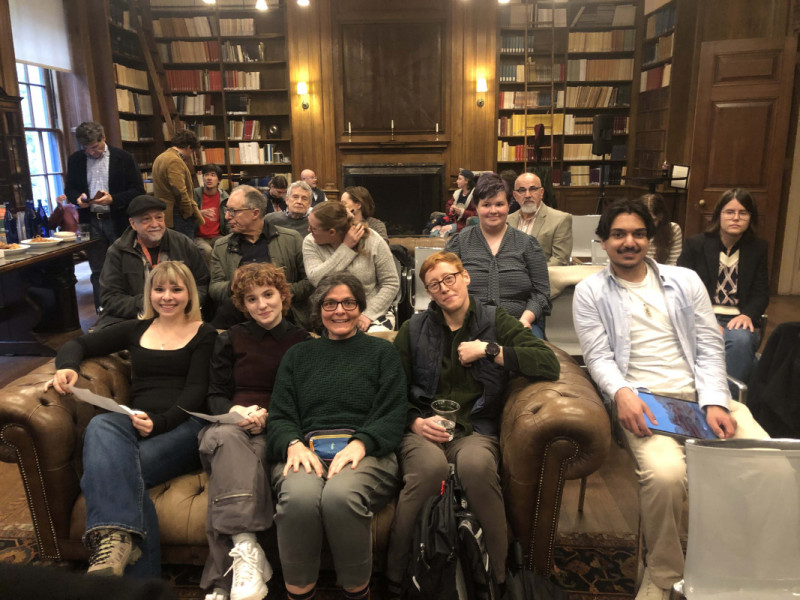
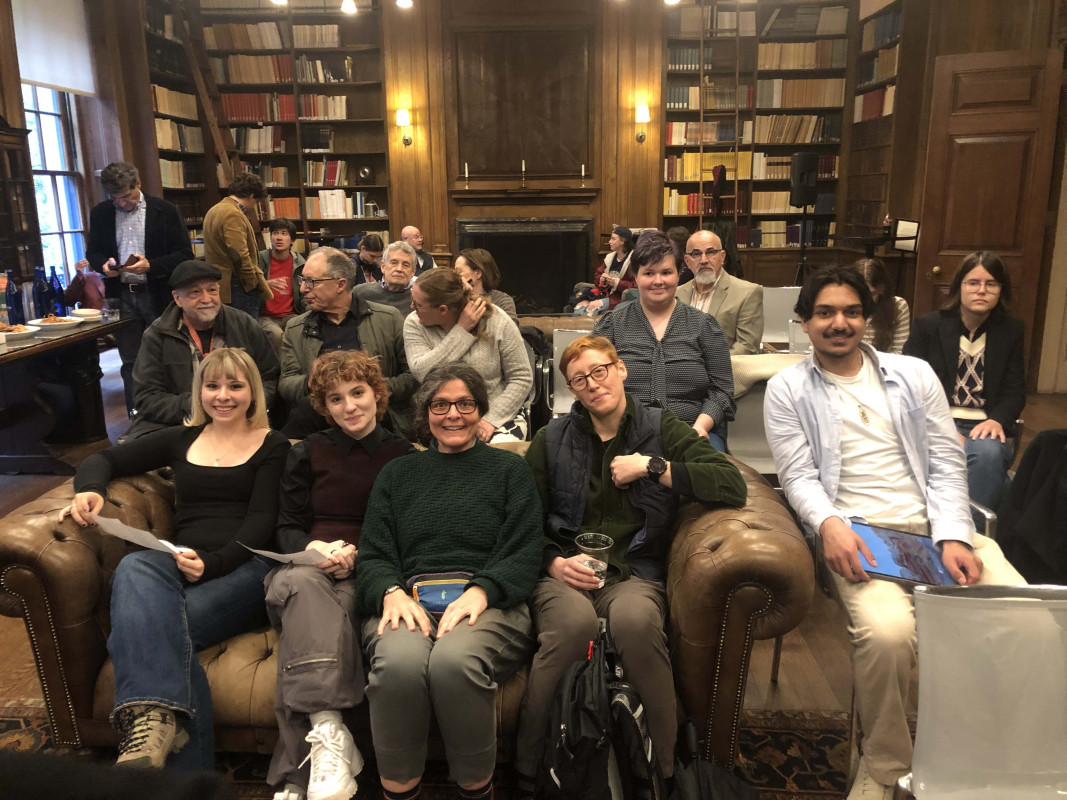
Weiss won first prize for his recitation of the piece this spring in the New York Classical Club’s annual College Oral Reading Contest in Greek and Latin. Undergraduates Allison Buckley and Krish Badhan also competed at the event, held at the Institute for the Study of the Ancient World (ISAW).
Contestants were offered a choice between a prose and verse reading in Greek or Latin: the selection from Euripides’ Medea, Aristophanes’ speech from Plato’s Symposium, a speech by Marcus Porcius Cato from Sallust’s Bellum Catilinae,or a famous poem from Horace’s Odes about enjoying life’s pleasures.
Buckley and Weiss, both finishing their first semester in ancient Greek, chose Medea; Badhan, who is taking an advanced Latin course, selected Horace’s Odes.
Binghamton students have competed in the past after the contest went online during the coronavirus pandemic, explained Ancient Languages Coordinator Carina de Klerk. When the Club returned to an in-person event, the Department of Middle Eastern and Ancient Mediterranean Studies (MEAMS) decided to sponsor a trip to New York City.
Before the competition, the group met up with Ancient Mediterranean Studies alumni Zoe Tasse-Winter ’14, Lyla Cerulli ’17, and Philip Hui ’23 for lunch and a chance to chat. All three alumni are currently teaching Latin at schools in the New York City area; Hui, as it happens, competed in 2022 and won third place in Latin.
Nine contestants recited in Greek and eleven in Latin before a panel of three judges: Katharina Volk of Columbia University, Patrick Burns from ISAW, and Sulochana Asirvatham of Montclair State University, who assessed their pronunciation and performance. The atmosphere was warm and welcoming, noted Buckley, a first-year chemistry major.
“When I got up there, it felt comfortable and welcoming. It made me feel like I belonged,” added Badhan, a sophomore double-majoring in biology and Ancient Mediterranean Studies.
Ancient languages in the modern world
While reading proficiency is perhaps the most important component of ancient language study, Binghamton students work on pronunciation in their ancient Greek and Latin courses just as they would with any other language, de Klerk explained. MEAMS also hosts an oral reading contest on campus in the fall, giving students a chance to practice their skills.
Binghamton students auditioned on campus for three spots in the New York City competition; once chosen, they spent the next several weeks working with Associate Professor Tina Chronopoulos to hone their performance, including meter and musicality.
Competitors weren’t required to memorize their selection, although repeated practice means that many do. Weiss deliberately chose to memorize the words so he could focus on his delivery, he said.
Buckley decided to audition on the spur of the moment. In New York City, she enjoyed meeting with students with similar interests from other universities, as well as an archaeologist who discussed a recent excavation.
“If something sounds interesting, just do it. You might end up having fun,” she said.
What draws modern-day students to ancient languages is a study in itself. Buckley’s interest was sparked by a high school Latin class; Weiss enjoys etymology and the ancient roots of words. Badhan thought a knowledge of Latin would be helpful in understanding medical terms. Over time, however, he found other benefits.
“Ancient languages are a puzzle: What goes where, and why does it go there? Are we sure that’s what it really means?” Badhan reflected. “Like English, words in ancient languages can have many different meanings even though they look the same. It makes you use your brain differently, and I’ve grown to love that.”
Being able to read a text in its original language also provides a direct connection to the content, Weiss explained; when you read a work in translation, you’re reading the translator’s interpretation rather than the text itself.
In addition to $300, Weiss received an authentic bronze coin minted during the lifetime of Alexander the Great, who ruled from 336 to 323 BCE. Likely originating in Greece or Macedon, it bears an image of Heracles wearing a lion skin. First-place winners also had the opportunity to recite their passage at the Club’s annual spring lecture, held on May 8 at the CUNY Graduate Center.
“Truly, this has been one of my favorite experiences at Binghamton,” Badhan said. “I really enjoyed getting closer with my teachers, meeting new people and developing these relationships. It was fantastic.”