Binghamton University at 80: The people
The students, faculty, presidents, alumni, and more
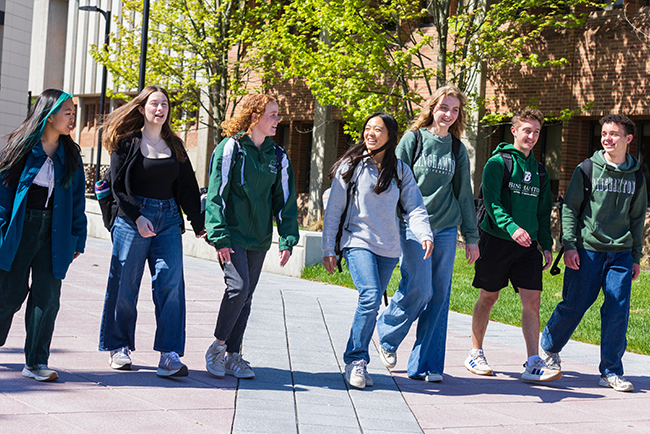
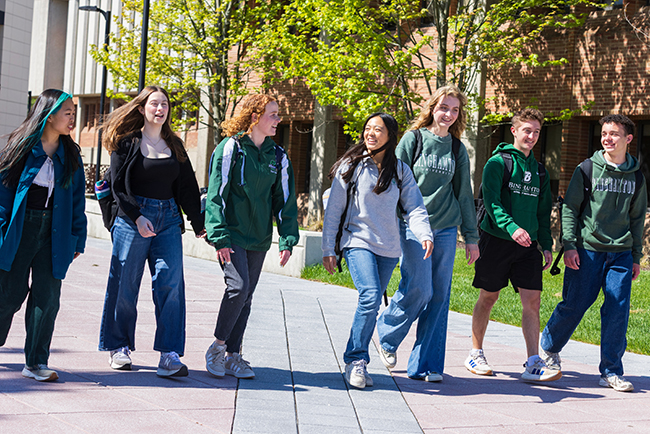
Binghamton University is celebrating its 80th birthday in 2026! In honor of 80 years of excellence, Binghamton University Magazine is presenting “80 Things to Love About Binghamton University,” highlighting the people, places, history, and cornerstones. Here are some of the people who have made the University special.
1. The students
Triple Cities College started in 1946 with 876 students. By the time Harpur College moved to the Vestal campus in 1961, enrollment had increased to 1,229. Graduate studies were also launched that year, and by fall 1970, SUNY Binghamton had 1,500 graduate students joining 4,500 undergraduates. The total number of students climbed to 11,966 when the Binghamton University name was adopted in 1992.
Today, Binghamton has more than 18,600 students from across the United States. Among those students are more than 2,300 international scholars from 100-plus countries.
2. The faculty
3. The president: Anne D'Alleva
Whether meeting with faculty, staff, students, alumni, and community leaders on a listening tour; taking the first steps toward a new strategic plan; or simply cheering on Bearcat student-athletes at home or in Syracuse and Albany, Anne D’Alleva has already made an impact in her more than six months as Binghamton University president. There’s no mystery as what she is doing: “From Anne’s Desk” is a weekly blog on the University’s website that highlights news and updates from the previous week.
4. The presidents: The early years
Glenn G. Bartle (1946–65)
The first dean of Triple Cities College and the founding president of Harpur College, Glenn Bartle oversaw Harpur’s integration into the State University of New York system, the establishment of a liberal arts-based general-education curriculum, and a campus move from Endicott to Vestal. Bartle’s leadership helped SUNY identify Harpur as one of four university centers that would eventually offer doctoral degrees. Bartle, whose name graces the campus library, died in 1977.
G. Bruce Dearing (1965–71)
The second president led SUNY Binghamton through a tumultuous period in the United States. While student protests took place on and off campus, Binghamton embarked on a period of growth in its enrollment and academic schools: The number of students tripled during Bruce Dearing’s tenure and the schools of nursing (Decker), management, and advanced technology (now Watson) were established. Dearing died in 1985.
Clifford D. Clark (1975–90)
The fourth president expanded SUNY Binghamton’s graduate education and strengthened the professional schools and research centers. Clifford Clark was also a leader in campus diversity, helping to develop the Educational Opportunity Program (EOP) and Office of Services for Students with Disabilities (SSD). The Clifford D. Clark Fellowships, established in 1990, are offered to prospective graduate students who contribute to the diversity of the student body. Clark died in 2014.
5. The presidents: The modern era
Lois B. DeFleur (1991–2010)
The first female president at Binghamton, Lois DeFleur transformed the University in numerous ways. She oversaw the establishment of the College of Community and Public Affairs, along with new graduate programs; prioritized campus internationalization; expanded the size and number of facilities on the Vestal campus; led the transition of intercollegiate athletics from Division III to Division I; and steered Binghamton’s first-ever comprehensive-gifts campaign (raising $50 million).
C. Peter Magrath (2010–11, 1972–74)
The only president to serve twice, Peter Magrath strengthened campus-community relations in his first tenure before departing to lead the University of Minnesota. In his second tenure, Magrath established international partnerships in academics and research, while also developing ties with SUNY Upstate Medical University. Magrath, who retired in 2011, was Binghamton’s youngest (38) and oldest (78) president.
Harvey G. Stenger (2012–25)
Harvey Stenger’s vision and direction enabled the University to show growth in areas such as student enrollment, research expenditures, sustainability, construction projects and fund-raising. His Road Map to Premier strategic plans (first launched in 2013) incorporated input from all walks of campus life – project highlights include the creation of the School of Pharmacy and Pharmaceutical Sciences; an expanded Decker College; and additional strategic faculty hiring.
6. The alumni donors and gift-givers
Led by campaign chair Howard Unger ’82, EXCELERATE: Moving at the Speed of Binghamton — the University’s third comprehensive-gifts campaign — soared past its fundraising goal in spring 2024. Thanks to the generosity of more than 35,000 donors – many of whom were alumni -- the campaign raised more than $260 million. By comparison, the first campaign (Believe in Binghamton) raised $50 million over six years before ending in 2002, while the second campaign (Bold.Brilliant.Binghamton) raised $101 over seven years before its conclusion in 2012.
7. The alumni in the spotlight
Several Binghamton graduates have helped Binghamton’s reputation and name recognition through their work in politics, business and entertainment. Among them: Tony Kornheiser ’70, LittD ’17, and Sunny Hostin ’90, LLD ’18, are seen daily on Pardon the Interruption and The View, respectively. Stephanie Courtney ’92 (above) is one of the country’s leading ad figures as Flo from Progressive; Billy Baldwin ’85 is as synonymous with Binghamton as he is with acting; fellow actor Paul Reiser ’77, LHD ’00, of Mad About You fame was featured in Stranger Things; Hakeem Jeffries ’92, Eugene Vindman ’97, and John Mannion ’90 are all members of the U.S. Congress; Justin Garcia '07, MS '09, PhD '12, leads the world-renowned Kinsey Institute; and Tom Secunda ’76, MA ’79, is co-founder and vice chairman of Bloomberg L.P.
8. The alumni Olympians
Emily Mackay ’21 (above) put Binghamton on the global stage in 2024 when she advanced to the semifinals of the 1,500 meters at the Paris Olympics. But she wasn’t the first Binghamton grad to claim the “Olympian” title. John Moreau ’77 competed in fencing in the 1984 and 1988 Summer Games; Chris Coleman ’89, MBA ’93, was a bobsledder in the 1992 and 1994 Winter Olympics; and swimmers Yun Qu ’05 and Hui-Jue Cai ’06 competed for China in the 1996 games before becoming Bearcats.
9. The alumni supporters
Binghamton alumni now stand at more than 160,000 strong! They are from every state and in more than 100 countries. Alumni are able to enhance the University not only through being in the spotlight or through philanthropic contributions, but by being involved and staying connected. Alumni volunteer, serve as mentors, take part in global days of service, lead alumni chapters around the country, and return each fall for Homecoming.
10. The groundkeepers and the cleaners
Whether it’s the clear roads and salted walkways on a snowy winter morning, the green grass glistening in the fall, or flowers blooming in the spring, the campus’ outdoors areas are maintained and kept to a high standard of beauty by Facilities Management’s grounds department. Meanwhile, the custodial team is sprucing up the buildings on the Vestal, Binghamton and Johnson City campuses.
By the numbers:
30: Groundskeepers
315: Custodial workers
6.3: Miles of roads
23: Miles of walkways
38.5: Acres of parking lots
106: Buildings
11. The deans and coaches
From founding school deans such as Lyle Feisel (Watson) and Patricia Ingraham (CCPA) to S. Stewart Gordon (first dean of Harpur and longtime vice president of academic affairs), Binghamton administrators have helped set the vision for the University’s future. Athletics coaches such as Tim Schum (soccer), Curt Coutts (tennis) Tim Sinicki (baseball), and Annette Acuff (cross country) have mentored and molded student-athletes in and out of the classroom.
12. The Nobel laureate
Catching up with M. Stanley Whittingham
13. The pioneers
Binghamton University’s growth and success would not be possible without the contributions of early-years dignitaries such as:
• Edgar Couper, a prominent Binghamton businessman, helped bring Triple Cities College into the SUNY system.
• Kenneth Lindsay, a veteran “Monuments Man” from World War II, founded and led the Department of Art and Art History, and started its permanent collection.
• Aldo Bernardo, who taught from 1949–87, founded the Center for Medieval and Renaissance Studies (CEMERS), led the center with fellow pioneer Bernard Huppé, and was an early advocate of study abroad.
• Ken Jacobs, who died in October 2025, was a renowned experimental filmmaker who co-founded the SUNY system’s first Cinema Department with Larry Gottheim.
14. The staff members
The work of Binghamton’s nearly 2,000 staff members does not go unnoticed. A Peer Recognition of Outstanding Professional Service (PROPS) Award is handed out each month to a recipient selected by the previous month’s winner. SUNY honors a staff member annually with its Excellence in Professional Service award. And more than four dozen were named 2025 University “career champions” for impacting students’ professional and personal growth. The Professional Staff Senate is the officially recognized governance organization of professional employees at Binghamton University (PSS Chair Andre Mathis is seen above receiving the University's STAR Award).
15. The University Police
The New York State University Police at Binghamton, led by Chief Matthew Rossie, is a fully accredited law enforcement agency consisting of a team of 51 officers, investigators, security specialists, and others. The University Police does more than provide around-the-clock campus safety: Officers work with students, faculty and staff to conduct safety and educational programs ranging from impaired-driving awareness to self-defense.
80 Things to Love about Binghamton University
See the digital edition of the magazine