Chemistry professor receives the prestigious Dreyfus Teacher-Scholar Award
Jennifer Hirschi researches the mechanisms behind catalytic reactions, central to drug development, industry and more
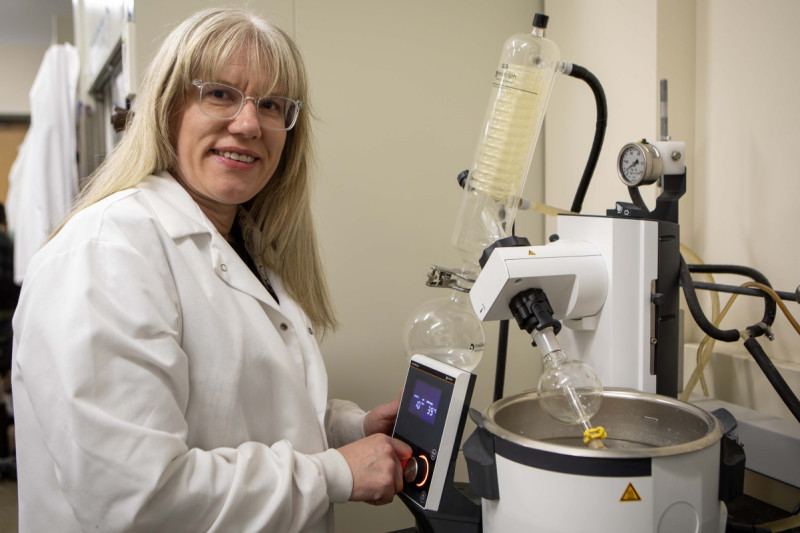
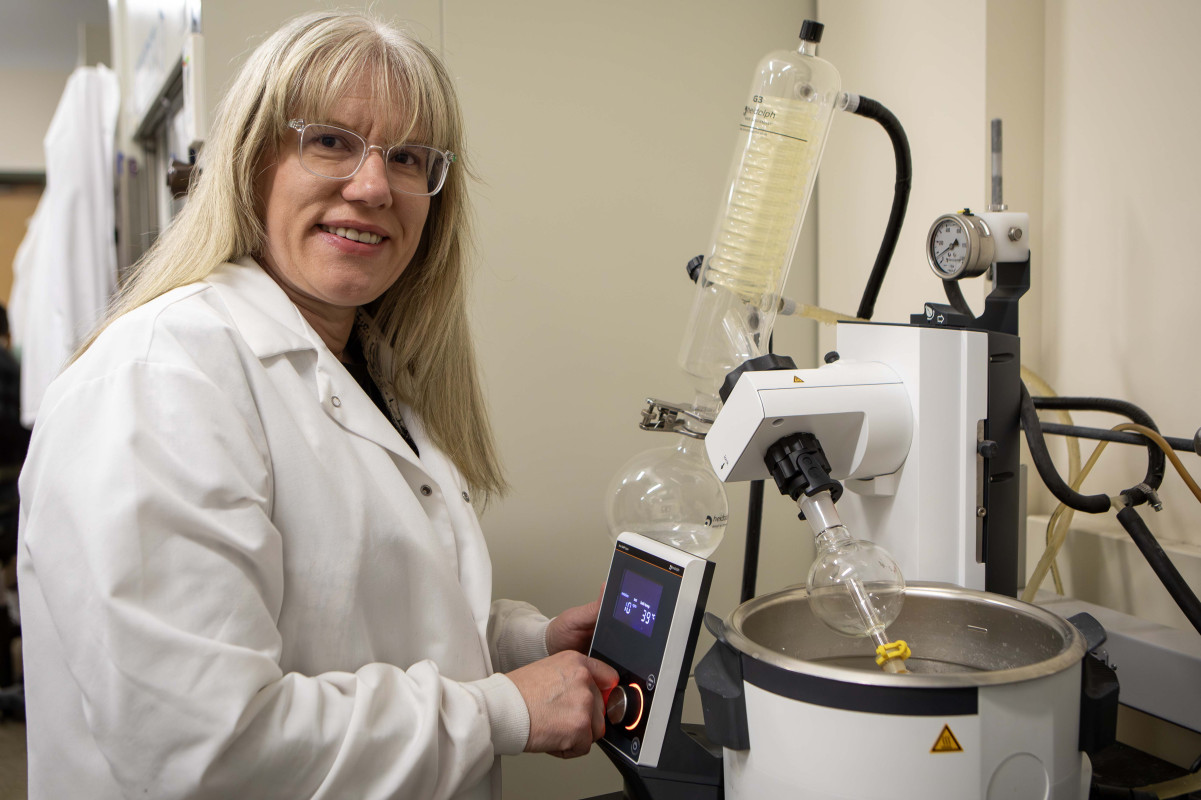
Catalysis is at the very heart of chemistry: the transformation of one chemical into another by way of an added substance, known as a catalyst.
Binghamton University Associate Professor of Chemistry Jennifer Hirschi researches the mechanisms behind these chemical reactions, using state-of-the-art experimental and computational techniques.
She recently received the 2026 Camille Dreyfus Teacher-Scholar Award from the Camille & Henry Dreyfus Foundation; this marks the first time that a Binghamton faculty member has received the award. The $100,000 grant will go toward her research into contemporary catalytic reactions in organic chemistry, and the mechanisms by which they work.
The prestigious award honors early-career faculty in the chemical sciences who have created an outstanding independent body of scholarship and are deeply committed to education with undergraduates.
“We will continue our work combining experimental and computational approaches to study reaction mechanisms at the frontier of contemporary catalysis — particularly photoredox and electrochemical methodologies,” Hirschi said. “The unrestricted nature of the grant is especially valuable, as it gives us the freedom to pursue fundamental questions without being constrained by a predefined scope.”
Catalytic reactions are routinely used to create pharmaceuticals and bulk chemicals used in manufacturing. A fundamental understanding of how these reactions work will help make these processes more efficient and could open the way to entirely new catalytic transformations, she said.
Since Hirschi joined Binghamton’s Chemistry Department in 2020, her lab has published 35 research articles in high-impact journals.
Undergraduates have contributed meaningfully to research in Hirschi’s lab since the start. A number of them have gone on to graduate programs in chemistry and medical schools across the country.
“This award reflects the hard work and perseverance of an exceptional team of postdocs, graduate students, and undergraduate researchers,” she said.