Cancer brought them together: How two Binghamton alumni found love through shared experience
Kimberly Hoffman ‘14 and Joshua Woda ‘16 first met as students navigating cancer. Years later, that shared experience led to marriage.

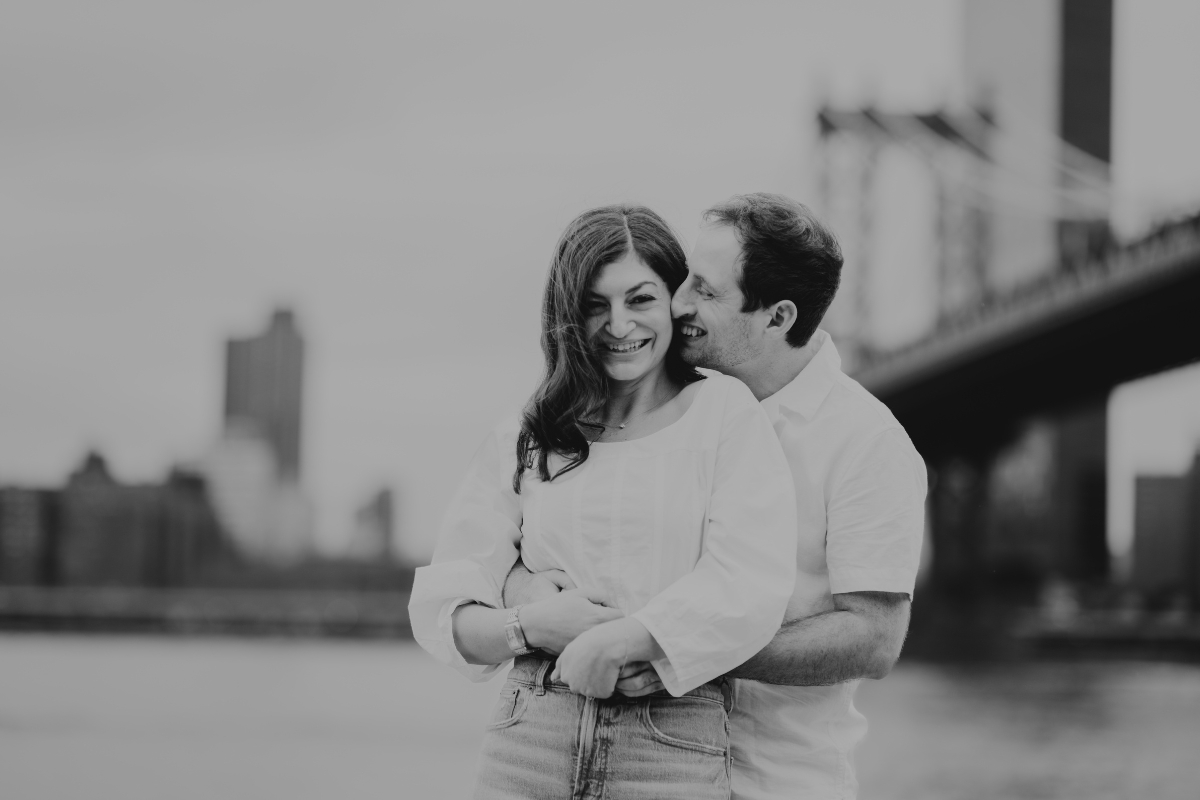
For some Binghamton University alumni, the college experience includes more than classes, clubs, and campus life – it can also involve unexpected challenges. For one couple, that meant navigating cancer diagnoses, an experience that would later reconnect them and shape how they approach life.
Kimberly Hoffman ‘14 (Human Development) and Joshua Woda ‘16 (Geology) were both diagnosed with Hodgkin lymphoma while they were students at Binghamton, balancing receiving treatment with classes and the uncertainty of being young and away from home.
Hoffman was diagnosed over winter break of her junior year and chose to take a medical leave of absence, unsure of how treatment would affect her. “Out of fear of the unknown, I just assumed, ‘OK, I’m getting treated for cancer, I can’t be up in Binghamton,’” Hoffman said.
When she felt well enough, she returned to campus often, splitting time between her home in Brooklyn and her off-campus house in Binghamton. To stay on track, she later made up missed semesters through summer coursework before graduating.
Woda, who was diagnosed as a sophomore, took a different approach. He remained enrolled and structured treatment around his academic schedule, traveling home to Yorktown Heights regularly for chemotherapy before returning to campus.
“I would go home every two weeks, get treatment, usually on a Thursday or Friday, feel crummy over the weekend, and then go back up to school,” Woda said.
Both said they received plenty of support from Binghamton faculty during that time, noting that professors were accommodating and understanding as they worked through the demands of treatment.
Although their experiences overlapped, the two only briefly connected as students. They were introduced through a Greek Life fundraiser – a dodgeball tournament organized in their honor – and spoke occasionally through mutual involvement in the American Cancer Society on campus. At the time, their connection was minimal; after graduation, they only stayed connected through social media.
Years later, in 2021, that changed. After experiencing a relapse, Woda reached out to Hoffman as he prepared for a stem cell transplant, knowing she had gone through a similar process. What started as a way to ask questions and seek advice gradually turned into regular conversations, and eventually, a friendship.
Their connection deepened during Woda’s transplant, which took place during the COVID-19 pandemic, when hospital restrictions made an already isolating experience even more difficult. Remembering her own time in the hospital, Hoffman made a point to stay in touch, checking in consistently as he went through treatment.
For Woda, having someone who understood made a significant difference. “Being able to talk to someone, even if it’s not the same kind of cancer, but just understands somewhat of what you’re going through, is a very powerful, helpful thing,” he said.
Now married and living together on the Upper East Side of Manhattan, Hoffman, a special education teacher, and Woda, a hydrologist for the federal government, said their experiences with cancer continue to shape how they approach life.
For Hoffman, that perspective is closely tied to the importance of a strong support system and the people who showed up for her during treatment. For Woda, it’s about being more intentional with how he spends his time and who he surrounds himself with.
“A critical health diagnosis really puts into perspective what matters and what's important versus what’s not,” Hoffman said.
As survivors, they hope their story can offer comfort to others facing similar experiences, especially those who may feel isolated or unsure of what comes next. “If anyone ever feels like they want someone to talk to, we’re both very happy to do that,” Woda said.
Hoffman echoed that sentiment, emphasizing how meaningful even one connection can be.
“Even if we can reach one person who’s about to go through something, or who knows someone who is, who wants to chat or has questions, we’re both open books,” she said.