Summer Research Fellow explores next-generation brain drug delivery
PharmD student Smit Patel advances lipid nanoparticle research at SOPPS
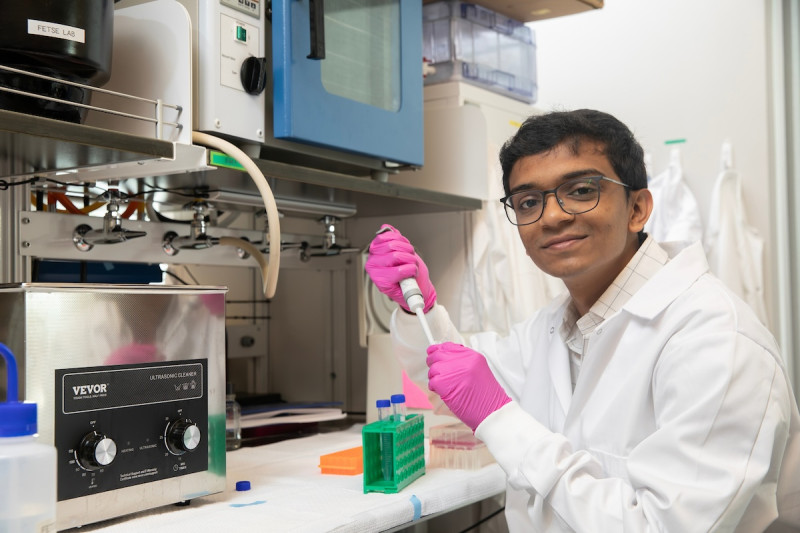
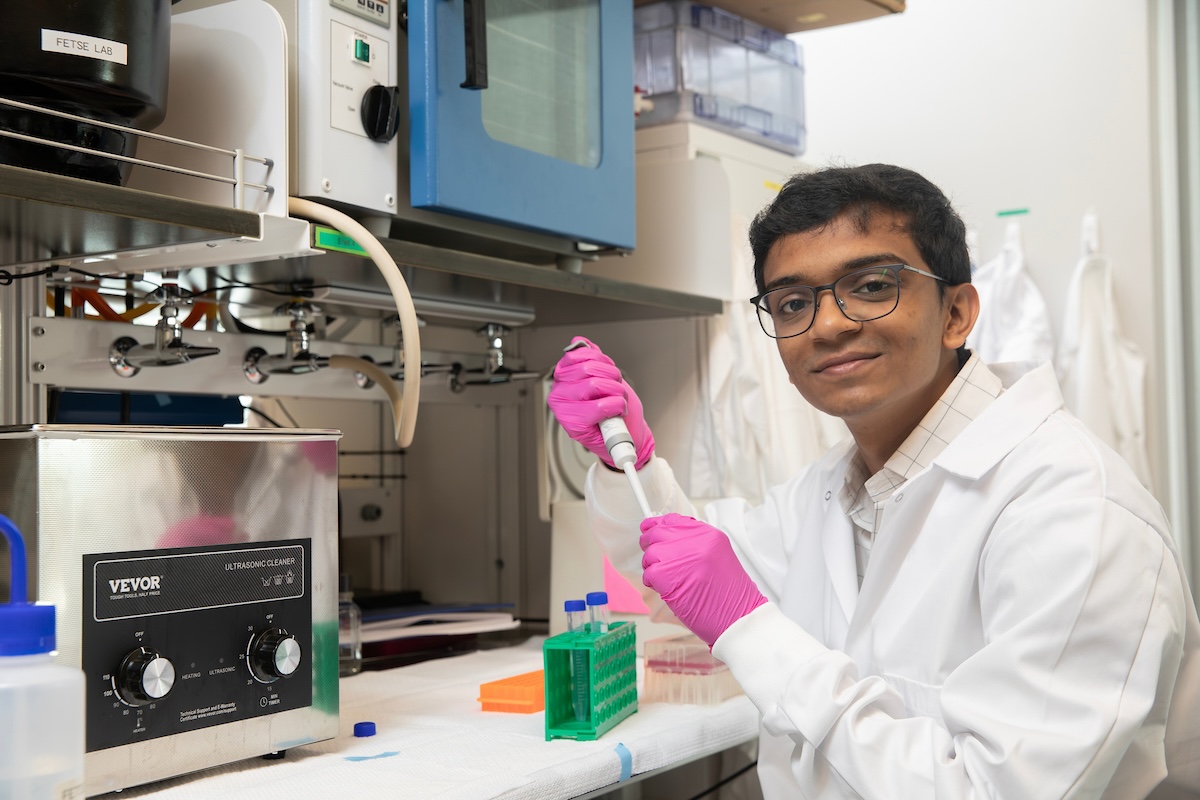
Upcoming second-year student researcher and Summer Research Fellow Smit Patel is working with Assistant Professor of Pharmaceutical Sciences John Fetse on the development of lipid nanoparticles (LNPs) for drug and gene delivery. His focus is on developing LNPs designed for delivering treatments directly to the brain.
“What excites me most is being at the forefront of a rapidly expanding field,” Patel said. “LNP technology is revolutionizing how we approach genetic therapies, and optimizing these systems for brain delivery could open doors to treating incredibly complex conditions. Having the dedicated time this summer to dive deeply into this work allows me to focus entirely on hands-on formulation and really engage with the science without the usual distractions of the academic year.”
These microscopic, protective delivery vehicles are one of the most efficient, nonviral methods for transporting delicate genetic materials — like mRNA, siRNA, and CRISPR therapies — into human cells. These nanoparticles overcome major biological hurdles by offering crucial cargo protection; if you introduce "naked" genetic material into the body, natural enzymes destroy it almost immediately, but LNPs bypass this by “wrapping” a fragile payload until it reaches the target cell. They also allow for "smart," pH-responsive delivery. The lipids remain neutral and stable in the bloodstream until they are taken up by a cell, where the acidic environment releases the payload directly into the cell's cytoplasm, and it can do its job.
“The day-to-day process involves actively developing these formulations, troubleshooting the chemistry, and analyzing how the nanoparticles behave,” Patel said. “Having a Binghamton faculty mentor is essential to this process. It provides much-needed direction when I hit a roadblock or feel lost in the data. My mentor helps me navigate complex challenges, steers me clear of common mistakes that others have made, and ensures I am building a solid foundation in lab techniques.”
Recognizing that every student learns differently is one of the most important aspects of mentoring, according to Fetse. Summer research has reinforced for him the importance of creating an environment where students feel comfortable asking questions, making mistakes, and learning through the scientific process.
“Smit has taken ownership of his project, developing expertise in nanoparticle formulation, characterization, and data analysis while becoming increasingly confident in troubleshooting experimental challenges,” Fetse said. “It has been especially rewarding to watch him grow from a student learning new laboratory technique into a young scientist who asks thoughtful questions, thinks critically, and contributes meaningful ideas.”
Patel, whose long-term professional goal is to pursue a PGY1 residency and become a clinical pharmacist, believes that this summer research opportunity directly benefits that future. He expressed gratitude to Fetse for creating a learning environment that didn’t focus solely on results.
“Securing a competitive clinical PGY1 residency requires a highly diverse and well-rounded portfolio,” he said. “Participating in dedicated lab-based research builds my analytical and problem-solving skills and gives me a deeper understanding of how therapies are developed from the ground up. Having this foundational, bench-to-bedside perspective will make me a more informed, versatile, and capable clinical pharmacist.”