Summer Research Fellow studies connections between inflammation and cellular aging
Student researcher Denisse Martinez explores Chagas disease, cellular senescence
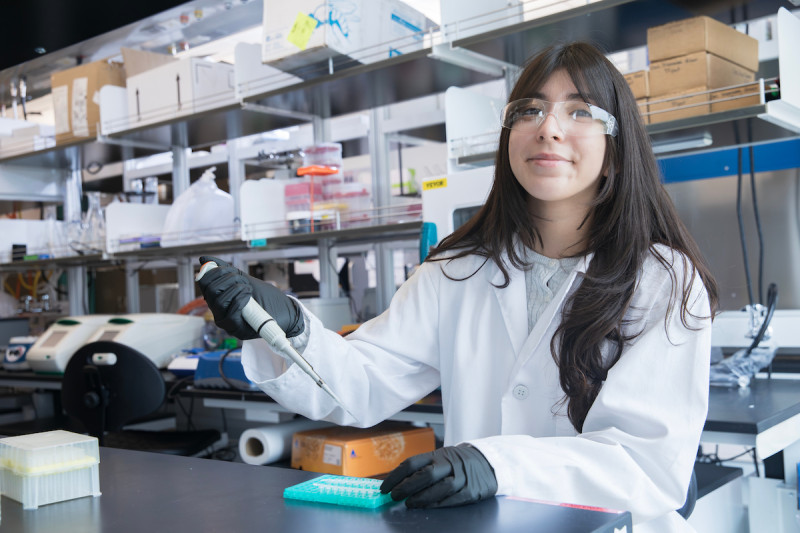
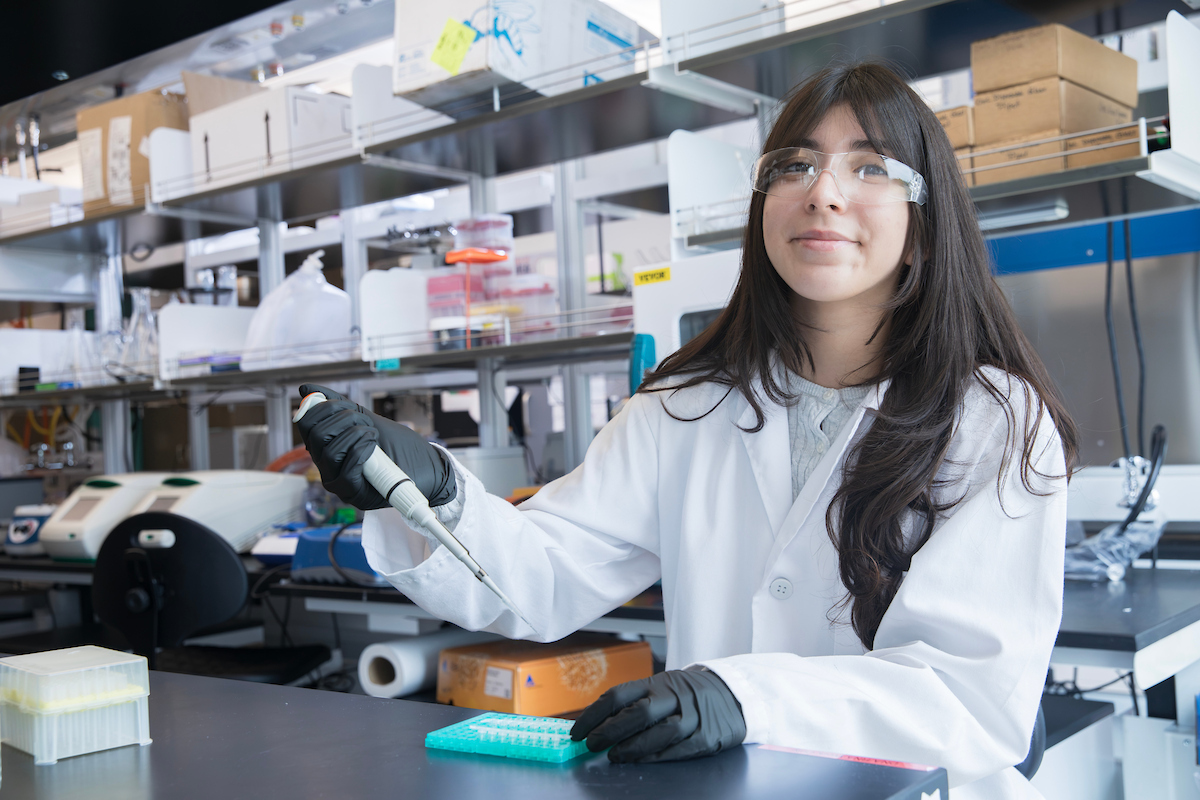
Denisse Martinez, an upcoming junior majoring in biology on the pre-med track, will work with Assistant Professor of Pharmaceutical Sciences Azadeh Nasuhidehnavi to study cellular senescence, a stress response that stops the division of damaged cells, sometimes without triggering cell death. This is a vital process for cells to repair themselves, but chronic infections may trigger the process prematurely, creating an inflamed environment within the tissue that weakens the immune system's ability, especially when those cells accumulate.
“This summer research opportunity has been so beneficial. I'm observing a variety of techniques while studying chronic infections and how that varies between different areas of the body or tissues, and how that leads and develops into bigger organ dysfunction,” said Martinez, who joined the lab as a Binghamton University Projects for New Undergraduate Researchers (BUPNUR) student, a program to help those with little lab experience find opportunities across campus. “Research like this helps construct the narrative for people like pathologists to assess and understand root causes of diseases, and therefore it improves treatment and outcomes.”
Martinez hopes to apply to graduate school and pursue pathology after her undergraduate career, due to her interest in disease states at the cellular level, and she believes this research is the perfect place to start gaining necessary skills. She’s also excited to work with a variety of students and mentors this summer: PhD students, postdoc students, lab technicians, pharmacy students, and faculty members like Nasuhidehnavi.
“Through having a mentor and being in this program, you're guided throughout every part of the process, surrounded by students that have a lot of experience, who are knowledgeable in specific techniques and bring a new perspective,” she said. “It has also been so nice to see how our individual projects fit together. During a regular academic year, that experience is difficult because of time constraints and schedules, which leaves a gap in understanding.”
The best part? This opportunity benefits the mentor, too.
“Working with different students with different backgrounds is really adding to the lab,” Nasuhidehnavi added. “I learn from them, as well; how they see the problem, how they troubleshoot. Interacting with these different students in different backgrounds is so interesting for me, and I'm grateful for it.”
Martinez will particularly investigate Chaga’s disease, caused by a parasite called T. cruzi. This disease is associated with causing chronic inflammation within tissues and organs, so she hopes to see if it has other relationships that trigger senescent-associated pathways and infected cells.
“As we age, different tissues in our body experience senescence,” said Nasuhidehnavi, whose background is in parasitic infections. “But there are certain conditions that can create the same inflammatory environment, a kind of accelerated aging, like parasitic infections. The problem is that, although the parasite load number may not be that high in your tissue, the inflammation will build up over time. With Chaga’s, we know 30% of individuals will develop cardiac symptoms that could be very severe for this inflammation. What if we can somehow reduce or slow down this process?”
To do so, the researchers hope to study potential anti-inflammatory remedies/compounds that could mitigate the expression of these genes and stops cells from undergoing senescence early, thereby treating the disease.
“We're studying such a novel thing; there's not a lot of past research done on this field of infectious diseases and their association with senescent pathways,” Martinez added. “It has been amazing to be able to put something out that might be beneficial in the future or might drive new science, or even just give people a place to start.”