Natural Environmental Change Center supports student and faculty research on environmental change and solutions
Grants prioritize environmental change research that involves collaboration in and across disciplines
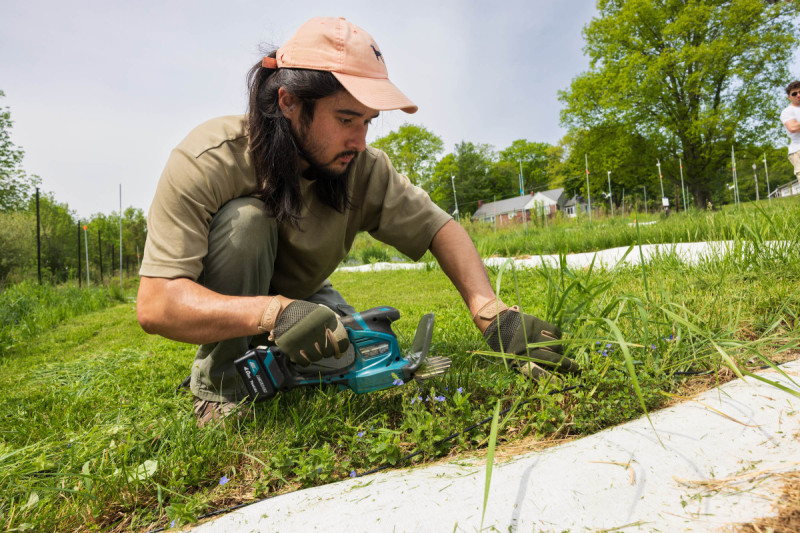
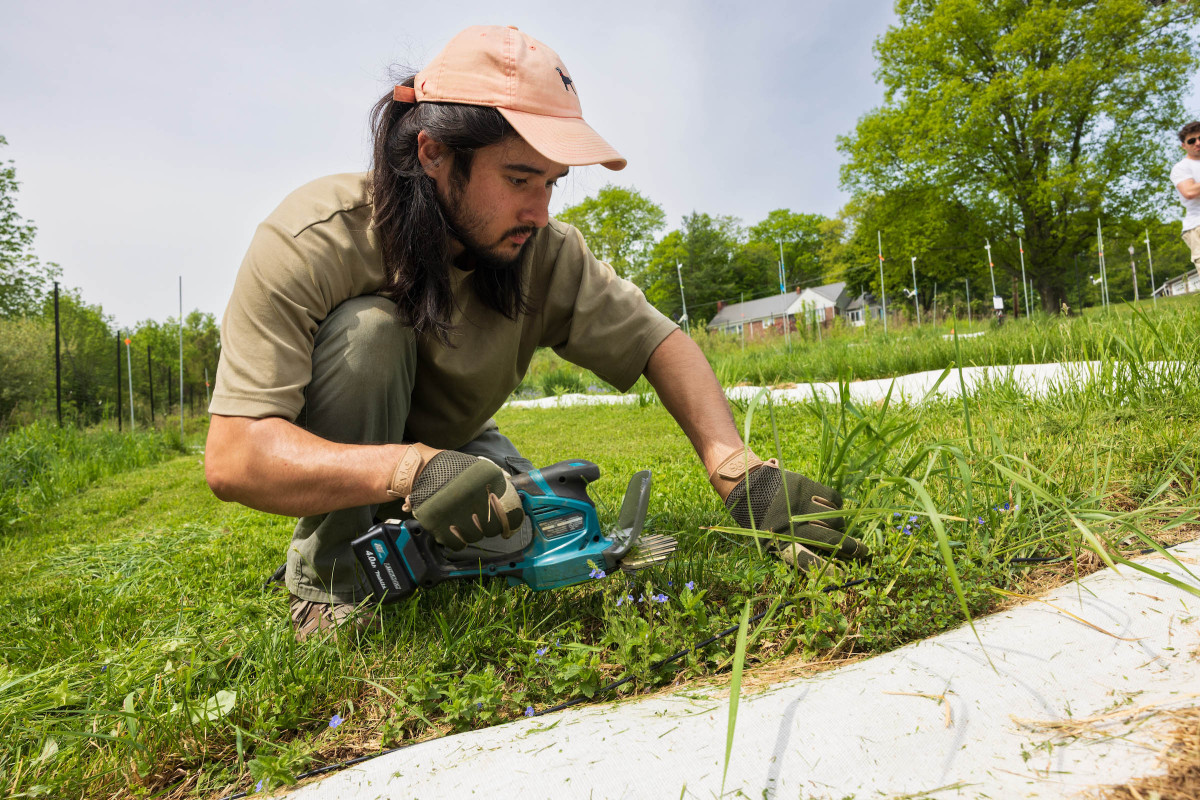
As with any ecosystem, the research ecosystem involves a web of relationships that connect scientists across a variety of disciplines.
As part of its mission, the Natural Environmental Change Center (NATCHANGE) issues grants to support environmental change research for both graduate students and faculty members. In 2025 and 2026, the center awarded five graduate student awards and two faculty seed grants.
Recipients include members from five different departments and programs associated with Watson and Harpur College, as well as the First-year Research Immersion (FRI) program. Some student awards are even in collaboration with affiliated faculty who run scientific and environmental consulting firms, noted Associate Professor of Earth Sciences Molly Patterson, the Center’s co-director.
“Collaborative research matters because it combines expertise no single researcher has, expands access to resources, and increases credibility while also reducing bias,” she said. “Fundamentally, it also builds relationships that ultimately help sustain research programs.”
The center offers two awards for graduate students; students from any department or program on campus are eligible to apply.
The Graney-Zhu Ecosystem Award is named for Earth Sciences Professor Emeritus Joseph Graney and Professor of Biological Sciences Weixing Zhu, the previous directors of the Center for Integrated Watershed Studies, NATCHANGE’s precursor. Intended to foster research in biogeochemistry and ecosystem science research, the biennial award is $6,000.
A current recipient of the Graney-Zhu Award is Earth Sciences doctoral student Gretl King, who is using 15-million-year-old microscopic fossils from the ocean floor to understand how large-scale climate change drives the evolution of marine plankton. Mentored by Assistant Professor of Earth Sciences Adriane Lam, King is focusing on an area off the western coast of New Zealand, subject to frequently changing winds and ocean currents; it’s a biodiversity hotspot, and experiences some of the most intense marine heatwaves globally.
“I’m trying to understand evolution in the context of environmental changes,” King said. “This grant will allow me to collect more geochemical stable isotope data, which will broaden my data set and allow me to answer more questions.”
The NATCHANGE Graduate Research Award funds graduate student projects that involve collaboration with multiple faculty or affiliated researchers; the $3,000 award is given annually to graduate students. Recipients include:
- Systems Science and Industrial Engineering doctoral candidate Tasneem Tawalbeh, working with Assistant Professor Yuxin Wang and scientists Richard Smith and Stella Woodward with the consulting firm Global Aquatic Research, for a project that examines the formation of PFAS-laden foam on the surface of New York’s Finger Lakes. Known as “forever chemicals,” these substances pose health risks to people and wildlife along the shore.
- Doctoral student Chris DeAngelis, working with Associate Professor Kirsten Prior, Associate Professor Thomas Powell, and Assistant Professor Diego Salazar-Amoretti, all in biological sciences, for research on how cuticular hydrocarbons — the waxy chemicals on insect exoskeletons — link climate adaptation to behavior in seed-dispersing ant species to uncover how climate change may affect eastern deciduous forest ecosystems.
- Biological Sciences doctoral student Joe Elias, working with Assistant Professor of Biological Sciences Eliza Grames to digitize and analyze a 25-year archive of nocturnal insect recordings from eastern Texas, including nine years that exist only on cassette tapes. To track long-term trends of insects in decline due to environmental pressures, the project will identify every cricket and katydid species by their unique sound patterns and train an AI model that can automatically detect species across approximately 7,000 hours of audio.
- Master’s student MD Tohidul Islam, working with Associate Professor Yong Wang and Assistant Professor Yuxing Wang, all in Systems Science and Industrial Engineering, to redesign the trail that leads to the historic stone arch bridge at the IBM Glen in the Town of Union. The current path runs straight down a steep slope, causing significant erosion and runoff into Gray’s Creek. Islam is working on a more sustainable trail design to reduce erosion, protect water quality, and improve visitor safety.
- Biological Sciences doctoral student Timothy Kurpiewski, working with Assistant Professor of Ecosystem Science Amber (Amy) Churchill, to investigate the interaction of grass with an endophyte, a beneficial fungus that lives within grass leaves and stems. Using a greenhouse experiment, his project will explore how drought affects the concentration of endophytes within grasses and how well these grasses tolerate the stress they are likely to experience under climate change.
As with graduate student funding, faculty seed grants are intended to promote collaborative environmental science research by supporting proposals with the potential to secure external funding, explained Prior, co-director of the center.
Faculty SEED grant awards were given to:
- Powell, for research that assesses the predictability of short-term evolutionary responses to climate change. Changes to seasonal conditions are expected to be a major source of pressure on insects. His project will focus on genomic variations in the apple maggot fly, a major agricultural pest, and whether its life cycle can evolve to keep pace with a rapidly changing world.
- Churchill and Research Associate Professor Jonathan Schmitkons of FRI’s biogeochemistry stream, to explore whether increasing plant diversity in lawns can reduce greenhouse gas emissions. The project will measure gas production from the Pasture and Lawn Enhanced Diversity Global-change Experiment (PLEDGE), an experimental lawn facility in Nuthatch Hollow; it will involve not only scientists, but also people who manage lawns in different contexts.
Binghamton’s environmental change research uses a variety of approaches and disciplines to monitor change, understand its drivers, and develop solutions, Prior said.
“Environmental change — and its solutions — are too complex for any one discipline to measure, let alone solve. NATCHANGE supports collaborative, innovative work by faculty and graduate students across environmental science and engineering disciplines to develop solutions that benefit society and are grounded in science,” she said. “We’re excited about the range of research happening across Binghamton University, and we’re working to support and create connections among departments, researchers, students, and the community.”