History of head injury could affect your ability to use self-driving vehicles
Athletes with a history of head injury contribute to driver simulation study of self-driving vehicles
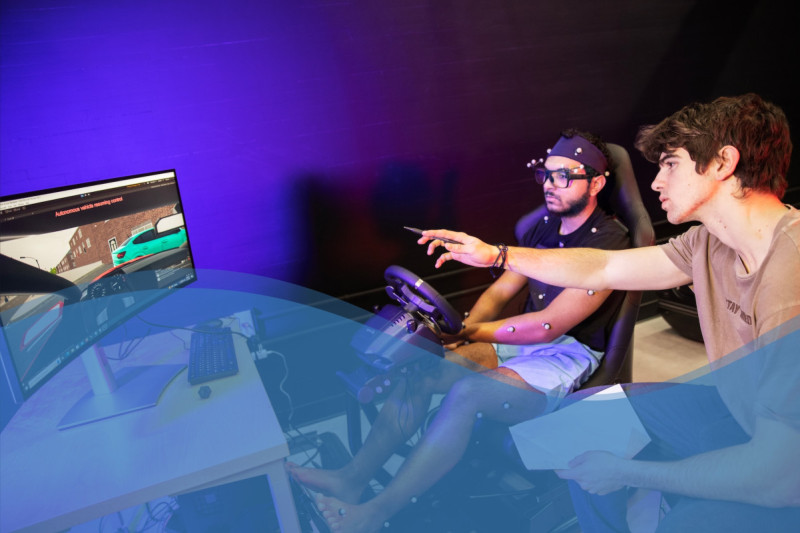
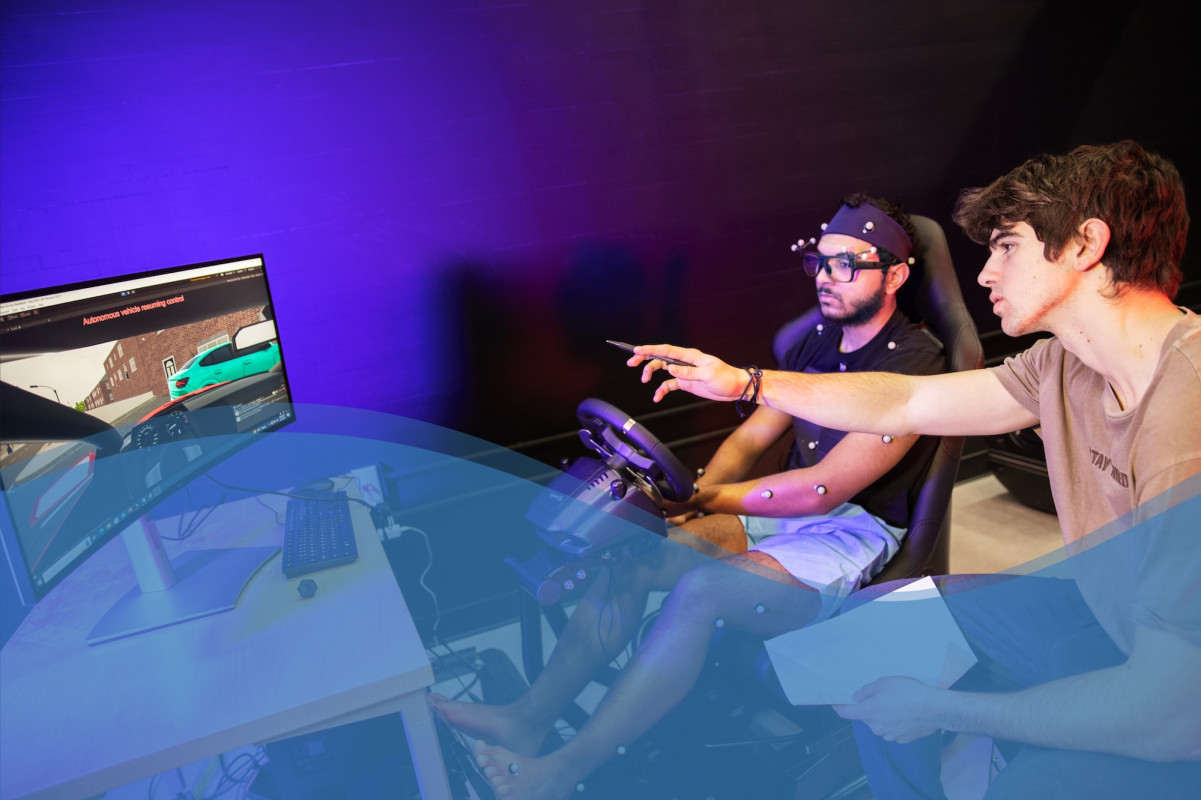
Much of the appeal of self-driving vehicles is just that: the fact that they drive themselves. Still, there are times when a driver needs to put their hands on the wheel, and a new study from Binghamton University suggests that task could be more difficult if you have a history of head injuries.
Researchers from Binghamton’s departments of physical therapy and psychology and the School of Systems Science and Industrial Engineering co-authored the study, published in Traffic Injury Prevention.
“Our perception is that a conditionally automated vehicle will provide individuals with an opportunity to relax, read, work, or perform any number of other nondriving-related tasks. Instead, however, the ‘self-driving’ cars are going to create an unusual transition period where you are not quite a passenger and not always a driver either," said Associate Professor of Physical Therapy Vipul Lugade. “What this study brings into question is whether people will actually be willing, and more importantly, able to resume driving after long periods of disengagement.”
Vehicles are classified on their self-driving ability on a range from zero to five — with zero being a vehicle completely driven by humans and five being a vehicle that can drive itself under any circumstances without human interaction. This study explored a person’s ability to intervene in a level-three vehicle, a partially self-driving vehicle where the driver must take back control when required (e.g., need to abruptly stop or swerve).
“In this mode, the car can handle routine driving on the highway by itself, but in more complex situations, like construction zones or when pedestrians are present, the driver is expected to take over manual control,” said Chao Shi, assistant professor in the School of Systems Science and Industrial Engineering. “That’s exactly the kind of scenario we recreated in our driving simulator.”
The team tested two groups in a driving simulator: ice hockey players with a history of concussions or repeated impacts to the head, and a group of participants around the same age who do not play high-contact sports. The simulation took place at Binghamton's Human Cognitive and Visual Behavior Lab.
The researchers tracked both how well drivers could anticipate upcoming hazards and how they performed manually taking over control when required. After a one-hour driving session, there was a clear divide between participants.
While the athletes did not perform worse on cognitive tests or report feeling more mental stress from the session than the comparison group, they were slower than the comparison group to take manual control of the driving simulation when required. The ice hockey players had an 81% takeover success rate versus the other group’s 93% success rate. The researchers found that the hockey players spent less time successfully maintaining that control.
The study also found that the hockey players overall had a more difficult time answering questions after the takeover event occurred. Correct answers delivered quickly indicate good situational awareness and cognitive ability to access information.
“They were less likely to expect what would happen in the next few seconds. ‘Will there be more cars on the road?’ ‘Do I need to slow the speed to avoid potential risk?’ And this is actually reflected in their driving performance,” Shi said.
As more self-driving vehicles hit the road each day, the researchers noted that future research surrounding this area could result in smarter designs for self-driving vehicles and better intervention systems. They also said improved driver evaluations and training approaches could improve safety for people of different cognitive abilities, as well as everyone else on the road.