Four Binghamton University students attend United Nations conference in Mongolia
Traveling with the Kaschak Institute, they’ll learn about desertification from communities experiencing it
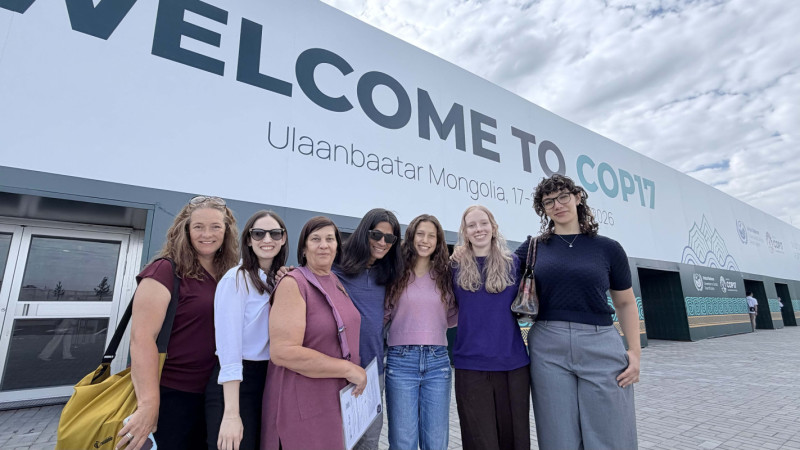
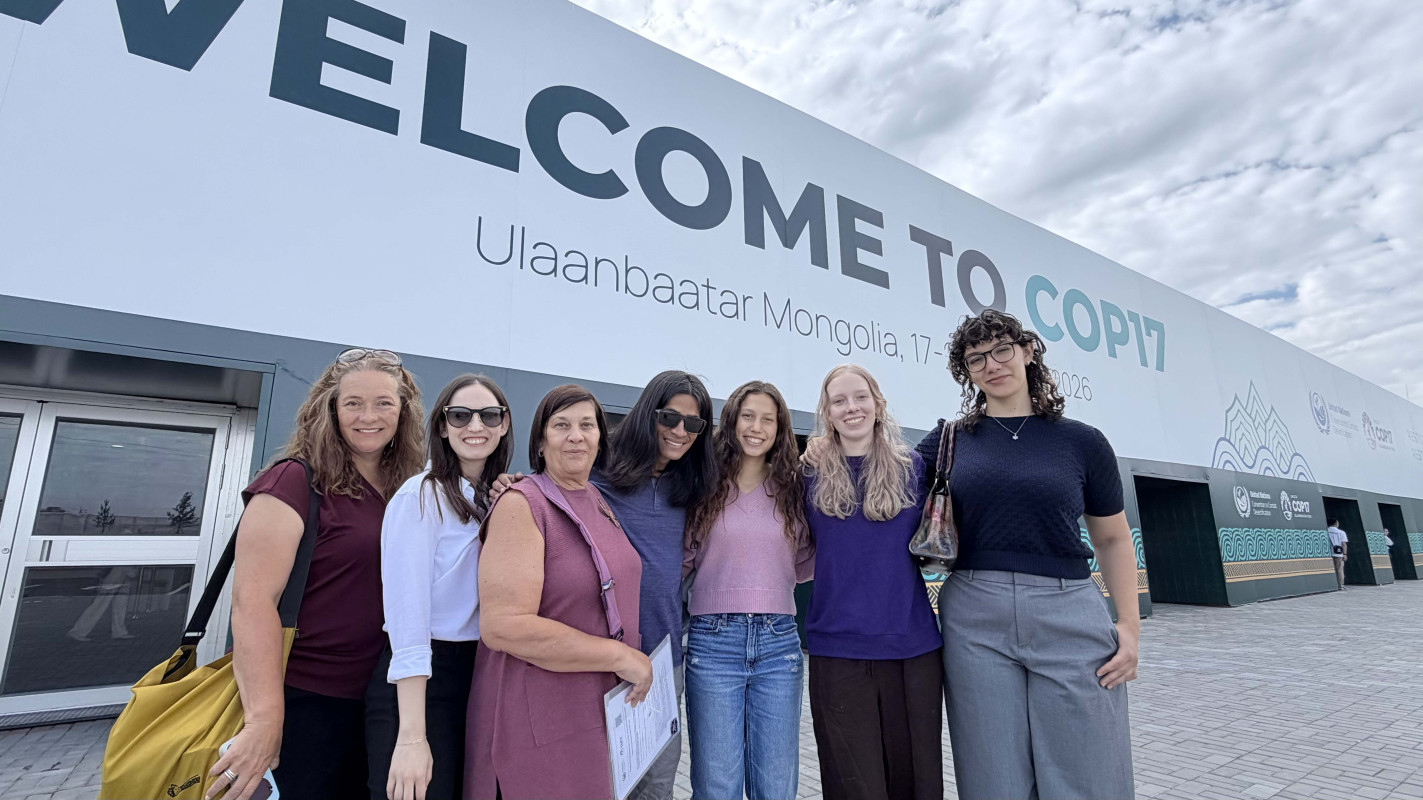
In sixth grade, Matilda Fillion completed a class project on Mongolia — on the other side of the world from her Rhode Island hometown.
Today, the mathematics major is one of four Binghamton University students headed to the country’s capital of Ulaanbataar for the 17th session of the United Nations Convention to Combat Desertification, along with Ellyn Uram Kaschak Institute for Social Justice for Women and Girls Executive Director Lorena Aguilar and Senior Associate Director Shelly Ross.
During the 12-day trip this August, Fillion, Andrew Cohen, Ariel Esposito, and Rebecca Silber will travel into the Gobi Desert to learn more about the pastoralist lifestyle of the region’s nomadic and semi-nomadic inhabitants and see the impact of desertification firsthand. At the convention, they will participate in events the Kaschak Institute is co-hosting with UN Women, witness international negotiation processes, and meet the women delegates and civil society representatives from around the globe.
“For me, the trip is an opportunity to broaden my understanding of environmental challenges in the context of the United States,” reflected Esposito, a junior environmental studies and psychology major. “Much of what I have learned so far has focused on environmental issues in the United States, and I am eager to gain a more global perspective on desertification, sustainability, and environmental justice.”
The four come from different backgrounds, which ultimately led them to the Kaschak Institute and its focus on equity, research, policy, and advocacy. Cohen and Silber are master’s students in Sustainable Communities. The undergraduates, Esposito and Fillion, received funding from the Provost’s International Internship Support fellowship program.
Fillion has sought out opportunities to connect her academic training with broader social issues, especially climate change and gender equality. Through the Kaschak Institute, she participated in research connected to the Love Canal environmental disaster, a catalyst for the passage of the federal Superfund Act; Esposito also cited a trip to the Niagara Falls site as particularly meaningful.
Esposito discovered the Institute while searching for campus organizations focused on the environment, and became a student ambassador and event liaison. She was also a conservation education camp counselor this summer with the New York state Department of Environmental Conservation; this fall, she will work with the Network for a Sustainable Tomorrow.
“My advice to other students is simple: take the opportunity,” added Fillion, a sophomore. “Try new things, even if they seem unrelated to your major. Sign up, show up, and stay open to where an unexpected experience may lead.”
Bringing knowledge home
Before earning his bachelor’s degree in ecology, Cohen ’26 spent years as a farmer, farm educator, and urban farm manager.
One of his guiding values is listening to frontline communities, the people most directly affected by environmental and social challenges. At Binghamton, he has completed training related to community-based research and interviewing, and also took part in a project connected to the Shuar people of Ecuador, helping support a multilingual cultural resource. He’s looking forward to the Gobi trip and the chance to engage directly with desert communities there.
The conference in Mongolia is more than an academic opportunity; it’s a chance to connect his lived experience with global conversations about desertification, drought resilience, soil health, and the future of communities whose livelihoods depend on the land, he said.
“Desertification is really important to me. It’s different in America than it is in other places, but it’s definitely something on the minds of farmers,” he said.
Currently, Silber is gaining professional experience at an environmental engineering consulting firm and preparing for fieldwork on green infrastructure in Queens, New York City. Her master’s project examines how land banks in New York promote equity for residents in the cities where they operate, and how they can do so more effectively.
Drawing on her own experience and her recent work on climate anxiety among Binghamton students, Silber understands how fear can leave students feeling powerless. By bringing back evidence of communities taking action, she hopes to offer her peers hope: change is possible, and students can be a part of it.
“My goal is not simply to return with interesting stories, but with practical insight,” Silber said of the Mongolia trip. “I hope to identify patterns across different places and consider how successful responses to desertification and environmental stress might inform local sustainability efforts.”