Local teachers learn about microelectronics manufacturing at Binghamton University program
The six-week course offered participants a deep dive into the industry to take back to their classrooms
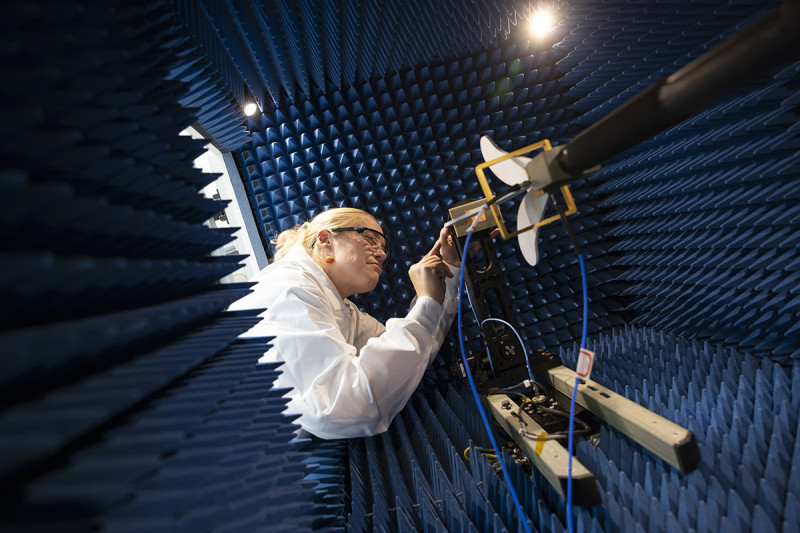
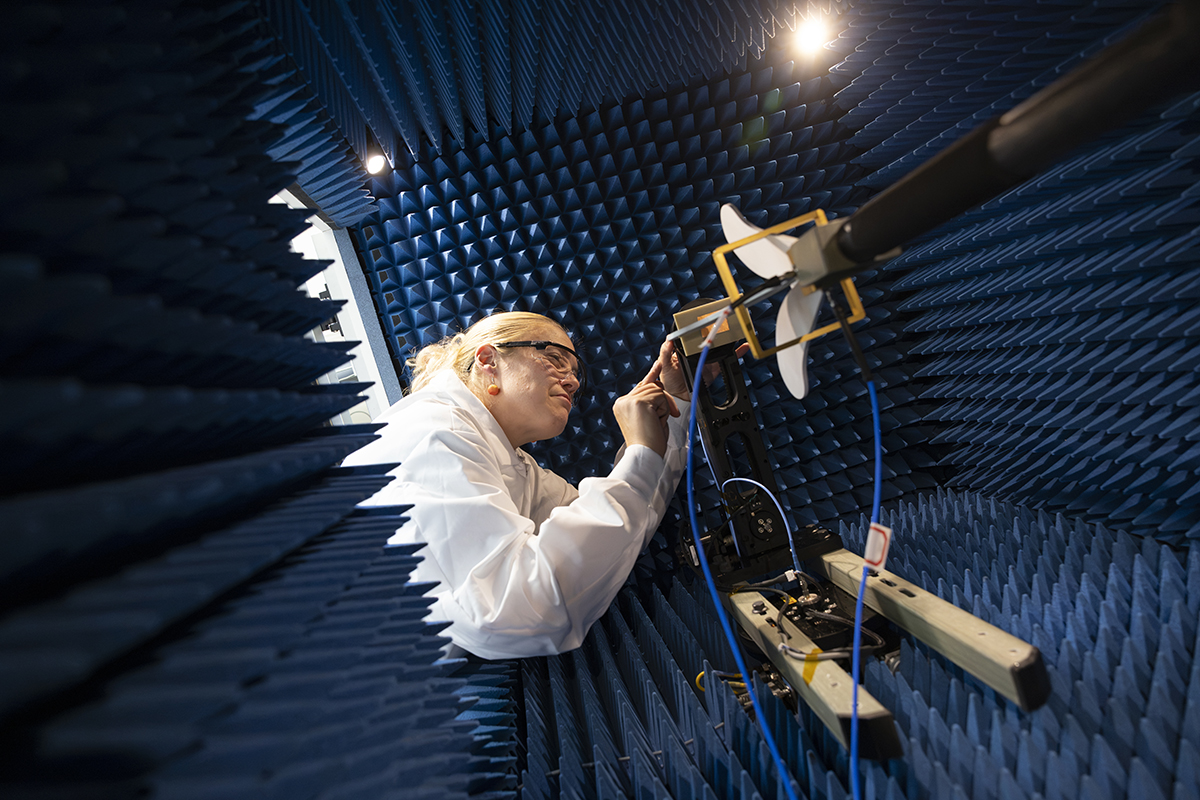
On the first day of this summer’s Research Experiences for Teachers program, Binghamton University microelectronics researchers gave the eight participating local educators a challenge: How many circuit-board components could they solder together by hand in 15 minutes?
They averaged about three during the allotted time. Not too bad, even with their varying levels of skills and experience with the task.
Then the researchers told them that automated machinery at the largest electronics manufacturers can produce 30,000 pieces in the same amount of time.
It was their first lesson during the six-week course that offered local middle and high school teachers a deep dive into microelectronics so they can take it back to their classrooms.
Sponsored by the National Science Foundation, RET hopes to cultivate highly skilled technical talent to support the region’s growing role in the national microelectronics industry. Faculty, staff, and graduate students from Binghamton’s Thomas J. Watson College of Engineering and Applied Science and the College of Community and Public Affairs organized and ran the program’s research activities and tours of local high-tech manufacturers.
“This project captures what makes Binghamton and our surrounding communities so special,” said Professor Paul Chiarot, chair of Watson College’s Department of Mechanical Engineering.
“Our program has many contributors, including faculty from across the University; researchers and staff from the Analytical and Diagnostics Laboratory, the Small Scale Systems Integration and Packaging Center, and our Nanofab facility; industry partners; and students from multiple departments and schools. And, of course, our outstanding RET Scholars, whose curiosity, desire to learn, and commitment to their students is an inspiration.”
The teachers worked alongside researchers on different varieties of microscopy, acoustic imaging, X-ray imaging, and spectroscopy, as well as measuring a sample’s thermal, mechanical, and optical properties. They also learned more about the opportunities and roles available in microelectronics manufacturing.
“I knew we had a lot of microelectronics companies in the area, but microelectronics to me meant just small, complicated technology. I didn't know enough about it to get my students excited or interested in it,” said Casey Baumlin '10, MSEd '13, a special education teacher at Whitney Point Middle School.
“One of the things on the flier advertising this program was that there isn't enough representation of people with disabilities in this field, but there are many jobs that are appropriate and a really good fit. How do we bridge that gap and make kids aware? To do that, I need to make myself aware of what jobs are available.”
Gene Jordan, a chemistry and math teacher at Whitney Point High School, advises a club for students with science, technology, engineering, and math (STEM) interests. One of the activities is taking apart computers and other devices to see how they work, then trying to build new things from the various components.
Jordan thinks it’s important for students to have that familiarity: “If you were a Phoenician in ancient times, you’d better know about shipbuilding. If you were in Holland, you’d better know about windmill-making. The modern world runs on transistors, and considering how little we know about what's going on inside our phones and computers, it's worthy of study.”
In addition to working in the ADL, Watson College’s cleanroom, and other lab spaces, teachers also went off campus to Universal Instruments, BAE Systems, and GlobalFoundries, as well as a road trip to NY Creates and the Albany NanoTech Complex.
“We could see not only the manufacturing process but how they hire technicians with just high school diplomas,” Jordan said. “That's really valuable to me as a teacher to give those options to students who want a foothold in industry.”
While the knowledge and hands-on experience from the RET program will benefit students around the region, teachers also will reap rewards from the networking among academics, industry representatives, and each other.
“We've made some really awesome connections,” said Zach Schinasi '22, MAT '23, a math teacher at Deposit High School. “They've been really willing to say, ‘Bring your students down here, and we could show them how everything is done and let them get their hands on it,’ because there really is stuff that you don't fully understand until you see it yourself or do it yourself.”
Brian Kinney, a science teacher at Owego Free Academy, added: “Everyone here [at Binghamton] is so supportive, helpful, and just genuinely nice. When we’re afraid to ask a question, this gives us a student’s perspective. That helps us to change our teaching strategies and styles.”
Binghamton University faculty and staff will continue to work with RET Scholars during the upcoming academic year as they incorporate their experience on microelectronics into their curricula.
Associate Professor Amber Simpson from CCPA's Department of Teaching, Learning, and Educational Leadership said she and her fellow RET organizers are already looking ahead to build on the strengths of this year’s experience for a second cohort of teachers next summer.
“The industry visits, guest speakers, hands-on laboratory work, and research poster presentations gave teachers an authentic understanding of microelectronics and the opportunities available in the field,” she said.
“The goal is to deepen teachers’ understanding of microelectronics and help them translate those experiences into meaningful learning opportunities that develop the skills highlighted by the New York State Portrait of a Graduate initiative, while also preparing students for the semiconductor industry and the evolving workforce of the future.”