Forgotten literature: Research brings new attention to Sudanese writers
Associate Professor Mary Youssef is working on a new book that centers the voices of marginalized populations
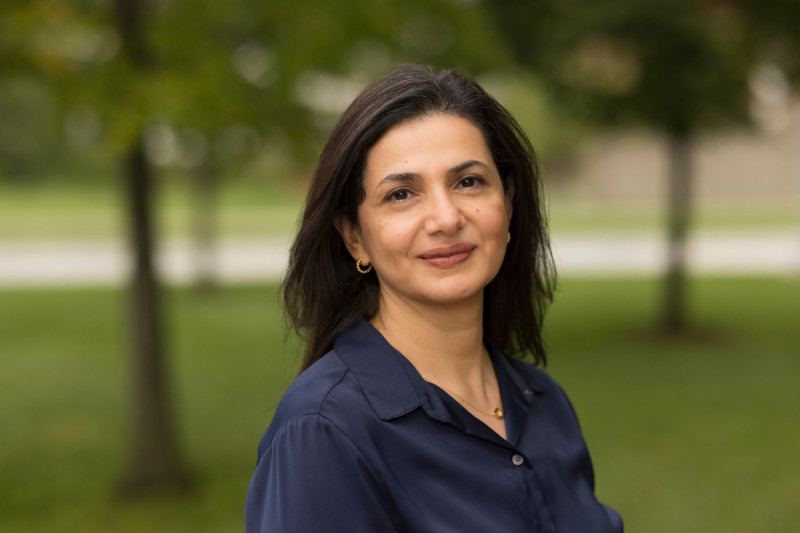
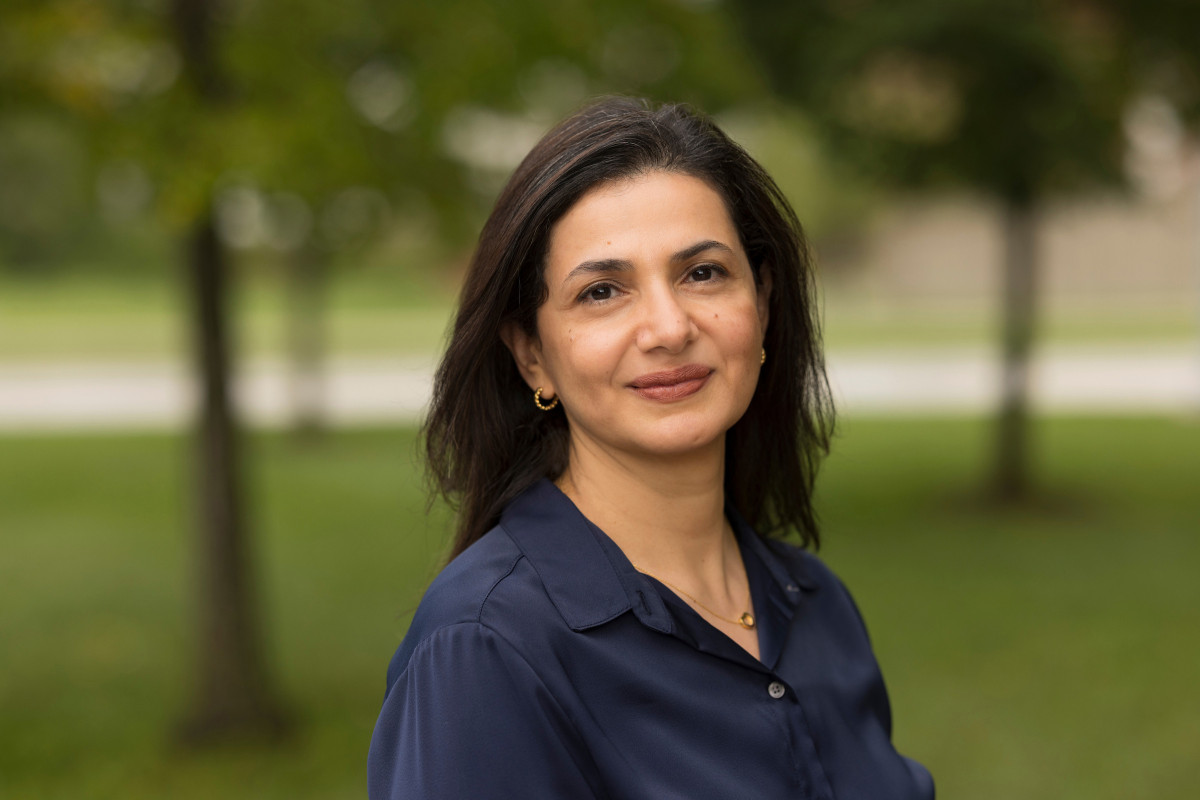
Called the “forgotten war” by humanitarian organizations, the stories of Sudan’s civil war often go untold.
And so do the stories of its complex mixture of people, of both Arab and African heritage. Through her research, Binghamton University Associate Professor of Middle Eastern and Ancient Mediterranean Studies Mary Youssef seeks to bring these stories to light — including those from Sudanese writer Abdel Aziz Baraka Sakin, whose work was banned by his homeland’s government.
“If they do not have the chance to tell what is happening to them, there will be no chance for change. The only way toward change is by seeing these people through their stories, from their own perspective, on their own terms,” Youssef said.
A member of the Binghamton faculty since 2012, Youssef’s research focuses on modern Arabic literature and the literature of the Arabic diaspora. She has just completed a sabbatical during which she focused on developing a new book that builds on her work in Minorities in the Contemporary Egyptian Novel, published in 2018. In that first book, she considered the Nubian minority in Egypt, as well as the North African people known as the Amazigh, the Coptic religious minority, and women.
“When I looked at those marginalized ethnic groups in Egypt, they opened my eyes to a larger problem in the region: its history of domination of one group over another,” she explained. “Discrimination on a national level against a specific group based on its contested belonging.”
Youssef is drawn to literature by individuals who cannot be easily categorized in terms of identity. North Africa’s history is complex, considering the intermixture of populations, usurpations, and displacements; out-groups can be targeted for ethnic cleansing, as seen today in Darfur.
When she studied the Nubian and Coptic experiences in Egypt for her first book, she learned that Sudan was colonized by Egypt and Great Britain. Few people are aware that one Arab country, while itself still under the thumb of empire, colonized another and exploited its people and resources in collaboration with another colonial power, she said.
The Sudanese capital of Khartoum, for example, was developed by the Egyptian colonial regime. When the British arrived in the region, they embedded themselves in an existing colonial setup that regarded northern Arabs as more civilized than the southern African tribes.
There is a history of slavery in the region as well, before the arrival of colonial powers. Not only Africans found themselves in chains, but people from Afghanistan, Persia, and other countries around the Indian Ocean, Youssef noted. The legacy of this lingers in modern Sudan, with some paramilitary recruits referring to the dark-skinned Darfuris as slaves.
“They are seen as lesser within the Sudanese Arab nation,” she observed.
Beyond the binary
With ancestral roots in Darfur, author Abdel Aziz Baraka Sakin was born in Kassala, a town near the Eritrean border; he now lives in exile in Europe. Two of his most famous works, written in Arabic, are the novels Masih Darfur and The Jungo: Stakes of the Earth.
Language is a complex affair in places such as Sudan, Youssef acknowledged.
“Such writers always know Arabic, but they also know their indigenous languages, such as the Darfuri languages,” Youssef said. “In Kassala and the overall southeastern border region, you would hear languages such as Eritrean and Tigrayan because it’s a multinational, multilingual, and multicultural community.”
Writers such as Baraka Sakin exist in a liminal place, bringing African and Arabic cultures into conversation as they wrestle with the “divide and rule” legacy of colonialism. Empires rule subject populations by highlighting differences and creating narratives that present them as fixed and normal; these classifications are then cemented into legal codes.
In the Ottoman Empire, these differences were often conceived along religious lines; national identification in successor states such as Egypt and Lebanon still includes religion. When the British imposed their colonial system in places such as Sudan, they applied racial classifications, drawn from the West’s legacy of chattel slavery.
“We inherited this world-making system, and we’re trapped in these ethnic landscapes with rigid binaries,” Youssef reflected.
Masih Darfur translates to “The Messiah of Darfur”; Baraka Sakin, who has ancestral roots in Darfur, had worked with humanitarian organizations in the contested region and used the novel to document what he saw. While the award-winning book has been translated into German and French, it’s not currently available in English.
Translated into languages including English, The Jungo centers on agriculture in eastern Sudan, where sesame, sugar cane, and sorghum are major crops. Laboring for meager wages, fieldworkers in eastern Sudan typically come from elsewhere, displaced by conflict; together, they create multiethnic border communities, with Arabic as a lingua franca.
“It’s a modern type of slavery. These groups live under atrocious conditions and are targeted by the state if they ever complain or refuse to comply with the demands of the agricultural industry,” Youssef said.
A similar fate awaited the writer who documented their lives in his novels. Shortly after The Jungo won the Al-Tayeb Salih Prize for Creative Writing in 2011, the Sudanese government banned and confiscated Baraka Sakin’s works, prompting him to flee the country.
Literature provides a way for marginalized populations to express their lived experiences to the larger world, an act that ultimately challenges the simplified “us versus other” binary that lies at the heart of systems of oppression.
“I have started to compile and read novels and poetry collections written by authors who try to articulate an experience that contests this binary,” Youssef said. “There are hundreds of thousands of people who are overlooked, even though they have existed for centuries with their languages, their fluid religious identities, their different shades and phenotypes. And now, because they do not conform to these rigid binary constructs, they are targeted.”